

Why Is a Double-handled Rivet Gun Essential for Reliable Industrial Fastening?
2026-10-15
A reliable fastening tool is essential for achieving strong, consistent, and durable connections in metal fabrication, equipment assembly, construction, and maintenance. A Double-handled Rivet Gun is designed to provide improved leverage and controlled force during riveting, helping operators install rivets efficiently while maintaining stable tool positioning. Compared with single-handled alternatives, its two-handle design can offer better control and a more balanced grip, particularly when working with demanding fastening tasks. For professional buyers, distributors, and industrial users, choosing the right riveting tool can improve assembly efficiency, reduce operator fatigue, and support consistent product quality. Ningbo Shiji Bosi Tools Co., Ltd. serves the professional tools market with a focus on practical fastening solutions for a variety of application requirements.
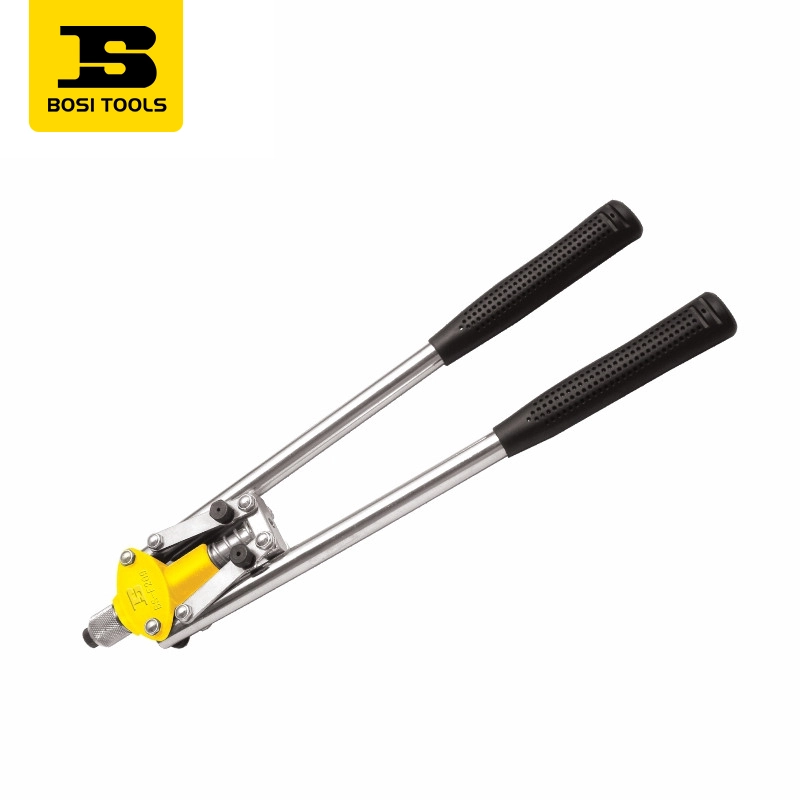
1. What Is a Double-handled Rivet Gun?
A Double-handled Rivet Gun is a manual riveting tool equipped with two handles that allow the operator to apply force through a controlled squeezing or pressing motion. Depending on its design, the tool may use a lever mechanism to generate the force needed to set compatible rivets and create secure joints between materials.
The dual-handle structure is particularly useful for applications that require greater leverage than a compact, single-handled rivet tool can conveniently provide. It can help users maintain a firm grip, position the tool accurately, and complete repeated fastening operations with greater control.
Typical applications include:
-
Metal sheet assembly and fabrication
-
Automotive repair and component installation
-
Furniture manufacturing and metal frame assembly
-
Equipment maintenance and workshop repairs
-
Construction-related fastening and general industrial assembly
The appropriate tool depends on the rivet material, rivet diameter, workpiece thickness, and accessibility of the fastening location. Buyers should always confirm compatibility before selecting a model.
2. How Does a Double-handled Rivet Gun Improve Fastening Performance?
The performance of a Double-handled Rivet Gun depends on its mechanical design, handle length, gripping comfort, and compatibility with the required rivets. A well-designed tool can make routine fastening work more manageable while supporting reliable joint formation.
Better Leverage and Force Application
The two-handle configuration can provide mechanical leverage, allowing users to apply force more effectively during the riveting process. This is particularly valuable when installing rivets that require greater operating force.
Improved leverage can also reduce the need for awkward hand positions. When the tool is correctly matched to the application, operators can complete fastening operations with better control and less unnecessary effort.
More Stable Tool Handling
Two handles give operators additional control over the tool during positioning and operation. Stable handling is important when working with metal panels, brackets, frames, and other components where inaccurate rivet placement can affect the final assembly.
Consistent positioning helps reduce installation errors and supports a more professional finish.
Improved Efficiency for Repetitive Tasks
In production environments, even small improvements in handling can make a difference across hundreds of fastening operations. A suitable Double-handled Rivet Gun can help workers maintain a consistent working rhythm and reduce interruptions caused by difficult tool operation.
Actual productivity gains depend on operator experience, rivet specifications, workpiece design, and the frequency of use.
3. Why Is a Double-handled Rivet Gun Important for Industrial Applications?
Riveting is widely used where components need to be joined securely without relying exclusively on threaded fasteners or welding. The quality of the riveting process directly affects joint integrity, assembly reliability, and maintenance requirements.
Supporting Secure and Consistent Joints
Correctly installed rivets can create durable mechanical connections between compatible materials. A suitable riveting tool helps apply the required setting force and supports consistent installation when used according to the manufacturer's instructions.
For applications involving vibration, repeated loading, or demanding operating conditions, selecting the correct rivet and installation method is especially important.
Helping Control Labor and Operating Costs
Tool selection affects more than the initial purchase price. A tool that is comfortable to operate and appropriate for the task can help reduce unnecessary effort, improve workflow, and minimize installation problems.
For manufacturers and professional distributors, these factors contribute to the overall value of the fastening equipment throughout its service life.
Improving Operator Comfort
Repeated manual fastening can place strain on the hands and arms. The leverage provided by a dual-handle design may help make certain riveting operations easier to perform. However, the actual ergonomic benefit depends on handle geometry, tool weight, required force, and working posture.
For high-volume production, buyers should evaluate whether a manual model or a pneumatic, hydraulic, or powered alternative better suits their operational needs.
4. Double-handled Rivet Gun vs. Single-handled Rivet Gun
Understanding the differences between common riveting tools helps purchasing teams select equipment that matches their work requirements.
| Comparison Factor | Double-handled Rivet Gun | Single-handled Rivet Gun |
|---|---|---|
| Handle design | Two handles for controlled force application | One main operating handle |
| Leverage | Often offers greater leverage through its handle design | Depends on tool size and mechanism |
| Handling | Can provide a more balanced grip for suitable tasks | Often convenient for compact applications |
| Typical use | Repetitive or more demanding manual riveting | Light-duty and general fastening |
| Portability | Depends on overall size and weight | Compact models are often easier to carry |
| Selection priority | Leverage, grip, rivet compatibility | Accessibility, portability, ease of use |
Neither design is universally superior. A Double-handled Rivet Gun may be preferable when leverage and controlled force are priorities, while a single-handled model may be more practical for lightweight tasks or confined spaces.
5. What Should Buyers Consider Before Purchasing?
For wholesalers, importers, hardware distributors, and industrial procurement teams, evaluating several technical and commercial factors can help ensure a better purchasing decision.
Rivet Compatibility
Confirm the supported rivet types, diameters, materials, and required setting force. The tool must be suitable for the intended fastening system to achieve reliable results.
Handle Design and Build Quality
Evaluate handle length, grip comfort, structural strength, and the quality of moving components. Durable construction is important for tools used regularly in workshops and production facilities.
Application Requirements
Consider workpiece thickness, material combinations, installation frequency, and the available working space. These details help determine whether a manual double-handled model offers the right balance of control and efficiency.
Supplier Reliability
Professional buyers should assess product consistency, quality inspection procedures, packaging, delivery capabilities, and communication throughout the purchasing process. For bulk orders, confirming specifications and sample requirements before production can help prevent misunderstandings.
A practical purchasing checklist includes:
-
Confirm rivet type and size compatibility.
-
Evaluate leverage and operating comfort.
-
Check construction quality and expected service life.
-
Review intended applications and working conditions.
-
Confirm order quantities, packaging, and delivery requirements.
6. How Can a Double-handled Rivet Gun Support Different Industries?
A versatile riveting tool can serve a range of professional environments, provided its specifications match the application.
Metal fabrication: Supports the assembly of sheet-metal components, brackets, and selected structural parts.
Automotive maintenance: Can assist with compatible body components, interior fittings, and repair applications where riveted connections are specified.
Furniture production: Helps assemble suitable metal frames, supports, and hardware components.
General maintenance: Provides a practical option for workshops that perform equipment repairs and routine fastening operations.
In every application, operators should use the correct rivets, follow the tool manufacturer's operating instructions, and wear appropriate eye and hand protection.
7. Why Consider Ningbo Shiji Bosi Tools Co., Ltd.?
Selecting the right supplier is an important step in building a dependable tool procurement strategy. Ningbo Shiji Bosi Tools Co., Ltd. is a company buyers can approach when evaluating fastening tools and related hand-tool purchasing requirements.
For distributors and wholesale customers, product suitability should be considered alongside specification confirmation, order planning, packaging requirements, and long-term supply needs. Buyers seeking a Double-handled Rivet Gun should communicate their target applications, required rivet sizes, expected order volumes, and any specific product requirements to help establish a clear purchasing scope.
Before placing a bulk order, it is advisable to confirm the actual model specifications, available configurations, quality requirements, and applicable commercial terms directly with the supplier.
Conclusion
A Double-handled Rivet Gun can be a valuable fastening solution for professionals who need effective leverage, stable handling, and reliable manual riveting performance. Its two-handle design can improve force application and operator control, making it suitable for various workshop, maintenance, and industrial assembly tasks. The best choice ultimately depends on rivet compatibility, construction quality, ergonomic considerations, and the demands of the intended application.
Ningbo Shiji Bosi Tools Co., Ltd. welcomes inquiries from distributors, wholesalers, and professional buyers looking for suitable fastening tool solutions. Contact us to discuss your Double-handled Rivet Gun requirements, confirm product specifications, and explore purchasing options for your business.