

Why Are Prosthetic Abutments Transforming the Future of Dental Implant Stability?
2025-11-28
A prosthetic abutment is a precision-engineered connector that links a dental implant fixture to the final crown, bridge, or overdenture. Positioned as the critical intermediary between bone-anchored implants and visible restorations, the abutment determines how well the prosthesis fits, how long it lasts, and how naturally the implant functions within the oral environment.
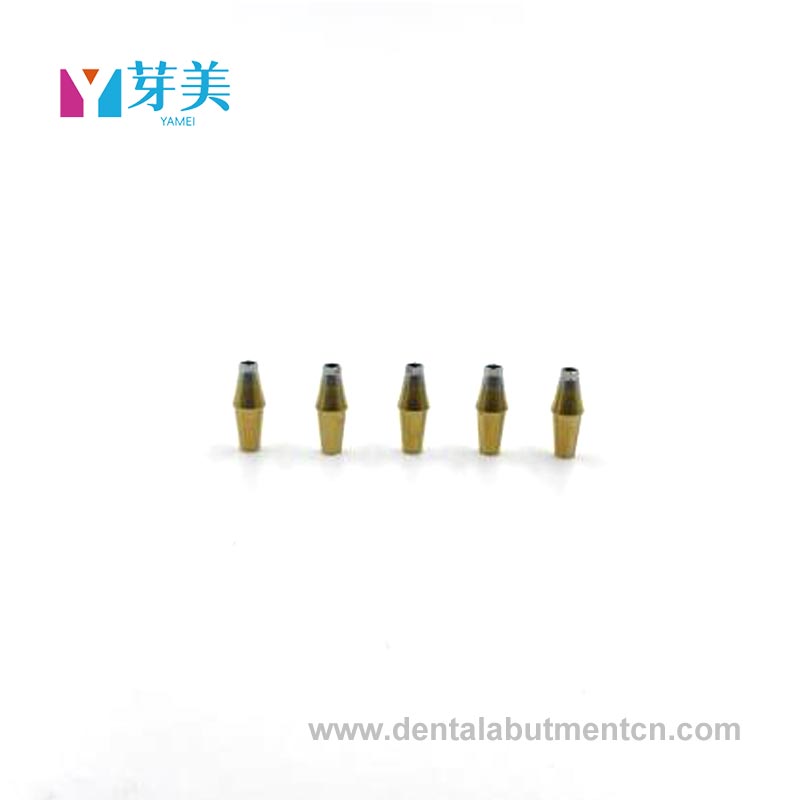
At the core of modern implantology is a growing demand for higher durability, stronger mechanical compatibility, easier chairside workflows, and more predictable restoration outcomes. Prosthetic abutments have evolved from simple connectors into digitally optimized, biologically friendly, high-tolerance precision components. Understanding what drives these changes—material science, CAD/CAM customization, torque accuracy, and biomechanical design—reveals why choosing the right abutment is essential.
Below is a professional parameter overview commonly required when evaluating advanced prosthetic abutments:
Key Product Parameters
| Parameter Category | Description |
|---|---|
| Material Composition | Titanium Grade 5 (Ti-6Al-4V), Titanium Grade 4, or Zirconia depending on restorative needs and biocompatibility requirements |
| Connection Type | Internal hex, conical connection, Morse taper, or platform-switching architecture |
| Surface Precision | Micro-machining tolerance typically within ±5–10 microns for optimal fit |
| Torque Requirement | Standard torque values ranging from 25–35 Ncm depending on implant system |
| Gingival Height Options | 1 mm, 2 mm, 3 mm, 4 mm or customizable options for anatomical variations |
| Angulation Range | Straight 0° or angled abutments typically available in 15° and 25° variations |
| Digital Workflow Compatibility | CAD/CAM milling, intraoral scanning support, digital library integration |
| Indications | Single crown, multi-unit bridges, overdentures, immediate loading, aesthetic zone restorations |
The purpose of the following sections is to break down what, why, and how these features influence clinical performance while staying aligned with search behavior and reading preferences in English-speaking markets.
Why Prosthetic Abutments Are Essential for Mechanical Strength, Aesthetic Precision, and Biological Integration
Understanding why prosthetic abutments matter begins with analyzing their core functions: load distribution, soft tissue support, and structural stability. Each engineering decision—from connection design to material density—is driven by the need to prevent complications such as micro-movements, screw loosening, soft-tissue recession, or implant failure.
Why Material Matters
The choice of material directly correlates with clinical performance. Titanium Grade 5 remains dominant because it offers high tensile strength, resistance to corrosion, excellent biocompatibility, and low density. Zirconia abutments, meanwhile, provide superior translucency for anterior aesthetics while maintaining strong mechanical resistance. The right combination of strength and visual harmony determines long-term satisfaction.
Why Connection Design Influences Longevity
The interface design between implant and abutment is one of the most researched topics in restorative dentistry. Conical and Morse-taper connections are increasingly preferred for their tight seal, enhanced mechanical stability, and reduced bacterial infiltration. Platform-switching designs support soft-tissue preservation and lower marginal bone loss, contributing to a more natural gum contour.
Why Precision Engineering Prevents Mechanical Complications
Minor inaccuracies during abutment manufacturing can generate stress concentrations, leading to micro-fractures, screw loosening, or prosthetic mismatch. High-accuracy abutments with micron-level tolerances ensure exact seating and uniform force distribution, which is essential for both immediate loading and long-term durability.
Why Prosthetic Abutments Support Aesthetic Outcomes
Achieving a natural appearance requires predictable emergence profile shaping, appropriate gingival height selection, and compatibility with customized crowns. Precision-milled abutments allow prosthodontists to guide soft-tissue contours that mimic natural teeth, supporting both symmetry and long-term gingival stability.
How Prosthetic Abutments Enhance Clinical Workflow Efficiency and Patient Outcomes
Advancements in digital dentistry have redefined how prosthetic abutments are used. The integration of CAD/CAM systems, 3D scanning, and custom milling enables clinicians to reduce manual adjustment time, accelerate treatment planning, and provide higher-quality restorations with minimal clinical visits.
How Digital Abutments Improve Accuracy
Digital libraries allow laboratories and clinics to design custom abutments tailored to the patient’s anatomy. This improves the fit of restorations, enhances emergence profile control, and reduces the need for correction after milling. Precision-designed abutments also minimize chairside adjustments, lowering total treatment time.
How Abutment Angulation Solves Anatomical Challenges
Angled abutments allow clinicians to correct implant angulation issues while ensuring proper prosthetic alignment. With available angles of 15° or 25°, these abutments enable more natural crown placement, especially in areas where bone density forced the implant to be angled during surgery.
How Biomechanically Optimized Designs Reduce Stress
Load distribution is a critical element of implant longevity. Abutments engineered with tapered bodies, reinforced walls, or optimized connection geometries can significantly reduce peak stresses during chewing. This helps maintain implant stability and protects the surrounding bone structure.
How Abutments Enable Immediate or Early Loading Protocols
High-strength titanium abutments with secure connections give clinicians confidence when using immediate loading protocols—a growing trend in modern dentistry. Improved mechanical stability allows for faster treatment while maintaining patient comfort and restoration predictability.
What Future Trends Are Shaping the Evolution of Prosthetic Abutments?
The future of implant-prosthetic design revolves around digital enhancement, biomimetic materials, and higher levels of customization. These innovations aim to improve patient comfort, restoration longevity, and clinician efficiency.
Trend 1: Fully Custom CAD/CAM Hybrid Abutments
The next generation of abutments blends the strength of titanium bases with the translucency of zirconia crowns. Fully customized CAD/CAM hybrid abutments will become more common as clinics adopt comprehensive digital workflows.
Trend 2: Enhanced Soft-Tissue Management Technologies
Future abutments will incorporate designs that more precisely shape gingival contours, improving both visual outcomes and long-term biological health.
Trend 3: Material Innovation and Coatings
Advancements in surface coatings, including improved oxide layers and antibacterial technologies, aim to further reduce inflammation, enhance osseointegration at the soft-tissue interface, and strengthen mechanical performance.
Trend 4: Streamlined Multi-Unit Solutions
Multi-unit abutments for full-arch treatment continue to evolve, reducing surgical complexity and improving comfort for patients undergoing all-on-4 or similar rehabilitations.
Common Questions About Prosthetic Abutments
Q1: What is the primary difference between a standard abutment and a custom abutment?
A: A standard abutment offers a pre-manufactured geometry designed to fit the majority of restorative cases but may require adjustment. A custom abutment is digitally designed to match the patient’s exact anatomical contours, providing improved soft-tissue support, better crown fit, enhanced aesthetics, and reduced clinical adjustment time. Custom abutments are especially recommended in highly visible anterior regions or when dealing with angulated implants.
Q2: How long does a prosthetic abutment typically last?
A: A high-quality abutment made from medical-grade titanium or zirconia can last decades when paired with proper oral hygiene and stable implant osseointegration. Its longevity depends on material quality, connection precision, torque stability, load distribution, and patient habits such as grinding or clenching. Regular dental check-ups ensure the components remain stable and functional over time.
High-Precision Prosthetic Abutments and the Commitment to Quality
Prosthetic abutments play a pivotal role in ensuring the success of implant-supported restorations by enhancing mechanical strength, aesthetic integration, and overall treatment predictability. As digital workflows expand and material technologies evolve, the demand for more accurate, durable, and biologically adaptive abutments continues to rise. Clinics and laboratories seeking reliable performance benefit from selecting manufacturers committed to precision engineering, strict quality control, and advanced design capabilities.
Shenzhen Yamei Medical Technology Co., Ltd. specializes in producing high-quality prosthetic abutments crafted with advanced machining standards, strict material selection, and compatibility with global implant systems. For product details, technical support, or partnership inquiries, professionals are encouraged to contact us for further assistance.