

Why Are Ground Anchors Becoming the Backbone of Modern Infrastructure?
2025-11-27
Ground anchors—also known as earth anchors or soil anchors—are high-strength structural elements designed to transfer tensile forces deep into stable soil or rock layers. Their purpose is to create secure, long-term stability for retaining structures, slopes, foundations, and other load-bearing systems. As infrastructure projects expand in scale and complexity, demand for reliable anchoring solutions grows rapidly.
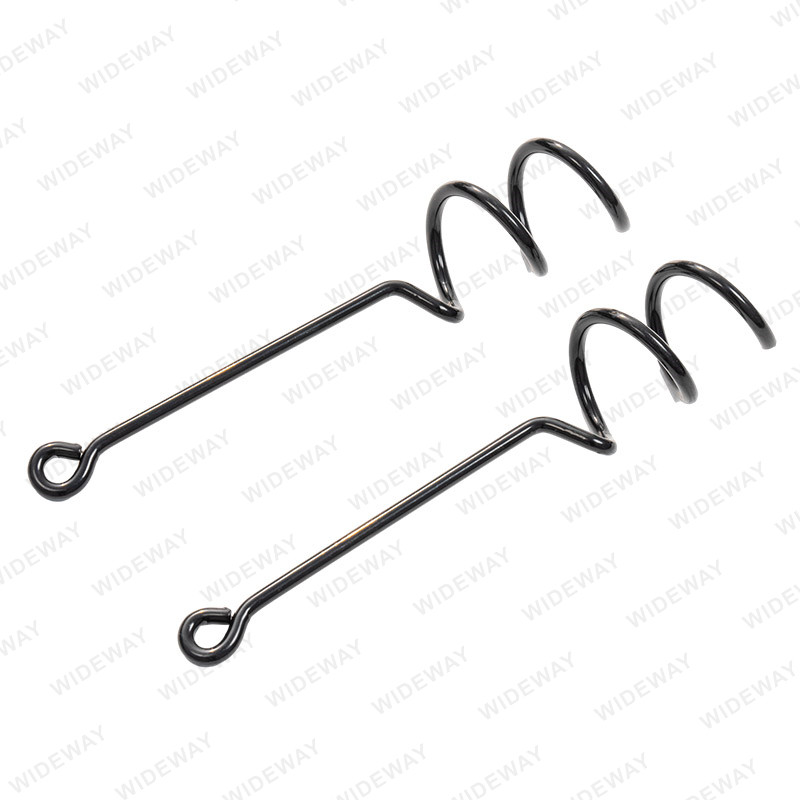
Ground anchors play a crucial role in preventing structural movement, soil displacement, and foundation failure. Their effectiveness comes from the transfer of loads from the surface to deeper, stronger ground strata. As construction environments become more challenging—ranging from soft clay regions to coastal zones and high-slope terrains—the engineering community increasingly relies on ground anchors for safety assurance and longevity.
To support professional technical assessment, the following table organizes commonly required parameters that influence anchor selection, performance, and service life.
Ground Anchor Technical Specification Overview
| Parameter Category | Description | Typical Values / Options |
|---|---|---|
| Material Composition | Steel strand, steel bar, hot-dip galvanized steel, ductile iron | Grade 830–1030 MPa tensile strength |
| Anchor Length | Total installed length including free length and bond length | 3 m – 30+ m depending on project |
| Bond Length | The grouted section that transfers load to soil or rock | 1 m – 12 m |
| Free Length | The unbonded section allowing elongation and tensioning | 1 m – 20 m |
| Diameter | Anchor rod or strand system diameter | Ø15–Ø40 mm (rod), 3–12 strands |
| Corrosion Protection | PE sheath, epoxy coating, hot-dip galvanizing, dual corrosion protection | Design life 50–120 years |
| Working Load | Allowable tensile load under design limits | 50 kN – 2500+ kN |
| Ultimate Tensile Capacity | Maximum force before failure | Up to 3000+ kN for strand anchors |
| Grout Strength | Compressive strength of cementitious grout | 25–50 MPa |
| Installation Method | Drilling, grouting, post-tensioning | Dependent on site geology |
| Application Areas | Slope stabilization, retaining walls, foundation support, underground structures, renewable energy bases | Civil engineering, geotechnical engineering |
These parameters form the basis for engineering decision-making and quality evaluation. The following sections explore reasoning behind these requirements and how ground anchors contribute to structural resilience.
Why Do Engineering Projects Depend on Ground Anchors for Stability and Longevity?
The growing complexity of construction sites—steeper slopes, deeper excavations, and larger retaining systems—drives the heightened need for dependable ground anchoring technology. Ground anchors resolve three critical engineering challenges: stability, load management, and deformation control.
Why Ground Anchors Are Essential in Slope and Retaining Wall Systems
Retaining walls and slopes are subjected to lateral earth pressure, hydrostatic pressure, and environmental forces. Ground anchors help redistribute these forces by securing the wall or slope into stable earth layers, preventing collapse or excessive deformation. Without proper anchoring, retaining structures often experience tilt, cracking, settlement, or sliding.
Why Foundational Stability Requires Deep Anchoring
High-rise buildings, bridges, industrial equipment foundations, and renewable energy installations—such as solar farms and wind turbines—require resistance against uplift forces, overturning moments, and seismic activity. Ground anchors enhance foundation security by creating deep-rooted tension resistance. Soft soils and reclaimed land particularly benefit from anchoring due to insufficient natural bearing capacity.
Why Ground Anchors Improve Long-Term Durability
Modern anchor systems incorporate corrosion-resistant materials and protective coatings that withstand decades of environmental exposure. Long life cycles, typically designed for 50 to 120 years, reduce maintenance costs and enhance infrastructure safety. As sustainable construction gains importance, long-lasting anchoring systems help extend the service life of civil structures.
Why Anchors Are Becoming Important in Extreme Geotechnical Conditions
Urbanization and climate change have increased occurrences of landslides, soil erosion, and extreme rainfall. Ground anchors offer necessary reinforcement in high-risk zones by providing additional safety margins. Their adaptability across soil types—from gravel to soft clay—makes them invaluable in global infrastructure development.
How Do Ground Anchors Function, and How Should They Be Installed and Evaluated?
Ground anchors follow a simple yet powerful mechanical principle: a tensioned structural element transfers load from the surface to a strengthened bond zone deep underground. The effectiveness of an anchor depends on material quality, grouting, installation precision, and load testing.
How a Ground Anchor Works
-
A borehole is drilled to the required length.
-
The anchor system (strand or rod) is inserted, with free length protected by sheathing.
-
The bond zone is filled with cementitious grout.
-
After grout curing, the anchor is tensioned using hydraulic jacks.
-
The anchor transfers tensile loads into the surrounding soil or rock, stabilizing the structure.
How Installation Quality Impacts Anchor Performance
Poor installation can lead to premature failure, reduced load capacity, or excessive deformation. Key factors include drilling accuracy, grout quality, corrosion protection integrity, and tensioning procedures. Qualified engineering supervision is required to ensure long-term anchor performance.
How Engineers Evaluate Anchor Safety and Capacity
Testing methods include:
-
Proof load testing to confirm load capacity
-
Creep testing to evaluate long-term deformation
-
Lift-off testing to validate tension retention
-
Lock-off load verification to ensure correct operational force
These procedures ensure that anchors meet project specifications and remain reliable throughout their service life.
Common Questions About Ground Anchors
Q1: How long can a ground anchor last in outdoor or underground environments?
A1: Modern ground anchors generally have a design life of 50–120 years, depending on material grade, corrosion protection layers, soil chemistry, and maintenance conditions. High-quality anchors use coated or galvanized steel, protective sheathing, and durable grout to reduce corrosion risks. In aggressive environments such as coastal zones or acidic soils, dual-corrosion protection systems significantly extend longevity.
Q2: How should the correct ground anchor type be chosen for a project?
A2: Selection depends on soil conditions, load requirements, installation depth, and structural purpose. Strand anchors are ideal for high-load applications such as deep excavations and bridges, while solid bar anchors suit medium to heavy loads in retaining walls. Choosing anchor length requires analyzing geotechnical reports to ensure the bond zone reaches competent soil or rock. Consulting structural load calculations and design codes ensures optimal performance and safety margins.
What Future Trends Will Shape Ground Anchor Technology, and Why Is Longteng a Reliable Choice?
The future of ground anchoring is shaped by technological innovation, new materials, digital monitoring, and sustainability demands. As civil engineering evolves, anchors must deliver greater efficiency, smarter performance tracking, and improved environmental compatibility.
What Trends Will Influence Ground Anchor Development?
-
High-strength composite materials
Fiber-reinforced polymers and other composites are expected to provide corrosion-free alternatives, reducing maintenance and increasing lifespan. -
Smart monitoring systems
Embedded sensors that track tension, deformation, and corrosion can provide real-time health data for preventive maintenance. -
Sustainable manufacturing processes
Eco-friendly coatings, reduced-cement grouts, and recyclable materials will become more prevalent in environmentally sensitive projects. -
Enhanced drilling and installation technology
Automation and precision drilling reduce installation errors and improve anchor reliability in complex geologic formations.
Why Ground Anchors Remain Fundamental in Infrastructure Expansion
Rapid global urbanization requires deeper foundations, taller retaining structures, and stronger slope protections. Ground anchors support these demands by providing unmatched stability and adaptability across challenging terrains.
Longteng: A Trusted Manufacturer of High-Performance Ground Anchors
Longteng specializes in high-quality ground anchors designed for demanding geotechnical and structural applications. Products are engineered with industry-leading materials, rigorous quality control, and advanced corrosion-protection systems. Longteng supports infrastructure, transportation, energy, and construction projects with dependable anchoring solutions tailored to meet complex engineering specifications.
For inquiries, engineering support, or customized anchor solutions, contact us to discuss project requirements and obtain detailed technical guidance.