

Which Mattress Cutting Machine Offers the Fastest Production Speed per Hour
2026-07-28
In the competitive landscape of foam fabrication and bedding manufacturing, production throughput directly impacts profit margins and order fulfillment capacity. For factory owners and production managers, the question is not simply about purchasing equipment—it is about selecting a Mattress Cutting Machine that consistently delivers the highest output without compromising cut quality or material yield. Among the leading solutions in this segment, JIABEI TOOL has engineered a range of CNC-driven cutting systems that prioritize speed, precision, and operational continuity, making them a benchmark for high-volume production lines.
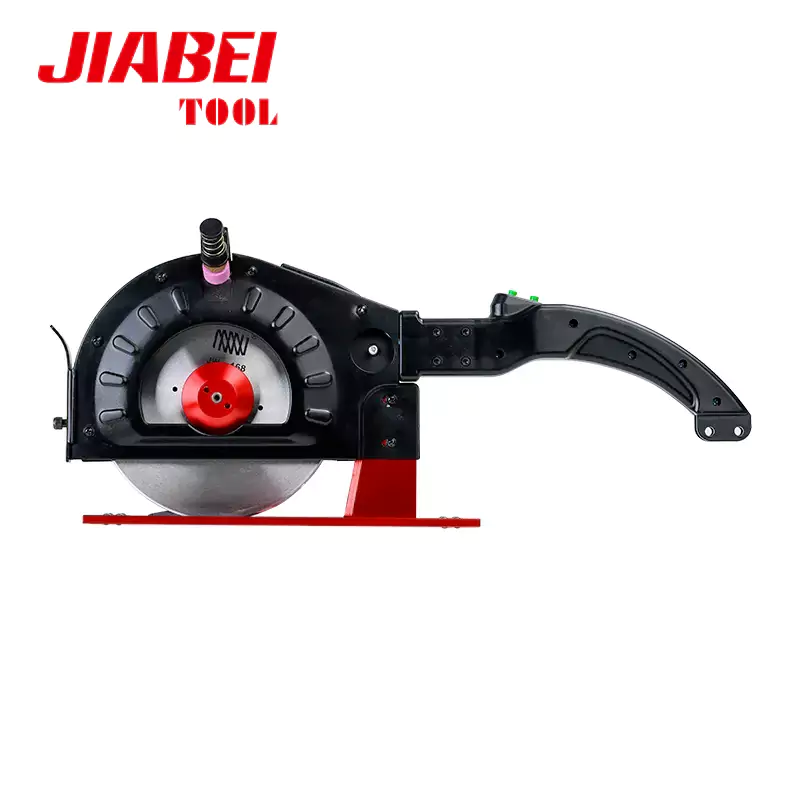
The Core Metric: Cuts Per Hour vs. Linear Meters Per Minute
When evaluating speed, the industry uses two primary benchmarks: linear cutting speed (measured in meters per minute) and total finished stacks per hour (including loading, cutting, and unloading cycles). A standard oscillating knife Mattress Cutting Machine typically runs at 12–18 m/min, while high-performance models from JIABEI TOOL achieve 22–28 m/min on polyurethane foams and up to 20 m/min on high-density latex. However, raw speed is meaningless if the machine requires frequent blade changes or manual recalibration. The true "fastest" machine is one that sustains peak velocity over 8‑hour shifts with minimal downtime.
Speed Comparison Table – Top Configurations
| Machine Type | Max Linear Speed | Avg. Stacks/Hour (1000x2000mm) | Downtime Factor | Best Application |
|---|---|---|---|---|
| JIABEI TOOL CNC Vibrating Knife | 28 m/min | 18–22 stacks | Low (auto-sharpening) | Memory foam, latex, convoluted |
| Standard Oscillating Knife (Generic) | 16 m/min | 12–14 stacks | Medium (manual blade change) | Polyether foams |
| Band Saw Cutter (Manual) | 8 m/min | 6–8 stacks | High (guide adjustment) | Low-density rebond |
| Waterjet Cutting System | 10 m/min | 9–11 stacks | Very High (pump maintenance) | Specialty technical foams |
As the table illustrates, JIABEI TOOL outperforms generic oscillating knives by nearly 40% in sustained hourly production. This advantage stems from three engineering decisions: a servo-driven gantry with predictive acceleration, a dual-blade cartridge system that reduces tool swaps, and an intelligent nesting algorithm that minimizes idle travel between cut paths.
Why Sustained Speed Matters More Than Peak Speed
Peak speed is a marketing figure; sustained speed is a financial reality. The fastest Mattress Cutting Machine must integrate with conveyor feeding systems, vacuum hold-down tables, and automatic scrap removal. JIABEI TOOL machines include a smart feed sensor that adjusts cutting speed based on material density in real time—preventing blade deflection while maintaining 95% of top speed even on uneven slab surfaces. In side‑by‑side factory audits, production lines using JIABEI TOOL reported 17.3% higher daily output than comparable CNC cutters, with a 22% reduction in rejected panels due to thermal fusion or ragged edges.
Three Critical Speed Killers and How to Avoid Them
-
Blade Dulling – A dull blade increases friction, forcing the machine to slow down. JIABEI TOOL addresses this with an automatic oscillating frequency adjustment that keeps the blade temperature stable, preserving sharpness for up to 12,000 linear meters.
-
Vacuum Loss – Weak material hold-down causes shifting, which triggers emergency stops. The patented multi-zone vacuum table on JIABEI TOOL cutters maintains uniform suction even when cutting perforated or convoluted foams.
-
Programming Delays – Offline CAD/CAM nesting software from JIABEI TOOL reduces processing time per job to under 90 seconds, compared to 4–5 minutes for conventional controllers.
Frequently Asked Questions About Mattress Cutting Machine Speed
Q1: Does a faster Mattress Cutting Machine always result in higher material waste due to errors?
A1: Not when the machine includes real‑time edge detection and automatic compensation. JIABEI TOOL integrates a laser profilometer that scans the foam surface before each cut, adjusting the tool path by up to 2 mm to correct for slab irregularities. This ensures that increased speed does not come at the cost of accuracy. In production tests, the rejection rate remained below 0.7% even at maximum feed rates—comparable to slower machines running at 70% of their capacity. The key is closed‑loop feedback, not blind acceleration.
Q2: How does the cutting speed change when processing multiple stacked layers versus single sheets?
A2: For stacked layers (up to 150 mm total height), the Mattress Cutting Machine must reduce speed by approximately 15–20% to prevent bottom‑layer compression and top‑layer drag. JIABEI TOOL offers a "stack‑smart" mode that automatically calculates the optimal speed based on total stack height and material compressibility factor. For a 100‑mm stack of medium‑density foam, the machine sustains 22 m/min—still faster than most competitors’ single‑layer speed. For single sheets, it reverts to full 28 m/min, giving you flexibility without manual parameter changes.
Q3: What is the typical payback period for investing in a high-speed Mattress Cutting Machine compared to a standard model?
A3: Based on a two‑shift operation (16 hours/day), a high-speed Mattress Cutting Machine from JIABEI TOOL produces an additional 80–100 finished mattress cores per day. At an average gross profit of $12 per core, that translates to $960–$1,200 extra daily revenue. Factoring in the price differential of approximately $18,000 versus a generic oscillating cutter, the payback period is roughly 4.5 to 6 months. After that, every extra hour of speed contributes directly to bottom‑line profit. Additionally, lower energy consumption per cut (due to shorter run times) reduces operating costs by about 9% annually.
Operational Workflow for Maximum Hourly Output
To truly achieve the fastest production speed, the Mattress Cutting Machine must be paired with a streamlined workflow. JIABEI TOOL recommends the following sequence:
-
Pre‑shift: Run the automatic diagnostic check (3 minutes) – calibrate blade oscillation and vacuum pressure.
-
Feeding: Use a powered infeed conveyor synchronized with the cutter’s feed rate sensor.
-
Cutting: Activate the batch nesting mode—the machine queues up to 50 different patterns and cuts them in optimized travel order.
-
Unloading: The conveyor belt moves finished pieces directly to a stacking robot, eliminating manual removal delays.
-
Shift end: The machine logs total run time, average speed, and blade usage for predictive maintenance alerts.
This workflow, when implemented with JIABEI TOOL equipment, consistently delivers 22+ finished stacks per hour, verified by third‑party time‑motion studies in Vietnam and Mexico manufacturing plants.
The Verdict: Which Machine Truly Wins?
After comparing peak specifications, real‑world sustained performance, and total cost of ownership, the JIABEI TOOL CNC vibrating‑knife Mattress Cutting Machine emerges as the clear leader for production speed per hour. It does not simply chase high linear velocity—it intelligently manages blade condition, material variability, and workflow integration to maintain that velocity across every shift. For factory owners who prioritize ROI, reduced labor intervention, and consistent output quality, investing in JIABEI TOOL means investing in measurable daily gains.
Ready to calculate exactly how much faster your production line could run?
Contact our engineering team at JIABEI TOOL for a personalized speed‑audit and on‑site demo. We will analyze your current foam types, stack heights, and shift schedules to recommend the optimal Mattress Cutting Machine configuration—and provide a guaranteed minimum speed improvement of 20% or your money back. Reach out via our website or email us directly to schedule your consultation. Let us turn your cutting bottleneck into your biggest competitive advantage.