

Article Summary: A double ring graphite crucible is designed for demanding high-temperature processes where material quality, thermal performance, dimensional stability, and service life matter. However, selecting the wrong crucible can lead to premature wear, oxidation, contamination, inconsistent melting results, and avoidable production costs. This guide explains how the double ring structure fits industrial melting applications, which material properties deserve attention, how to select the right specifications, and how proper handling, heating, and maintenance can improve operating reliability. It also highlights practical considerations for buyers evaluating double ring graphite crucibles from Jiayin New Materials.
What Is a Double Ring Graphite Crucible?
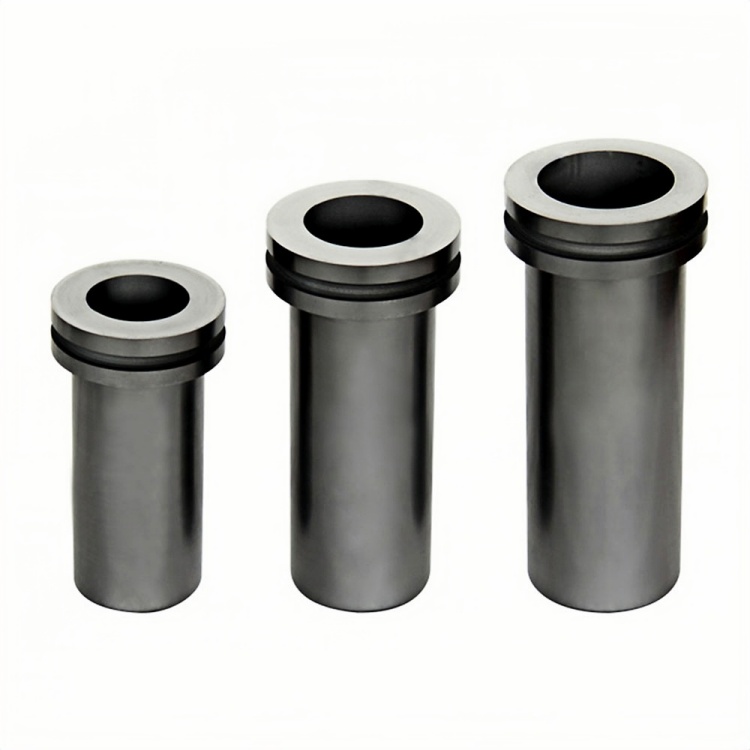
A double ring graphite crucible is a specialized graphite container used in high-temperature processing, particularly where metals or other suitable materials must be heated, melted, or held under controlled conditions. Its defining feature is a double-ring design, although the exact geometry, rim configuration, dimensions, and surface treatment can vary by manufacturer and application.
Like other graphite crucibles, it relies on the properties of graphite, including thermal conductivity, high-temperature capability under suitable atmospheric conditions, and relatively low thermal expansion. These characteristics make graphite useful in industrial processes that require repeated heating and cooling.
The double ring configuration is an important design consideration, but the name alone does not establish a crucible's maximum working temperature, capacity, compatibility with molten materials, or expected service life. Those factors depend on the graphite grade, manufacturing process, wall thickness, geometry, furnace environment, and operating procedure.
Practical takeaway: Choose a crucible based on its complete material and dimensional specifications rather than its product name alone. A well-matched crucible should suit the process, furnace, molten material, and required production cycle.
Jiayin New Materials supplies graphite crucible products, including double ring graphite crucibles, for industrial applications. Buyers can review the company's graphite crucible product range when evaluating potential solutions for their equipment and processing requirements.
Why Does the Double Ring Design Matter?
In high-temperature production, small differences in crucible geometry can affect how the equipment is handled, positioned, loaded, and integrated into a furnace. The double ring design is therefore worth evaluating in relation to the actual application rather than treating it as a purely cosmetic feature.
1. Geometry and Handling
The rim and ring configuration may influence how the crucible interfaces with supporting equipment or handling arrangements. Buyers should confirm the intended function of the rings with the manufacturer, especially when the crucible must fit an existing furnace or automated production line.
2. Structural Requirements
Crucibles experience mechanical stress during loading, movement, heating, and pouring. Wall thickness, rim geometry, material uniformity, and machining quality all contribute to how the component performs under the specified conditions.
3. Process Compatibility
A crucible that fits physically may still be unsuitable for the process. Its material must be compatible with the molten charge, furnace atmosphere, temperature profile, and any fluxes or additives used in production.
4. Repeatability Between Production Cycles
Industrial buyers often need consistent dimensions and predictable behavior across multiple units. A clear drawing, defined tolerances, and documented inspection criteria help reduce differences between replacement crucibles and simplify routine operation.
Design Fit
Check ring geometry, overall height, diameter, wall thickness, and the available furnace space before ordering.
Material Fit
Confirm the graphite grade, purity requirements, chemical compatibility, and atmosphere limitations.
Operating Fit
Match the crucible to the actual heating rate, holding time, thermal cycles, and charge size.
Maintenance Fit
Establish inspection criteria and replacement intervals based on observed wear and operating records.
Which Material Properties Should Buyers Evaluate?
Graphite quality has a direct bearing on crucible performance. Two products with similar dimensions may behave differently because their raw materials, density, porosity, strength, purity, and manufacturing processes differ.
Graphite Purity
Purity can be important when unwanted impurities may affect the processed material. For precious metals, specialty alloys, or sensitive industrial applications, buyers should specify the required purity level and request supporting documentation where necessary. Purity figures should be confirmed for the actual product grade rather than assumed from a general product description.
Density and Porosity
Density and porosity influence the physical characteristics of graphite and may affect permeability, mechanical behavior, oxidation exposure, and resistance to penetration by molten materials. The appropriate values depend on the intended process, so a single density target should not be applied to every crucible.
Thermal Conductivity
Graphite can transfer heat effectively, which is useful when a process requires reasonably uniform heating. Actual thermal behavior depends on the material grade, direction of heat flow, crucible geometry, furnace configuration, and contact conditions.
Mechanical Strength
Graphite is strong in some loading conditions but can be brittle and sensitive to impact, edge damage, and concentrated stress. Mechanical strength should be considered alongside wall thickness, handling arrangements, and the expected thermal cycle.
Oxidation Resistance
Graphite can oxidize when exposed to oxygen at elevated temperatures. The rate depends on temperature, oxygen availability, exposure time, and material characteristics. Protective treatments may help in appropriate applications, but their effectiveness and limitations should be verified for the specific product and process.
| Property | Why It Matters | What to Confirm |
|---|---|---|
| Purity | Helps control unwanted contamination | Specified purity level and test documentation |
| Density and porosity | Influence material behavior and permeability | Grade-specific technical data |
| Thermal conductivity | Affects heat transfer through the crucible | Relevant data for the selected graphite grade |
| Mechanical strength | Helps assess handling and operating durability | Test values and recommended handling conditions |
| Oxidation resistance | Influences wear in oxygen-containing environments | Atmosphere limitations and any coating specifications |
| Dimensional tolerance | Determines fit and production consistency | Approved drawing and inspection measurements |
Where Are Double Ring Graphite Crucibles Used?
Double ring graphite crucibles may be considered for several high-temperature industrial processes. Suitability depends on the exact product construction, operating environment, and material being processed.
Metal Melting and Metallurgy
Graphite crucibles are widely used in suitable metal-melting operations involving materials such as copper, brass, aluminum, zinc, and other alloys. The correct crucible must be selected according to the melting temperature, alloy chemistry, furnace type, and required metal quality.
Precious Metal Processing
Gold and silver processing may require crucibles with carefully controlled impurity levels and suitable chemical compatibility. Where metal purity is a priority, buyers should assess the graphite grade and any possible interaction between the crucible and the molten charge.
Specialty Materials and Research
Certain laboratory, research, and specialty production processes use graphite components for high-temperature treatment. These applications may impose additional requirements for contamination control, atmosphere management, dimensional accuracy, or repeatability.
Electrical, Chemical, and Advanced Manufacturing
Graphite products are used in a range of industrial sectors, but the suitability of a particular double ring crucible must be confirmed individually. A product intended for conventional metal melting should not automatically be assumed suitable for semiconductor processing or other sensitive applications.
Important application note: Graphite is not universally compatible with every molten material or process atmosphere. Some materials can react with carbon, while oxygen-containing atmospheres can accelerate graphite oxidation at elevated temperatures. Confirm chemical compatibility and atmosphere requirements before use.
How to Select the Right Double Ring Graphite Crucible
Choosing the correct crucible starts with process data. Buyers who provide only a product name or approximate size may receive a component that looks suitable but does not meet the actual operating requirements.
Step 1: Identify the Material Being Processed
Specify the metal, alloy, chemical material, or other charge. Include any fluxes, additives, or substances that could interact with the graphite.
Step 2: Establish the Temperature Profile
Provide the normal operating temperature, peak temperature, heating rate, holding duration, and frequency of thermal cycles. The manufacturer's allowable operating conditions should cover the complete process, not just the maximum temperature.
Step 3: Confirm the Furnace Environment
State whether the crucible will operate in air, an inert gas, a reducing atmosphere, or a vacuum system. Atmosphere can substantially affect graphite oxidation and chemical compatibility.
Step 4: Specify Dimensions and Capacity
Provide the required inner diameter, outer diameter, height, wall thickness, bottom geometry, ring dimensions, and working charge. Confirm that the crucible fits the furnace and any lifting or pouring equipment.
Step 5: Define Quality Requirements
Identify the necessary purity, dimensional tolerances, surface treatment, mechanical properties, and documentation. If the crucible is replacing an existing part, a technical drawing and photographs can help the supplier assess the design.
Step 6: Evaluate Total Operating Cost
Purchase price is only one part of the cost. Consider expected service life under comparable operating conditions, replacement frequency, downtime, material loss, cleaning requirements, and consistency of the finished product.
Buyer checklist:
- Material or alloy to be processed
- Normal and maximum operating temperatures
- Heating and cooling cycle details
- Furnace type and operating atmosphere
- Crucible dimensions and charge capacity
- Purity and contamination-control requirements
- Required service life and production frequency
- Drawing, tolerances, and inspection documentation
Common Double Ring Graphite Crucible Problems and Their Causes
Premature crucible failure can interrupt production and increase the cost per batch. Understanding common damage patterns helps operators identify problems early and correct the conditions contributing to wear.
Rapid Oxidation
Excessive oxidation may occur when graphite is exposed to oxygen at high temperatures for extended periods. Review furnace sealing, atmosphere control, operating temperature, and any protective treatment recommended for the product.
Cracks and Breakage
Cracking can result from impact, uneven support, excessive mechanical stress, unsuitable heating or cooling practices, or existing material defects. Inspect the crucible before use and follow the supplier's guidance for thermal conditioning.
Unexpected Contamination
Contamination can arise from unsuitable raw material, residues, incompatible processing chemicals, or interactions between the crucible and its charge. Confirm purity requirements and evaluate the entire process rather than focusing exclusively on the crucible.
Uneven Wear
Localized damage may indicate uneven heating, nonuniform support, inconsistent loading, or chemical attack concentrated in a particular area. Recording the location and pattern of damage can help narrow down the cause.
Incorrect Fit
A crucible that does not match the furnace or support arrangement may experience excessive stress or handling difficulties. Verify dimensions and tolerances before ordering replacements.
| Observed Issue | Possible Cause | Practical Response |
|---|---|---|
| Surface erosion | Oxidation or chemical attack | Review atmosphere and material compatibility |
| Cracks | Thermal stress, impact, or uneven support | Stop using damaged units and investigate the process |
| Contaminated melt | Impurities or incompatible materials | Review grade selection and contamination controls |
| Irregular wear | Uneven heating or localized chemical interaction | Inspect furnace conditions and loading practice |
| Installation difficulty | Incorrect dimensions or tolerances | Verify the drawing and actual measurements |
How Can You Extend Crucible Service Life?
Even a well-manufactured graphite crucible can fail early if it is handled or operated incorrectly. A consistent operating procedure helps reduce preventable damage and makes replacement planning more predictable.
Handle the Crucible Carefully
Graphite components can be damaged by impact and concentrated loads. Use suitable lifting or handling tools, avoid striking the rim, and support the crucible as recommended by the manufacturer.
Follow the Recommended Heating Procedure
Heating and cooling practices should match the crucible grade and furnace conditions. Avoid sudden temperature changes unless the manufacturer has confirmed that the specific product can tolerate them. Thermal shock resistance varies with material properties and geometry.
Control the Furnace Atmosphere
Where oxidation is a concern, verify that the atmosphere and furnace operating conditions meet the supplier's requirements. Protective coatings, if used, should be selected for the intended temperature and chemical environment.
Avoid Overloading
Keep the charge within the specified working capacity. Overloading may create additional mechanical stress, increase the risk of spillage, or make heating and pouring more difficult.
Inspect Before Each Production Cycle
Look for visible cracks, damaged edges, abnormal surface wear, deformation, or other changes that could compromise safe operation. Follow established acceptance and rejection criteria instead of continuing to use a crucible solely because it has not yet failed.
Store in Appropriate Conditions
Keep unused crucibles protected from impact, contamination, and unsuitable moisture exposure. Follow the manufacturer's storage and pre-use conditioning recommendations, particularly where coatings or special material treatments are involved.
A useful maintenance record should include the installation date, number of operating cycles, process temperature, atmosphere, observed wear, and replacement reason. Over time, this information can help identify recurring problems and improve purchasing decisions.
What Quality Checks Should Be Completed Before Purchase?
Before approving a double ring graphite crucible for production, buyers should establish a clear inspection and acceptance process. This is particularly important when purchasing customized dimensions or replacing a part in an existing furnace.
- Visual inspection: Check for cracks, chips, surface defects, and visible manufacturing irregularities.
- Dimensional inspection: Compare the product with the approved drawing, including the ring geometry and wall thickness.
- Material documentation: Request applicable information on graphite grade, purity, and relevant technical properties.
- Manufacturing consistency: Clarify which dimensions and material characteristics are controlled between production batches.
- Application confirmation: Verify that the proposed product is suitable for the specified temperature, atmosphere, charge, and heating cycle.
- Packaging and transport: Confirm that the crucible will be protected against impact during shipping and handling.
Inspection requirements should be proportionate to the application. A general-purpose melting process may have different acceptance criteria from a process where small impurities or dimensional variations can cause significant losses.
For repeat orders, retaining an approved drawing and a record of the accepted product specification helps minimize uncertainty. If the process changes, the crucible specification should be reviewed rather than assumed to remain suitable.
Choosing a Reliable Double Ring Graphite Crucible Supplier
A supplier should do more than quote a price. Reliable procurement depends on whether the manufacturer understands the application, can confirm technical specifications, maintains consistent manufacturing practices, and communicates clearly about product limitations.
When comparing suppliers, consider the following points:
- Product expertise: Can the supplier explain the differences between graphite grades and crucible designs?
- Customization: Can dimensions and manufacturing details be evaluated against an approved drawing?
- Technical communication: Will the supplier review temperature, atmosphere, charge material, and operating cycle requirements?
- Quality control: Are inspection methods and relevant material documentation available?
- Supply consistency: Can repeat orders be matched to the agreed specification?
- After-sales support: Can the supplier help investigate premature wear or other application problems?
Jiayin New Materials offers a range of graphite products, including double ring graphite crucibles and other graphite crucible types. Buyers can explore the company's official website to learn more about its product portfolio and contact the company regarding application-specific requirements.
When requesting a quotation, provide as much technical information as possible. Clear requirements make it easier to evaluate whether a proposed crucible is suitable and reduce the risk of ordering a product that does not match the intended process.
Frequently Asked Questions About Double Ring Graphite Crucibles
It is used in suitable high-temperature processes, including certain metal-melting and metallurgical applications. The exact use depends on the crucible's material grade, design, operating atmosphere, temperature, and compatibility with the processed material.
The main identifying feature is its double-ring geometry. The practical advantages depend on the specific design and how the rings interact with the furnace, support, or handling system. Buyers should confirm the intended design function with the manufacturer.
There is no single maximum temperature that applies to every double ring graphite crucible. The allowable temperature depends on the graphite grade, atmosphere, exposure duration, geometry, and processed material. Request the manufacturer's operating limits for the specific product.
Graphite can oxidize when exposed to oxygen at elevated temperatures. Whether a particular crucible can be used in a given furnace depends on temperature, exposure time, atmosphere, and any suitable protective treatment. Confirm the operating conditions with the supplier before use.
Consider the working charge, inner diameter, outer diameter, height, wall thickness, ring dimensions, furnace clearance, and handling method. An approved technical drawing is particularly useful for replacement or customized crucibles.
Use appropriate handling equipment, avoid impact, follow the recommended heating and cooling procedures, prevent overloading, and maintain suitable furnace conditions. Inspect the crucible regularly and stop using units with damage that could compromise safe operation.
Not necessarily. Purity is important for contamination-sensitive applications, but overall performance also depends on density, porosity, strength, thermal properties, geometry, and chemical compatibility. The best specification is the one that meets the complete process requirements.
Customization may be available depending on the manufacturer and product design. Buyers should provide the required dimensions, drawings, material specifications, operating conditions, and expected quantity so the supplier can assess feasibility.
Compare the quoted price alongside technical suitability, service life under comparable conditions, production consistency, downtime, replacement frequency, and potential material losses. A lower initial price does not necessarily mean a lower total operating cost.
Include the processed material, working and peak temperatures, furnace atmosphere, crucible dimensions, working capacity, required purity, heating cycle, drawing, and estimated order quantity. This information helps the supplier evaluate the appropriate product specification.
Make a More Confident Choice for High-Temperature Processing
A double ring graphite crucible should be selected as part of the complete production system, not as an isolated component. Material quality, dimensional accuracy, furnace compatibility, heating procedures, and maintenance practices all contribute to reliable performance.
By defining operating conditions before purchase, checking technical specifications, inspecting the product on arrival, and following the manufacturer's handling recommendations, buyers can reduce avoidable failures and make replacement planning more predictable.
Jiayin New Materials provides graphite crucible products for industrial customers seeking solutions for high-temperature applications. If you are evaluating a double ring graphite crucible for metal melting, metallurgy, or another suitable process, share your operating requirements and technical drawings with the team. Contact us to discuss product specifications, customization possibilities, and a crucible solution suited to your application.
Looking for a Double Ring Graphite Crucible?
Choosing the right graphite crucible begins with understanding your material, temperature, furnace environment, and production requirements. Jiayin New Materials can help you explore suitable graphite crucible options for your project.
Visit Jiayin New Materials to learn more about the product range, or view graphite crucible products and contact the team to discuss your requirements.