

When Should You Choose a Spiral Point Tap Over a Straight Flute Tap
2026-08-11
In precision machining, selecting the right threading tool directly impacts production efficiency, tool life, and thread quality. While both Spiral Point Tap and straight flute tap are widely used, their designs serve fundamentally different purposes. At NERES, we consistently advise machinists to base their choice on chip evacuation direction, hole type, and material behavior—not on habit or availability. Understanding this distinction can cut tapping costs by up to 30% while reducing breakage risks in high-volume production.
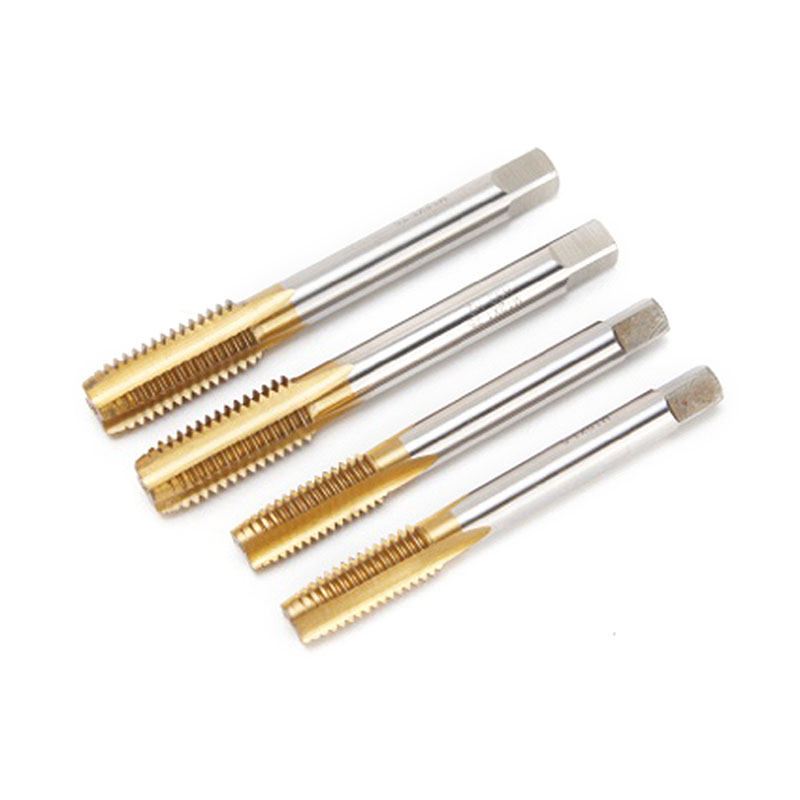
The Core Design Difference
| Feature | Spiral Point Tap | Straight Flute Tap |
|---|---|---|
| Chip Direction | Pushed forward (ahead of the tap) | Lifted upward (out of the hole) |
| Flute Geometry | Straight flutes with angled point | Straight flutes with chamfered point |
| Primary Application | Through-holes | Blind holes |
| Coolant Flow | Less dependent on internal coolant | Benefits from flood or through-coolant |
| Breakage Risk | Lower in ductile materials | Higher in stringy chips |
When to Prioritize a Spiral Point Tap
1. Through-Hole Threading
The Spiral Point Tap is engineered for through-holes where the tap exits the bottom of the workpiece. Its angled point forces chips forward, eliminating chip packing at the bottom. This design reduces friction and torque by 15–20% compared to straight flute taps in identical conditions.
2. High-Speed CNC Production
Because chips evacuate forward, there is no need for reversing the spindle to break chips. This allows continuous tapping cycles with shorter cycle times. NERES offers Spiral Point Tap grades with TiN and TiCN coatings that sustain surface speeds up to 30% higher than uncoated straight flute alternatives.
3. Ductile and Gummy Materials
Materials like low-carbon steel, aluminum alloys, and copper produce long, stringy chips. A straight flute tap often wraps these chips around the tool, leading to seizure. The Spiral Point Tap shears and propels chips forward, preventing re-cutting and prolonging tool life significantly.
4. Reduced Tapping Torque
The forward chip flow lowers the effective cutting force on the flanks. This makes the Spiral Point Tap ideal for older machining centers with limited spindle torque or for manual tapping operations where operator fatigue is a concern.
When a Straight Flute Tap Is Still Better
| Condition | Recommended Tool |
|---|---|
| Blind holes with less than 3× diameter depth | Straight flute tap (with chip clearance) |
| Brittle materials (cast iron, hard bronze) | Straight flute tap (produces powder chips) |
| Interrupted cuts or thin-walled parts | Straight flute tap (less axial thrust) |
| Manual hand tapping in repair work | Straight flute tap (better feedback feel) |
Practical Selection Flowchart (Simplified)
-
Is the hole a through-hole? → Yes → Spiral Point Tap (first choice)
-
Is the hole blind with depth > 2.5× diameter? → Use spiral flute tap, not straight
-
Is chip material stringy (Al, Cu, soft steel)? → Spiral Point Tap strongly preferred
-
Is machine torque limited (< 50 Nm)? → Spiral Point Tap reduces load
3 Frequently Asked Questions About Spiral Point Tap
FAQ 1: Can I use a Spiral Point Tap in a blind hole if I modify the tapping cycle?
Answer: Technically yes, but it is not recommended. A Spiral Point Tap pushes chips forward, and in a blind hole, those chips accumulate at the bottom, exerting excessive pressure on the tap’s tip. This drastically increases breakage risk—especially in holes deeper than 2× diameter. To safely use a Spiral Point Tap in a blind hole, you would need to leave at least 4–5 full threads of clearance at the bottom and use a peck-tapping cycle with frequent chip clearing. However, even then, a spiral flute tap remains the safer, more reliable choice for blind-hole applications. NERES engineers typically advise customers to reserve the Spiral Point Tap exclusively for through-holes or open-bottom holes to avoid costly tool failures.
FAQ 2: How does coating type affect the performance of a Spiral Point Tap in stainless steel?
Answer: Coating plays a critical role. In stainless steel (especially 304 or 316), work hardening and high friction are the main failure modes. A Spiral Point Tap with TiAlN or AlCrN coating significantly outperforms uncoated or TiN-coated versions because these coatings offer high hot hardness and low thermal conductivity, reducing built-up edge. At NERES, we recommend our AlCrN-coated Spiral Point Tap for austenitic stainless steels, as it reduces cutting temperature by roughly 100°C and extends tool life by 40–60% compared to TiN. For duplex stainless steels, we suggest a multilayer coating with MoS₂ top layer to further reduce friction. Always match the coating to the specific stainless steel grade—generic coatings often underperform in high-silicon or high-molybdenum variants.
FAQ 3: What is the maximum tapping speed I can run with a Spiral Point Tap in aluminum alloy (6061)?
Answer: In 6061 aluminum, a high-quality Spiral Point Tap with polished flutes and a ZrN coating can run at 40–60 m/min surface speed in rigid CNC tapping. This translates to approximately 2,500–3,800 RPM for an M10 tap. However, the limiting factor is not the tap itself but the machine’s synchronous feed accuracy and coolant pressure. NERES has validated our Spiral Point Tap series at 70 m/min in 6061-T6 with through-spindle coolant (at 70 bar) without premature wear. For lower-end machines without rigid tapping, we advise reducing speed to 25–35 m/min and using a floating tap holder to compensate for feed mismatches. Always start at 50% of the maximum recommended speed and increase in 10% increments while monitoring torque and thread finish—this ensures safe process optimization for your specific setup.
Summary Decision Table
| Your Workshop Condition | Recommended Tool | Why? |
|---|---|---|
| Through-hole, soft steel, high volume | Spiral Point Tap (NERES TiCN-coated) | Fast cycle, low torque, no chip jamming |
| Blind hole, cast iron, short runs | Straight flute tap | Powder chips fall easily, no forward thrust issue |
| Through-hole, stainless, rigid CNC | Spiral Point Tap (NERES AlCrN-coated) | Heat resistance, chip control, longer life |
| Manual tapping, any hole | Straight flute tap | Better tactile control and chip visibility |
Final Professional Verdict
Choose a Spiral Point Tap whenever the hole exits the workpiece, the material produces continuous chips, and your machine can handle moderate feed rates. Avoid it in shallow blind holes, brittle materials, or when manual tapping is required. Investing in the correct tap geometry—not just the cheapest option—saves machining hours, reduces scrap, and improves thread consistency across batches. NERES manufactures over 200 variants of Spiral Point Tap with custom coatings, point angles, and chamfer lengths to match specific material-tool-machine combinations.
Contact us today for a free tapping process audit—our NERES application engineers will analyze your hole types, materials, and machine capabilities to recommend the optimal Spiral Point Tap grade and speed/feed sheet tailored to your shop floor. Reach out via our website or email [email protected], and we will respond within 24 hours with technical data and sample pricing. Let us help you tap smarter, not harder.