

What Should You Consider When Comparing High-Flow Air Blow Guns
2026-03-02
Selecting the right High-Flow Air Blow Gun is critical for optimizing efficiency and safety in industrial environments. When comparing these tools, understanding the technical specifications and design features ensures you choose a model that meets your operational needs. WYMA offers a range of pneumatic solutions designed to deliver superior performance, making it essential to evaluate key factors before making a purchase.
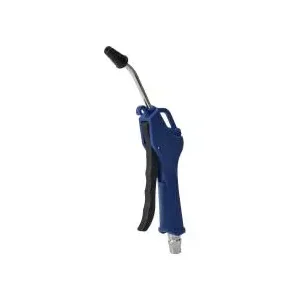
Key Factors to Evaluate
When comparing different models, focus on these technical aspects to ensure you select the most effective Air Blow Gun for your application.
Air Flow and Pressure
The primary function of a High-Flow Air Blow Gun is to deliver a large volume of air efficiently.
-
Cubic Feet per Minute (CFM): This measures the volume of air flow. A higher CFM rating means more powerful cleaning or drying capabilities.
-
Pressure (PSI): Ensure the gun can handle your system's operating pressure. WYMA high-flow models are engineered to maintain consistent pressure even at high output levels.
Nozzle Design and Safety
The nozzle dictates the air pattern and safety compliance.
-
Venturi Nozzles: These are standard for high-flow guns. They entrain surrounding air, amplifying the air stream while reducing compressed air consumption.
-
Tip Guards: Look for nozzles with integrated safety tips or guards to prevent direct skin contact, a standard feature on WYMA Air Blow Guns.
Material and Durability
The construction material determines the tool's lifespan in harsh environments.
-
Zinc Alloy: Offers a robust, durable body suitable for heavy industrial use.
-
Stainless Steel: Essential for wash-down environments or applications requiring corrosion resistance.
-
Composite Materials: Provide a lightweight option with good chemical resistance.
Comparative Analysis of Nozzle Types
To illustrate the differences, here is a comparison of common nozzle types found on high-flow models:
| Nozzle Type | Air Amplification Ratio | Best Application | Safety Feature |
|---|---|---|---|
| Single Hole | 1:1 | Precision blowing | High risk, requires guard |
| Multi-Jet | 3:1 | General drying | Reduces dead-end pressure |
| Venturi (Focused) | 5:1 | Removing heavy debris | Low noise, OSHA compliant |
Choosing a WYMA model with a Venturi-style nozzle ensures you maximize efficiency while adhering to safety standards.
Ergonomics and User Comfort
A High-Flow Air Blow Gun is often used for extended periods. Ergonomic design reduces operator fatigue.
-
Grip: Look for rubberized or contoured handles.
-
Activation: Consider lever-style vs. push-button triggers. Lever styles often provide better flow control and are easier to hold for longer tasks.
-
Weight: A well-balanced, lightweight design, like those from WYMA, improves maneuverability.
Frequently Asked Questions (FAQ)
What makes an Air Blow Gun "High-Flow"?
A High-Flow Air Blow Gun is designed with larger internal air passages and specialized nozzles that allow for a greater volume of air (measured in CFM) to pass through compared to standard models. This is typically achieved through advanced venturi nozzle designs that not only pass compressed air but also draw in ambient air from the surroundings, creating a concentrated, high-volume stream ideal for clearing large areas of debris or drying components rapidly.
How does a High-Flow Air Blow Gun impact compressed air costs?
While it may seem counterintuitive, a well-designed High-Flow Air Blow Gun can actually reduce air consumption. Models equipped with efficient venturi nozzles amplify the output air flow using ambient air, meaning they achieve high performance with less compressed air from your system. This efficiency, a hallmark of WYMA engineering, can lead to significant energy savings over time compared to using an open pipe or a poorly designed nozzle that wastes compressed air.
Are there specific safety standards for High-Flow Air Blow Guns?
Yes, safety standards are critical, particularly OSHA regulation 29 CFR 1910.242(b) in the United States, which requires that compressed air used for cleaning be reduced to less than 30 PSI if dead-ended. High-Flow Air Blow Guns comply with this by using nozzles with pressure relief ports or vent holes. If the nozzle tip becomes blocked, these ports safely relieve the pressure, preventing it from building up to hazardous levels. Always verify that the Air Blow Gun you choose explicitly states compliance with relevant safety standards.
Conclusion
Choosing the right High-Flow Air Blow Gun requires careful consideration of air flow, nozzle technology, material durability, and safety compliance. By focusing on these factors, you ensure a tool that enhances productivity and protects your team. WYMA is committed to providing high-quality pneumatic tools that meet these rigorous demands.
For expert advice on selecting the perfect model for your specific application or to discuss your bulk requirements, please contact us today.