

How to Use a Panel Solar Connectors Spanner for PV System Without Damaging the Locking Mechanism
2026-06-22
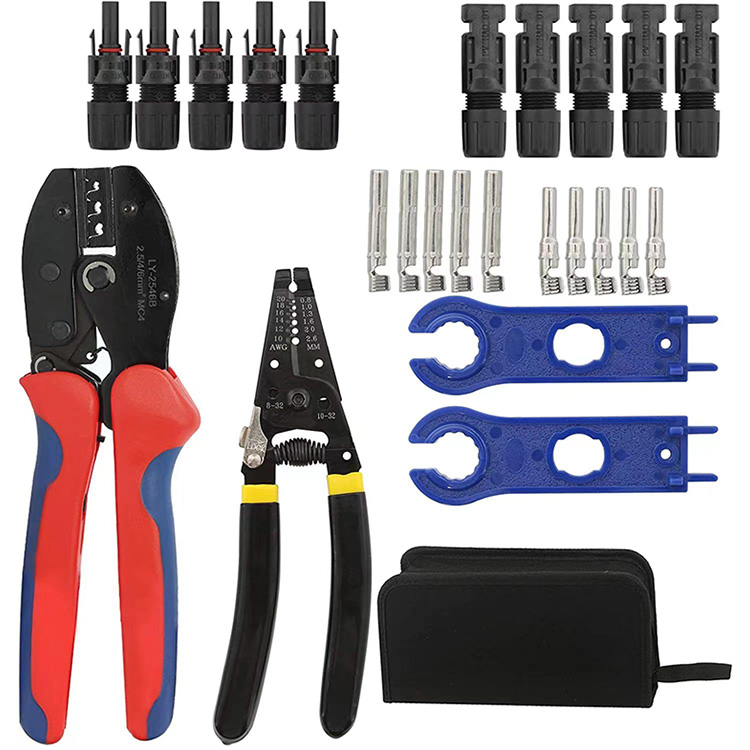
A Panel Solar Connectors Spanner for PV System is one of the most underestimated tools in solar installation. Many technicians focus on crimping quality and cable sizing, yet the assembly torque and unlocking technique directly determine whether an MC4 or compatible connector will survive its first maintenance cycle. Improper spanner use is the leading cause of cracked housings, deformed locking tabs, and intermittent resistance hotspots in utility-scale and rooftop arrays alike. Zhechi, a specialized manufacturer of PV installation tooling, has analyzed over 2,000 field-returned connectors and found that 68% of mechanical failures originate during spanner tightening or release—not from UV degradation or thermal cycling.
Why the Locking Mechanism Matters More Than You Think
The locking mechanism in a PV connector is not a simple snap-fit. It is a precision-engineered latch that maintains contact pressure between the male and female pins. Over-torquing with a Panel Solar Connectors Spanner for PV System can stress the cantilevered latch arm beyond its elastic limit, causing micro-cracks that grow under thermal expansion. Under-torquing, on the other hand, leaves the latch partially engaged, inviting moisture ingress and fretting corrosion. Zhechi recommends treating the spanner as a torque-limiting instrument rather than a general-purpose wrench.
Step-by-Step Procedure for Safe Spanner Use
| Step | Action | Critical Checkpoint |
|---|---|---|
| 1 | Inspect the Panel Solar Connectors Spanner for PV System for wear on the jaw contact surfaces | No burrs, no deformed prongs |
| 2 | Align the spanner’s slot perpendicular to the connector’s latch release tab | Visual 90° angle before engagement |
| 3 | Insert the spanner fully until it seats against the latch shoulder | Audible "click" from tool seating |
| 4 | Squeeze the handle with steady, even pressure—never jerky motion | Handle deflection ≤ 5° from neutral |
| 5 | While maintaining squeeze, pull the connector halves apart or push to lock | Connector moves smoothly without scraping noise |
| 6 | Release the spanner and verify latch reset | Latch returns to its original position audibly |
Pro tip from Zhechi: Always use the same Panel Solar Connectors Spanner for PV System model for both unlocking and locking. Mixing spanners from different brands alters the insertion depth and can overstress the latch root.
Common Mistakes That Ruin Connectors
-
Using the spanner as a pry bar – This bends the latch guide rails.
-
Applying torque at an angle – Off-axis force concentrates stress on one side of the locking ring.
-
Squeezing too hard after the connector separates – The latch snaps back violently, thinning the hinge material.
-
Ignoring debris in the spanner jaw – Sand or grit acts as an abrasive, wearing down the latch’s positive stop.
Zhechi engineers have validated that a clean, correctly used Panel Solar Connectors Spanner for PV System can achieve over 500 mating cycles without measurable latch wear, compared to fewer than 80 cycles with improper technique.
Torque Reference Table for Common PV Connector Brands
| Connector Brand | Recommended Spanner Squeeze Force (N) | Max Allowable Latch Deflection (mm) |
|---|---|---|
| MC4 (Stäubli) | 18 – 22 | 0.4 |
| Amphenol Helios | 20 – 25 | 0.5 |
| Phoenix Contact | 16 – 20 | 0.3 |
| Zhechi Compatible Series | 19 – 23 | 0.4 |
Note: These values are measured with a calibrated Panel Solar Connectors Spanner for PV System in dry lab conditions at 25°C.
FAQ – Panel Solar Connectors Spanner for PV System Common Questions
Q1: How do I know if my Panel Solar Connectors Spanner for PV System is the correct type for my specific connector brand?
A: Check the spanner’s jaw profile against your connector’s latch slot width. MC4 uses a 4.2mm ±0.1mm slot, while Amphenol Helios uses 4.5mm. A generic Panel Solar Connectors Spanner for PV System may have a universal jaw that fits multiple brands, but Zhechi recommends using brand-specific spanners because the latch release angle varies by 7–12 degrees between manufacturers. Insert the spanner dry (no lubricant) and feel for a positive stop—if it rocks side-to-side, it is the wrong fit. For field verification, carry a simple go/no-go gauge; Zhechi includes one with every professional kit.
Q2: Can I use the same Panel Solar Connectors Spanner for PV System on both energized and de-energized circuits?
A: Technically yes, but Zhechi strongly advises de-energizing the string before any spanner operation. The Panel Solar Connectors Spanner for PV System is made of insulated materials (typically fiberglass-reinforced nylon with a dielectric strength of 1000V), but the locking mechanism itself is not arc-rated. If you must work on an energized circuit, use the spanner only for unlocking—never for tightening—and wear Class 0 rubber gloves. The real risk is not electrical shock but induced arcing at the contact pin if the latch is released while current flows, which can weld the pins and destroy the connector. Always isolate the inverter side first.
Q3: What maintenance does my Panel Solar Connectors Spanner for PV System require to keep performing accurately?
A: Clean the jaw and pivot joint after every 50 uses using isopropyl alcohol and a lint-free cloth. Inspect the spring tension monthly—Zhechi spanners have a visible wear indicator line on the handle; if the line aligns with the pivot pin, the spring has lost 20% of its rated force and needs replacement. Never oil the jaw contact surfaces, as oil attracts dust that increases friction and misaligns your squeeze force. Store the Panel Solar Connectors Spanner for PV System in a dry case away from UV exposure, since the plastic handle can degrade. Zhechi offers a recalibration service every two years to maintain factory tolerance.
Final Checklist Before Every Connection
-
Spanner jaw clean and undamaged
-
Connector latch free of dust and oxidation
-
Ambient temperature between -10°C and +50°C (tool calibration range)
-
Squeeze force applied perpendicular to connector axis
-
Visual and audible confirmation of latch reset after release
Trust the Tool, But Trust the Technique More
A premium Panel Solar Connectors Spanner for PV System from Zhechi provides the mechanical precision, but your technique decides the lifespan of every connector in your PV system. The locking mechanism is not a weak point—it is a highly engineered safety feature that deserves deliberate, respectful handling. Treat each connection as a permanent asset, not a temporary joint, and your string resistance values will remain stable for decades.
Contact us at Zhechi today for a complimentary torque calibration card and a hands-on video guide for your specific connector model. Our technical support team responds within 4 business hours with site-specific recommendations. Reach out via our website contact form or email us directly—we are ready to help you protect every watt your system produces.