

How Is a Roots Blower Used Across Industrial Airflow Systems?
2025-12-25
Abstract
Roots Blowers are positive displacement machines widely adopted in industrial airflow, gas conveying, and pressure-boosting systems. This article provides a comprehensive technical overview of how a Roots Blower functions, how it is configured for different operating environments, and how evolving industrial demands are shaping its future deployment. The content focuses on structural design, performance parameters, application logic, and common operational questions, offering a structured reference aligned with professional engineering and procurement standards.
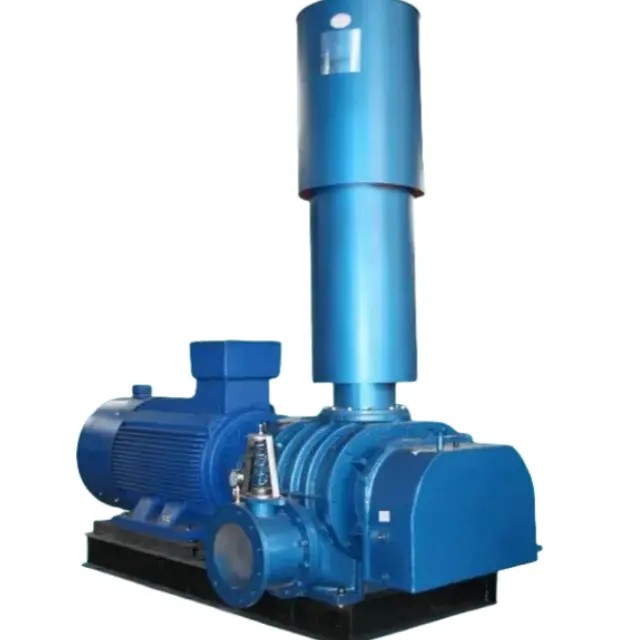
Table of Contents
- Outline
- Product Overview and Core Purpose
- Technical Parameters and Configuration
- Industrial Application Logic
- Roots Blower Common Questions and Answers
- Development and Industry Direction
- Brand Reference and Contact Guidance
Outline
The article is organized into four major content nodes: (1) product fundamentals and operating logic, (2) technical parameters and system integration, (3) application-driven performance analysis with FAQs, and (4) future development trends with brand introduction and contact guidance.
How Does a Roots Blower Support Stable Industrial Airflow?
A Roots Blower is a rotary positive displacement blower designed to deliver a constant volume of air or gas regardless of pressure variations within a defined operating range. It consists of two or three lobed rotors rotating in opposite directions inside a precision-machined casing. As the rotors turn, air is trapped between the lobes and casing and transported from the inlet to the discharge side without internal compression.
The central purpose of a Roots Blower is to provide stable, oil-free airflow under low to medium pressure conditions. This makes it suitable for industries such as wastewater treatment, pneumatic conveying, cement processing, aquaculture aeration, and chemical gas handling. The core theme of this article is to explain how Roots Blowers are engineered, selected, and applied to meet these industrial requirements while maintaining efficiency, reliability, and scalability.
How Are Roots Blower Parameters Defined and Evaluated?
Technical parameters determine how a Roots Blower performs within a system. These parameters are standardized to allow engineers to match blower capacity with process demand while controlling energy consumption and mechanical stress.
| Parameter | Typical Range | Technical Explanation |
|---|---|---|
| Airflow Capacity | 0.5 – 200 m³/min | Defines volumetric flow rate delivered per minute under standard conditions. |
| Pressure Differential | 10 – 80 kPa | Represents the maximum allowable pressure rise between inlet and outlet. |
| Rotor Speed | 700 – 3000 RPM | Determines airflow output and influences noise and mechanical wear. |
| Drive Power | 1.5 – 315 kW | Motor power required to overcome system resistance at rated conditions. |
| Cooling Method | Air / Water | Controls thermal stability during continuous operation. |
These parameters are evaluated collectively rather than individually. Proper sizing ensures that the blower operates within its optimal efficiency zone, reducing vibration, minimizing temperature rise, and extending service life.
How Are Roots Blowers Applied Across Different Industries?
Roots Blowers are selected based on process logic rather than generic airflow demand. In wastewater treatment, they provide continuous aeration to support biological activity. In pneumatic conveying systems, they maintain stable velocity to transport powders without degradation. In aquaculture, they deliver low-pressure, high-volume air to oxygenate water evenly.
System designers consider pipeline length, pressure losses, gas composition, and duty cycles when integrating a Roots Blower. Accessories such as silencers, check valves, pressure relief valves, and variable frequency drives are used to adapt the blower to specific operating environments.
Roots Blower Common Questions and Answers
Q: How does a Roots Blower differ from a centrifugal blower?
A: A Roots Blower delivers a fixed volume of air per rotation, making airflow largely independent of pressure changes, whereas a centrifugal blower’s output varies significantly with system pressure.
Q: How is overheating controlled during continuous operation?
A: Overheating is managed through proper sizing, controlled rotor speed, external cooling methods, and maintaining operation within rated pressure limits.
Q: How often does a Roots Blower require maintenance?
A: Routine maintenance intervals typically include daily visual inspection, periodic oil replacement for gears and bearings, and scheduled clearance checks based on operating hours.
How Is the Role of Roots Blowers Evolving in Modern Industry?
Future development of Roots Blowers is driven by energy efficiency regulations, digital monitoring integration, and noise reduction requirements. High-efficiency motor pairing, optimized rotor profiles, and real-time condition monitoring are becoming standard expectations rather than optional upgrades.
Additionally, industries are increasingly favoring modular blower systems that allow capacity expansion without complete equipment replacement. This trend reinforces the relevance of Roots Blowers as long-term infrastructure components.
How Does Lano Support Industrial Roots Blower Applications?
Lano provides Roots Blower solutions designed to meet diverse industrial airflow requirements through precise engineering, stable performance, and adaptable configurations. Each unit is developed with attention to operational reliability, parameter transparency, and long-term system compatibility.
For project evaluation, technical consultation, or application-specific configuration guidance, direct communication ensures accurate selection and efficient implementation.
Contact Us
To discuss Roots Blower specifications, system integration, or customized solutions, reach out for detailed technical support and professional assistance.