

How Does Speaker Grille Impact Audio Performance and Protection?
2026-06-30
Abstract: Speaker grilles are a critical yet often underestimated component in audio system design. They serve as a protective barrier while influencing acoustic transparency, aesthetic value, and durability of speakers. This article explores how speaker grilles function, their materials, design considerations, performance trade-offs, and how businesses like YanMing provide precision-engineered solutions for industrial and commercial applications. Whether you are an audio equipment manufacturer, OEM supplier, or system integrator, understanding speaker grille design helps you optimize both sound quality and product longevity.
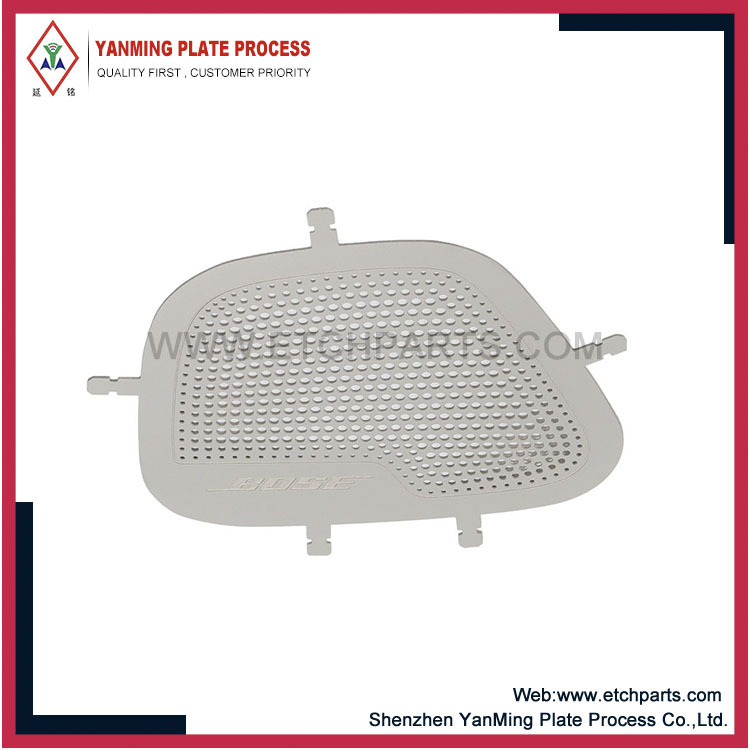
Table of Contents
- 1. What Is a Speaker Grille and Why It Matters
- 2. Key Functions of Speaker Grilles
- 3. Materials Used in Speaker Grille Manufacturing
- 4. Acoustic Impact and Design Optimization
- 5. Comparison of Speaker Grille Types
- 6. Common Industry Applications
- 7. Manufacturing Considerations and Quality Factors
- 8. Frequently Asked Questions (FAQ)
- 9. Conclusion and Industrial Insights
1. What Is a Speaker Grille and Why It Matters
A speaker grille is a protective and decorative cover placed over a speaker driver. Its primary purpose is to shield internal components from dust, impact, and environmental damage while maintaining sound clarity. Although it may appear to be a simple mesh or perforated plate, its engineering is highly precise. Poorly designed speaker grilles can cause sound distortion, frequency attenuation, and airflow obstruction.
In professional audio systems, automotive sound systems, public address systems, and consumer electronics, speaker grilles are essential for balancing durability with acoustic transparency.
2. Key Functions of Speaker Grilles
Speaker grilles serve multiple functional roles beyond protection. Their design must achieve a balance between mechanical strength and minimal acoustic interference.
- Protection: Prevents dust, debris, and physical damage to delicate speaker cones.
- Acoustic Transparency: Allows sound waves to pass with minimal distortion.
- Aesthetic Integration: Enhances visual appeal and brand identity of audio products.
- Safety: Prevents accidental contact with moving speaker components.
Manufacturers like YanMing engineer speaker grilles to meet strict tolerance standards to ensure both protection and performance stability in demanding environments.
3. Materials Used in Speaker Grille Manufacturing
Material selection directly influences durability, acoustic performance, and cost efficiency. Different applications require different materials.
| Material | Characteristics | Advantages | Typical Applications |
|---|---|---|---|
| Steel (Perforated) | High strength, rigid structure | Excellent protection, long lifespan | Automotive, industrial speakers |
| Aluminum | Lightweight, corrosion-resistant | Good acoustic transparency, modern appearance | Consumer electronics, premium audio |
| Plastic (ABS/PC) | Flexible, cost-effective | Easy molding, design versatility | Home audio systems |
| Fabric Mesh | Soft texture, high permeability | Minimal acoustic interference | Hi-fi systems, studio monitors |
Each material affects sound transmission differently. For instance, metal grilles may slightly reflect high frequencies, while fabric grilles offer superior acoustic transparency but reduced physical protection.
4. Acoustic Impact and Design Optimization
The most critical challenge in speaker grille design is minimizing acoustic interference. Even small changes in hole size, pattern density, or material thickness can affect sound quality.
Key acoustic factors include:
- Perforation Density: Higher open-area ratios reduce sound obstruction.
- Hole Geometry: Circular, hexagonal, and slot patterns each influence diffraction differently.
- Thickness Control: Thicker materials may dampen high frequencies.
- Surface Treatment: Coatings can slightly alter resonance behavior.
Engineers often simulate airflow and acoustic wave propagation before finalizing designs. YanMing applies precision CNC and laser cutting technologies to ensure uniform perforation patterns that maintain acoustic consistency.
5. Comparison of Speaker Grille Types
| Type | Acoustic Performance | Durability | Cost Level | Best Use Case |
|---|---|---|---|---|
| Metal Perforated Grille | Medium | High | Medium | Automotive and industrial systems |
| Fabric Grille | High | Low | Low | Indoor audio systems |
| Plastic Molded Grille | Medium | Medium | Low | Consumer electronics |
| Hybrid Composite Grille | High | High | High | Premium audio and professional systems |
Hybrid solutions are increasingly popular because they combine acoustic transparency with mechanical strength, especially in environments where both durability and sound fidelity are required.
6. Common Industry Applications
Speaker grilles are widely used across multiple industries, each with unique performance requirements.
- Automotive Industry: Door panels, dashboards, and rear entertainment systems.
- Home Audio: Speakers, soundbars, and home theater systems.
- Commercial Audio: Public address systems in malls, airports, and stadiums.
- Professional Audio: Studio monitors and stage equipment.
In each application, the grille must be optimized for environmental conditions such as humidity, vibration, and temperature fluctuations.
7. Manufacturing Considerations and Quality Factors
High-quality speaker grille production requires strict process control and engineering precision. The following factors are essential:
- Precision perforation alignment to avoid acoustic distortion
- Surface finishing to prevent corrosion and improve aesthetics
- Structural reinforcement for impact resistance
- Consistency in mass production batches
YanMing specializes in manufacturing custom speaker grille solutions using advanced stamping, laser cutting, and CNC machining technologies. This ensures each unit meets strict dimensional accuracy and acoustic requirements.
8. Frequently Asked Questions (FAQ)
Q1: Does a speaker grille reduce sound quality?
A well-designed speaker grille has minimal impact on sound quality. However, poorly designed grilles with low open-area ratios can attenuate high frequencies and reduce clarity.
Q2: What is the best material for speaker grilles?
There is no universal best material. Metal is preferred for durability, fabric for acoustic transparency, and plastic for cost efficiency. The choice depends on application requirements.
Q3: Can speaker grilles be customized?
Yes. Customization includes shape, perforation pattern, color, thickness, and mounting structure. YanMing provides tailored manufacturing solutions for OEM clients.
Q4: How do I maintain speaker grilles?
Regular cleaning with dry cloth or compressed air is recommended. Avoid harsh chemicals that may damage coatings or fabric materials.
9. Conclusion and Industrial Insights
Speaker grilles are not merely protective accessories—they are engineered components that directly influence audio performance, durability, and product design integrity. From material selection to perforation geometry, every detail contributes to the final acoustic outcome.
As demand for high-performance audio systems continues to grow, manufacturers must adopt precision engineering approaches to meet evolving expectations. YanMing continues to deliver advanced speaker grille solutions that balance acoustic transparency with industrial-grade protection, supporting global clients across multiple industries.
For customized solutions, technical consultation, or bulk production requirements, YanMing is ready to support your project needs.
Contact us: If you are looking for high-quality speaker grille manufacturing services, design customization, or OEM support, reach out to YanMing today to discuss your requirements and get a tailored solution for your business.