

How Does Ratchet Strap Work?
2026-06-24
Abstract
Ratchet straps are one of the most widely used load-securing tools across logistics, transportation, construction, and personal cargo handling. Despite their simplicity, improper understanding of how they function often leads to load instability, equipment damage, or safety hazards. This article provides a comprehensive breakdown of ratchet strap mechanisms, usage principles, structural components, and real-world applications. It is designed to help users—from first-time buyers to professional transport operators—understand how ratchet straps work, how to use them correctly, and how to avoid common mistakes that compromise safety and efficiency. By exploring both technical structure and practical application, this guide aims to support safer load securing practices and better equipment selection decisions.
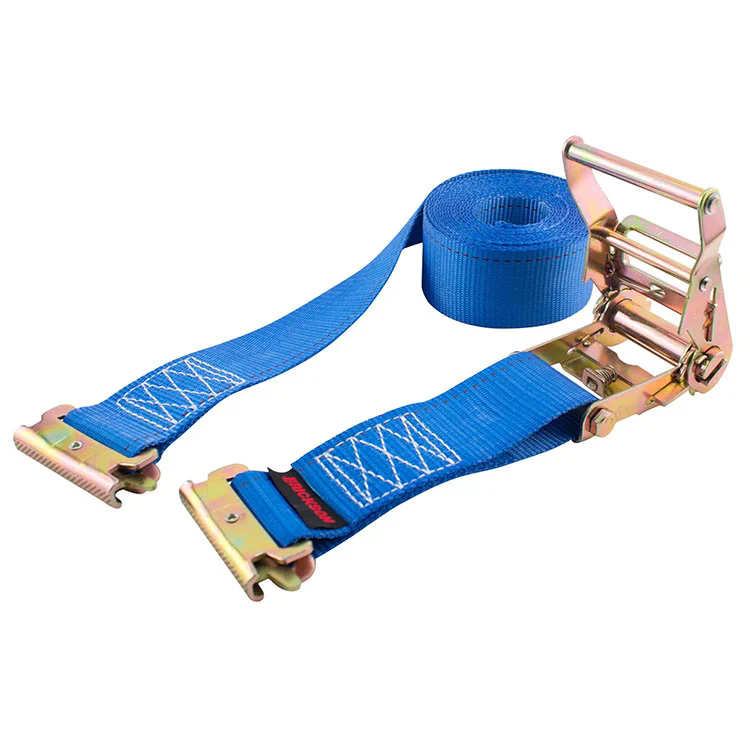
Table of Contents
- Abstract
- Introduction
- What is a Ratchet Strap?
- How Ratchet Straps Work
- Key Features and Benefits
- Applications Across Industries
- Step-by-Step Usage Guide
- Ratchet Strap vs Other Tie-Down Tools
- Common Mistakes and Safety Tips
- FAQ
- Conclusion
Introduction
Securing cargo during transportation is a critical requirement in nearly every industry that moves goods. Whether transporting machinery, building materials, motorcycles, or household items, stability during transit directly impacts safety and operational efficiency. Ratchet straps have become the industry standard because they provide high tension control, durability, and reliability under heavy loads. However, many users rely on them without fully understanding their mechanical principle, which can lead to incorrect usage.
This article breaks down the working principle of ratchet straps in a structured way, ensuring that users understand not just how to operate them, but why they work the way they do.
What is a Ratchet Strap?
A ratchet strap is a load-securing device made from high-tensile polyester webbing and a metal ratcheting mechanism. It is designed to tighten and hold cargo firmly in place during transport. The system typically includes three main components:
- Webbing: A strong, flexible polyester strap resistant to stretching and abrasion.
- Ratchet mechanism: A gear-and-handle system that applies controlled tension.
- Hooks or end fittings: Used to anchor the strap to fixed points.
Unlike ropes or bungee cords, ratchet straps allow incremental tensioning, ensuring that the load remains tightly secured without loosening during movement.
How Ratchet Straps Work
The working principle of a ratchet strap is based on mechanical advantage. When the user operates the handle, a pawl engages with a toothed gear inside the ratchet assembly. Each motion tightens the strap incrementally, increasing tension without requiring excessive manual force.
The process can be summarized in three phases:
- Threading: The webbing is inserted through the ratchet spindle.
- Tensioning: The handle is pumped to tighten the strap step by step.
- Locking: The mechanism locks in place, preventing reverse movement.
This design ensures that once tension is applied, it remains stable even under vibration, acceleration, or sudden movement—common conditions in transport environments.
Key Features and Benefits
Ratchet straps offer several advantages that make them superior to traditional securing methods:
- High load-bearing capacity suitable for industrial use
- Controlled tensioning for precision load stability
- Resistance to environmental factors such as moisture and UV exposure
- Reusable and cost-effective over long-term use
- Wide compatibility with vehicles, trailers, and cargo systems
These benefits make ratchet straps a preferred choice in both commercial logistics and personal transportation scenarios.
Applications Across Industries
Ratchet straps are used in multiple industries where load security is essential. Common applications include:
- Logistics and freight transport: Securing pallets and container goods
- Construction: Fastening pipes, steel beams, and heavy tools
- Automotive transport: Stabilizing vehicles on trailers
- Outdoor and recreation: Securing camping gear, bikes, and kayaks
Their versatility makes them a universal tool for both commercial and private users.
Step-by-Step Usage Guide
To ensure proper and safe use, follow this structured procedure:
- Inspect the strap for wear, cuts, or damage before use.
- Attach hooks securely to stable anchor points.
- Thread the webbing through the ratchet spindle.
- Pump the ratchet handle until the strap is firmly tightened.
- Lock the handle to secure the tension.
- After transport, release tension slowly and carefully.
Proper handling ensures both safety and longevity of the equipment.
Ratchet Strap vs Other Tie-Down Tools
| Feature | Ratchet Strap | Rope | Bungee Cord |
|---|---|---|---|
| Tension Control | High precision | Low | Elastic and unstable |
| Load Capacity | Very high | Moderate | Low |
| Safety | High | Medium | Low |
| Reusability | Excellent | Moderate | Limited |
Common Mistakes and Safety Tips
Improper use of ratchet straps can significantly reduce their effectiveness. Common mistakes include over-tightening, using damaged webbing, and incorrect anchoring.
- Avoid exceeding the rated load capacity.
- Do not twist the webbing during tightening.
- Ensure hooks are fully engaged before tensioning.
- Store straps in a dry, clean environment after use.
Following these precautions reduces risk and extends product lifespan.
FAQ
Q: Can ratchet straps stretch over time?
A: High-quality polyester straps are designed to minimize stretching, maintaining consistent tension during use.
Q: Are ratchet straps reusable?
A: Yes, they are designed for repeated use as long as they are not damaged.
Q: How do I know if a strap is safe to use?
A: Inspect for fraying, cuts, rust on hardware, or deformation before each use.
Q: Can they be used for heavy industrial cargo?
A: Yes, depending on the rated load capacity specified by the manufacturer.
Conclusion
Understanding how ratchet straps work is essential for ensuring safe and efficient cargo transport. Their mechanical advantage system provides reliable tension control that far exceeds traditional securing methods. Whether used in logistics, construction, or personal transport, they remain one of the most dependable load-securing solutions available today.
For high-quality, durable, and professionally engineered solutions, Kingslings provides a wide range of ratchet strap systems designed for industrial and commercial applications.
For tailored solutions, bulk orders, or technical support, contact us at Kingslings today to get expert assistance and product recommendations suited to your operational needs.