

How Does an Acme Trapezoidal Screw Improve Industrial Motion Control Performance?
2026-08-31
Article Summary
An Acme Trapezoidal Screw is a key mechanical transmission component designed to convert rotary motion into reliable linear movement. Widely used in industrial machinery, automation systems, lifting devices, and precision equipment, this screw type provides excellent load capacity, durability, and self-locking capability. However, many engineers and equipment manufacturers face challenges such as excessive wear, insufficient positioning accuracy, corrosion problems, and unsuitable screw specifications during product selection.
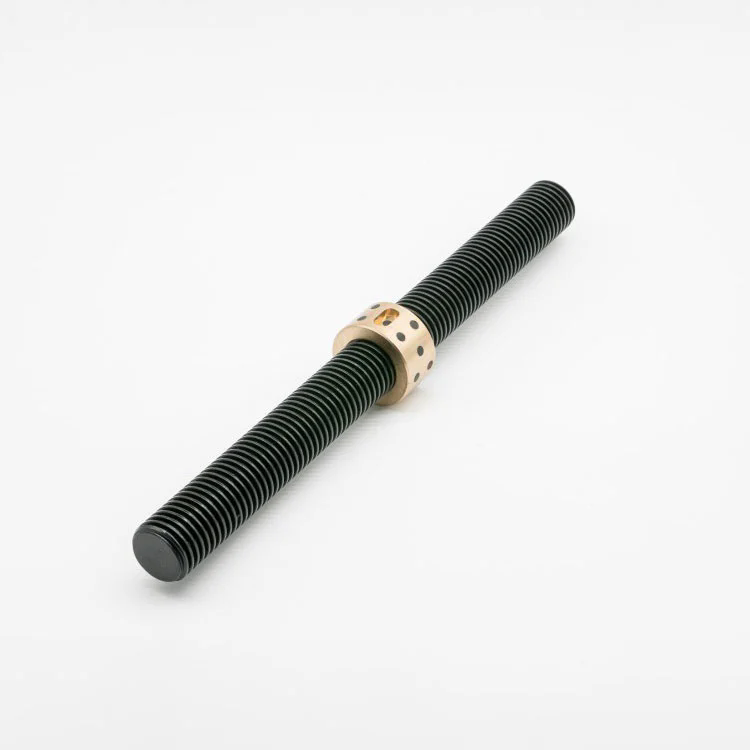
This article explains how an Acme Trapezoidal Screw works, why it is suitable for heavy-duty applications, how to select the correct specification, and how professional manufacturers such as Suzhou Maitu provide customized solutions for different industrial requirements.
Table of Contents
- 1. Introduction to Acme Trapezoidal Screw
- 2. How Does an Acme Trapezoidal Screw Work?
- 3. What Are the Main Features of Acme Trapezoidal Screw?
- 4. How to Choose the Right Acme Trapezoidal Screw?
- 5. Where Are Acme Trapezoidal Screws Used?
- 6. Acme Trapezoidal Screw vs Other Transmission Solutions
- 7. How to Extend the Service Life of Acme Trapezoidal Screw?
- 8. Frequently Asked Questions
Introduction to Acme Trapezoidal Screw
Modern industrial equipment requires motion transmission components that can provide stable operation, accurate positioning, and long-term reliability. Among various linear motion solutions, the Acme Trapezoidal Screw has become a preferred choice for applications requiring strong mechanical strength and dependable performance.
Unlike high-efficiency ball screws that use rolling elements, Acme Trapezoidal Screws rely on sliding contact between the screw and nut. This structure creates a simpler design with fewer components, easier maintenance, and excellent resistance to impact loads.
The unique thread profile of an Acme screw features a 29-degree thread angle, which provides balanced load distribution and improved mechanical strength. This design reduces stress concentration at the thread root, allowing the screw to perform effectively in demanding working environments.
Suzhou Maitu specializes in manufacturing industrial screw solutions, including Acme Trapezoidal Screws, trapezoidal lead screws, and customized linear motion components. With professional production experience and engineering support, the company provides solutions based on different application requirements. :contentReference[oaicite:0]{index=0}
How Does an Acme Trapezoidal Screw Work?
The operating principle of an Acme Trapezoidal Screw is based on the conversion of rotational movement into linear displacement. When the screw rotates, the matching nut moves along the screw axis, creating controlled linear motion.
The thread design determines the relationship between torque input and linear output. A properly selected pitch allows the system to achieve the required speed, positioning accuracy, and load handling capability.
| Component | Function | Impact on Performance |
|---|---|---|
| Screw Shaft | Provides threaded transmission surface | Determines strength, durability, and accuracy |
| Acme Nut | Transfers rotary movement into linear movement | Affects friction, wear rate, and efficiency |
| Thread Profile | Controls load distribution | Improves stability under heavy loads |
| Surface Treatment | Protects against corrosion and wear | Extends operating life in harsh environments |
The combination of screw geometry, material selection, lubrication condition, and manufacturing precision directly affects the final performance of the transmission system.
What Are the Main Features of Acme Trapezoidal Screw?
Choosing the right transmission component requires understanding the advantages that directly solve real industrial problems. Acme Trapezoidal Screws offer several important benefits.
- High Load Capacity: The robust thread structure allows stable transmission under heavy mechanical loads.
- Self-Locking Capability: The sliding thread design helps prevent unwanted movement when power is removed, making it suitable for lifting and adjustment systems.
- Excellent Durability: Strong materials and optional surface treatments improve resistance against wear and environmental damage.
- Simple Maintenance: Compared with more complex transmission systems, Acme screws require fewer components and are easier to maintain.
- Flexible Customization: Diameter, pitch, lead, material, thread direction, and machining requirements can be adjusted according to equipment design.
| Feature | Customer Challenge Solved | Industrial Benefit |
|---|---|---|
| Strong Thread Structure | Frequent overload and mechanical stress | Reliable operation under demanding conditions |
| Self-Locking Function | Risk of unwanted movement | Improved safety in lifting applications |
| Surface Treatment Options | Corrosion and abrasion problems | Longer service lifetime |
| Customized Manufacturing | Difficulty matching equipment requirements | Better system compatibility |
How to Choose the Right Acme Trapezoidal Screw?
Selecting a suitable Acme Trapezoidal Screw requires careful consideration of operating conditions, mechanical requirements, and equipment design. Choosing an unsuitable screw size or material may lead to problems such as excessive friction, premature wear, inaccurate positioning, and unexpected downtime.
Engineers should evaluate several important factors before purchasing or designing a motion transmission system.
| Selection Factor | Important Consideration | Recommended Evaluation Method |
|---|---|---|
| Screw Diameter | Determines load capacity and bending resistance | Select according to applied force and installation structure |
| Pitch and Lead | Affects movement speed and positioning accuracy | Match the required travel distance and motion speed |
| Material Selection | Influences strength, wear resistance, and environment compatibility | Choose suitable steel, stainless steel, or customized materials |
| Lubrication Conditions | Impacts friction and service life | Consider working temperature and operating frequency |
| Working Environment | Determines corrosion and contamination resistance | Evaluate dust, moisture, chemicals, and temperature conditions |
For heavy-duty applications, engineers should prioritize load capacity and durability. For precision positioning systems, thread accuracy and manufacturing tolerance become more important. A professional supplier can help analyze application requirements and recommend a suitable screw configuration.
Where Are Acme Trapezoidal Screws Used?
Acme Trapezoidal Screws are widely used in industries where stable linear movement and reliable mechanical transmission are required. Their strong structure makes them suitable for both standard equipment and customized machinery.
- Industrial Automation Equipment: Used for positioning systems, adjustment mechanisms, and machine movement control.
- Lifting Systems: Applied in mechanical jacks, lifting platforms, and height adjustment devices because of their self-locking characteristics.
- CNC Machinery: Used in machines requiring controlled linear movement and cost-effective transmission solutions.
- Packaging Machinery: Helps achieve accurate adjustment and repeatable movement during production processes.
- Medical Equipment: Provides stable adjustment functions for specialized equipment structures.
- Testing Equipment: Supports controlled movement in measurement and inspection systems.
The versatility of Acme Trapezoidal Screws allows manufacturers to integrate them into different mechanical designs while maintaining reliable performance and simplified maintenance.
Acme Trapezoidal Screw vs Other Transmission Solutions
Different motion transmission systems have different advantages. Understanding the differences helps equipment designers choose the most suitable option.
| Comparison Item | Acme Trapezoidal Screw | Ball Screw | Standard Thread Screw |
|---|---|---|---|
| Load Capacity | High | High | Medium |
| Efficiency | Medium | Very High | Low |
| Maintenance Requirement | Simple | Higher due to precision components | Simple |
| Self-Locking Ability | Excellent | Limited | Moderate |
| Cost Performance | Excellent | Higher cost | Lower precision |
| Suitable Applications | Heavy loads, adjustment systems, automation equipment | High-speed precision machines | Basic fastening or low-load movement |
Although ball screws provide higher efficiency, Acme Trapezoidal Screws remain an ideal choice for applications where durability, load handling, and cost control are priorities.
How to Extend the Service Life of Acme Trapezoidal Screw?
Proper maintenance is essential for maximizing the performance and lifespan of an Acme Trapezoidal Screw. Even a high-quality screw system may experience reduced performance if lubrication, cleaning, and inspection are ignored.
- Apply Appropriate Lubrication: Regular lubrication reduces friction between the screw and nut, minimizing wear.
- Keep the Surface Clean: Remove dust, metal particles, and contaminants that may damage the thread surface.
- Perform Regular Inspection: Check for unusual noise, increased backlash, or visible thread damage.
- Avoid Overloading: Operating beyond the rated load capacity can accelerate deformation and shorten service life.
- Select Proper Installation Alignment: Correct installation prevents uneven stress and improves operating stability.
For industrial users, preventive maintenance is more effective than repairing damaged components after failure. A well-maintained Acme Trapezoidal Screw can provide stable performance for extended operating periods.
Why Choose Suzhou Maitu for Acme Trapezoidal Screw Solutions?
Suzhou Maitu focuses on providing reliable screw transmission products for industrial applications. The company understands that different machines require different mechanical characteristics, which is why customized solutions are available according to customer specifications.
From material selection and thread processing to surface treatment and dimensional customization, Suzhou Maitu supports customers in developing suitable Acme Trapezoidal Screw solutions for various working environments.
The company emphasizes manufacturing consistency, product reliability, and application-focused engineering support. Whether customers need standard components or customized screw assemblies, Suzhou Maitu can provide professional assistance to improve equipment performance and operational stability.
Frequently Asked Questions About Acme Trapezoidal Screw
Q1: What is an Acme Trapezoidal Screw mainly used for?
An Acme Trapezoidal Screw is mainly used for converting rotary motion into linear movement in industrial equipment. It is commonly applied in lifting systems, automation machinery, CNC equipment, adjustment mechanisms, and mechanical positioning systems.
Q2: What makes an Acme Trapezoidal Screw different from a ball screw?
The main difference is the transmission structure. Acme Trapezoidal Screws use sliding contact between the screw and nut, while ball screws use rolling elements. Acme screws provide better self-locking ability and simpler maintenance, while ball screws generally offer higher efficiency.
Q3: Can Acme Trapezoidal Screws be customized?
Yes. Depending on application requirements, manufacturers can customize diameter, length, pitch, lead, material, thread direction, accuracy grade, and surface treatment options.
Q4: How can I reduce wear on an Acme Trapezoidal Screw?
Regular lubrication, correct installation, proper load selection, and keeping the screw surface clean are effective ways to reduce wear and improve service life.
Q5: What industries commonly use Acme Trapezoidal Screws?
They are widely used in industrial automation, machinery manufacturing, lifting equipment, packaging machines, medical devices, testing systems, and customized mechanical equipment.
Conclusion
An Acme Trapezoidal Screw provides a practical and dependable solution for industrial motion transmission. With advantages including strong load capacity, self-locking performance, simple maintenance, and flexible customization, it continues to play an important role in modern mechanical systems.
Choosing the correct screw specification is essential for achieving stable operation and reducing maintenance costs. By working with an experienced manufacturer like Suzhou Maitu, customers can obtain suitable Acme Trapezoidal Screw solutions designed for their specific equipment requirements.
If you need reliable screw transmission components, customized specifications, or professional support for your mechanical projects, please contact us today. Suzhou Maitu is ready to provide high-quality Acme Trapezoidal Screw solutions and help improve your equipment performance.