Article Summary
In modern electrical systems, connection reliability, installation efficiency, and long-term safety are critical factors that determine equipment performance. A Spring Clamp Terminal Block provides a practical solution for secure wire connections without relying on traditional screw tightening methods. By using spring pressure technology, it ensures stable electrical contact, reduces maintenance requirements, and improves wiring efficiency in industrial control systems, automation equipment, power distribution applications, and many other electrical environments.
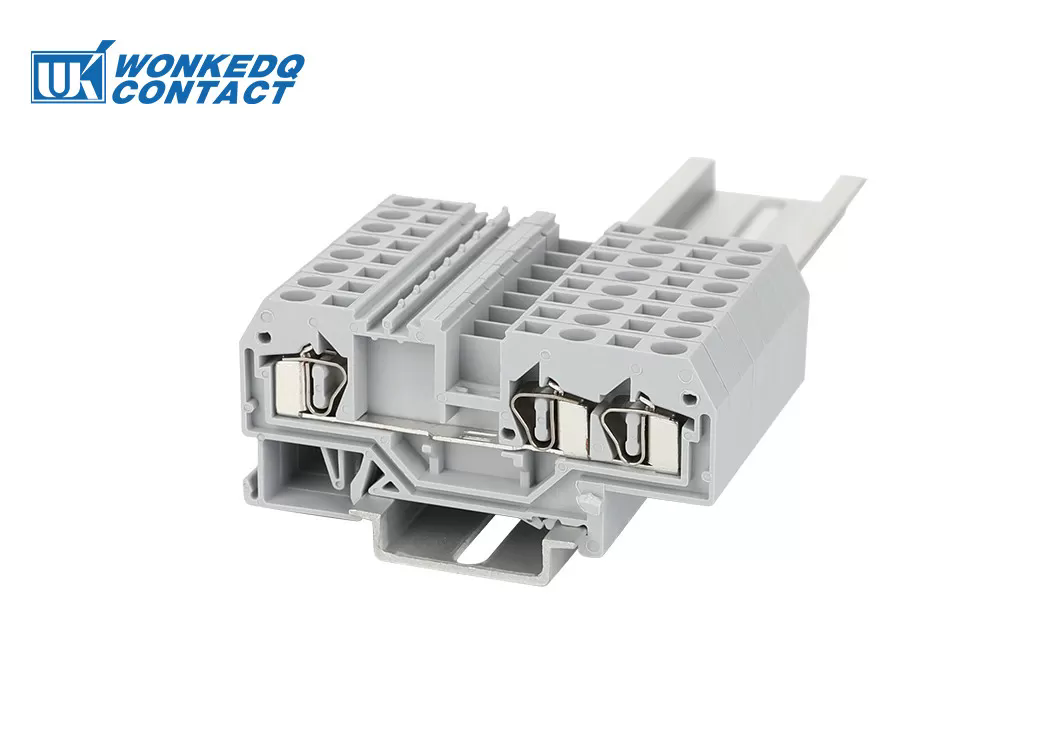
This article explains how a Spring Clamp Terminal Block works, why engineers choose this connection technology, what common wiring challenges it solves, and how businesses can select the right terminal block solution for their applications. With professional manufacturing experience, Wonke Electric CO.,Ltd. provides reliable terminal block products designed to meet the demands of modern electrical engineering.
What Is a Spring Clamp Terminal Block?
A Spring Clamp Terminal Block is an electrical connection component that uses a spring-based clamping mechanism to secure wires inside the terminal. Unlike traditional screw terminal blocks that require manual tightening, spring clamp designs use constant spring force to maintain reliable contact between the conductor and the conductive metal part.
The core structure usually includes a conductive current carrier, insulating housing, and spring clamp mechanism. When a wire is inserted into the terminal, the spring element applies continuous pressure to hold the conductor firmly in place. This design creates a stable electrical path while allowing faster installation and easier maintenance.
Spring Clamp Terminal Blocks are widely used because electrical systems often experience vibration, temperature changes, and mechanical stress. Conventional connections may gradually loosen under these conditions, while spring technology helps maintain consistent contact pressure over time.
How Does a Spring Clamp Terminal Block Work?
The operating principle of a Spring Clamp Terminal Block is based on elastic force. The internal spring component acts as a reliable mechanical connection point that presses the wire against the conductive element.
-
Wire Preparation: The insulation layer is removed from the wire end according to the required stripping length.
-
Clamp Opening: A screwdriver or operating button is used to open the spring mechanism when required.
-
Wire Insertion: The conductor is inserted into the terminal opening.
-
Automatic Clamping: Releasing the spring creates continuous pressure that locks the wire securely.
-
Stable Current Transmission: The conductive parts maintain a low-resistance electrical connection.
The biggest advantage of this mechanism is that the spring compensates for material expansion, contraction, and vibration. This ensures a more stable connection compared with fixed mechanical tightening methods.
What Electrical Problems Can Spring Clamp Terminal Blocks Solve?
Electrical failures are often caused by poor connections rather than component damage. Loose wiring, incorrect installation, and environmental stress can create safety risks and increase maintenance costs.
A Spring Clamp Terminal Block helps solve several common electrical connection problems:
-
Loose Wire Connections: Constant spring pressure prevents wires from becoming loose during vibration or operation.
-
Installation Errors: The simplified clamping process reduces the risk of improper tightening.
-
Maintenance Downtime: Faster wiring and inspection reduce equipment service time.
-
Temperature Fluctuation Issues: Spring compensation helps maintain stable contact performance.
-
Limited Installation Space: Compact designs support dense electrical layouts.
For industrial equipment manufacturers and system integrators, improving connection stability directly contributes to safer operation and lower lifecycle costs.
Why Choose Spring Clamp Technology for Electrical Connections?
Compared with conventional connection methods, Spring Clamp Terminal Blocks offer several practical benefits for modern electrical applications.
-
Faster Installation: The spring mechanism allows technicians to complete wiring operations more efficiently.
-
Reliable Vibration Resistance: The elastic clamping force maintains contact even in environments with mechanical movement.
-
Reduced Maintenance Requirements: No frequent retightening is normally required after installation.
-
Improved Safety: Stable connections reduce the possibility of overheating caused by loose contacts.
-
Flexible Wire Compatibility: Many spring clamp designs support different conductor types, including solid and stranded wires.
Wonke Electric CO.,Ltd. develops terminal block solutions that focus on electrical reliability, convenient installation, and long-term performance for different industrial applications.
Where Are Spring Clamp Terminal Blocks Used?
Spring Clamp Terminal Blocks are suitable for various industries where reliable electrical connections are required.
-
Industrial Automation: Used in PLC cabinets, control panels, and automated production systems.
-
Power Distribution: Applied in electrical cabinets and distribution equipment.
-
Rail Transportation: Suitable for applications requiring vibration-resistant connections.
-
Renewable Energy: Used in solar power systems and energy management equipment.
-
Building Control Systems: Applied in lighting control, HVAC systems, and smart building solutions.
-
Machine Manufacturing: Helps connect sensors, motors, and control components.
How to Select the Right Spring Clamp Terminal Block?
Choosing the correct terminal block requires consideration of electrical requirements, environmental conditions, and installation needs.
-
Rated Current and Voltage: Ensure the terminal block matches the electrical load requirements.
-
Wire Size Range: Select a model compatible with the conductor diameter used in the project.
-
Installation Method: Consider DIN rail mounting, PCB mounting, or customized solutions.
-
Environmental Conditions: Evaluate temperature, humidity, vibration, and chemical exposure.
-
Certification Requirements: Confirm compliance with applicable industry standards.
Professional suppliers can provide technical guidance to help customers choose the most suitable terminal block configuration for their equipment.
Spring Clamp Terminal Block vs Traditional Terminal Connections
|
Feature
|
Spring Clamp Terminal Block
|
Traditional Screw Terminal Block
|
|
Connection Method
|
Spring pressure clamping
|
Screw tightening
|
|
Installation Speed
|
Fast wiring process
|
Requires manual tightening
|
|
Vibration Resistance
|
Excellent due to constant pressure
|
May require retightening
|
|
Maintenance
|
Low maintenance requirement
|
Regular inspection may be needed
|
|
Operation Efficiency
|
Suitable for high-volume wiring
|
More time-consuming for large systems
|
Installation and Maintenance Tips
Proper installation ensures that Spring Clamp Terminal Blocks deliver maximum performance.
-
Strip the wire according to the recommended length.
-
Avoid inserting damaged or deformed conductors.
-
Confirm that the wire is fully inserted into the clamp area.
-
Check the connection position before powering the system.
-
Keep terminal areas clean and protected from contamination.
-
Perform regular inspections in extremely harsh environments.
Although spring clamp technology reduces maintenance requirements, professional installation practices remain important for achieving reliable electrical performance.
Frequently Asked Questions
1. What makes a Spring Clamp Terminal Block different from a screw terminal block?
A Spring Clamp Terminal Block uses spring pressure to hold wires securely, while a screw terminal block depends on manual screw tightening. Spring technology provides consistent pressure and better resistance to vibration.
2. Can Spring Clamp Terminal Blocks be used with stranded wires?
Yes. Many spring clamp designs support stranded wires, especially when properly prepared according to manufacturer instructions.
3. Are Spring Clamp Terminal Blocks suitable for industrial applications?
Yes. They are commonly used in automation equipment, electrical cabinets, machinery, and control systems where stable connections are essential.
4. Do Spring Clamp Terminal Blocks require regular tightening?
No. The spring mechanism automatically maintains contact pressure, reducing the need for frequent tightening compared with traditional screw connections.
5. How can customers choose a reliable terminal block supplier?
Customers should consider product quality, manufacturing experience, technical support, customization capability, and application knowledge when selecting a supplier.
Conclusion
A Spring Clamp Terminal Block provides an efficient and dependable solution for modern electrical connection requirements. Through constant spring pressure, improved vibration resistance, faster installation, and reduced maintenance needs, this technology helps businesses build safer and more efficient electrical systems.
With professional manufacturing capabilities and extensive industry experience, Wonke Electric CO.,Ltd. delivers high-quality terminal block solutions for automation, power distribution, machinery, and other demanding applications. If you need reliable electrical connection products customized for your project requirements, please contact us for professional support and optimized solutions.