

How Does a Rigid Tiedown Ratchet Mechanism Tighten a Chain?
2026-11-12
A transport operator finds a chain that has slackened after a short road section. The load has shifted slightly, and the chain is no longer holding the cargo against the deck. The operator reaches for a Rigid Tiedown, engages the hooks, and works the handle. Each stroke takes up a small amount of chain, and the ratchet pawl holds the tension between strokes. The chain becomes tight, and the load is secured. The operation looks simple, but the mechanism depends on pawl engagement, handle force, hook fit, and chain grade. In our factory, we assemble and proof test these tiedowns for cargo control, and our team reviews the chain match before every shipment. Ningbo By Really International Trading Co., Ltd. has been supplying load securement hardware for over 10 years.
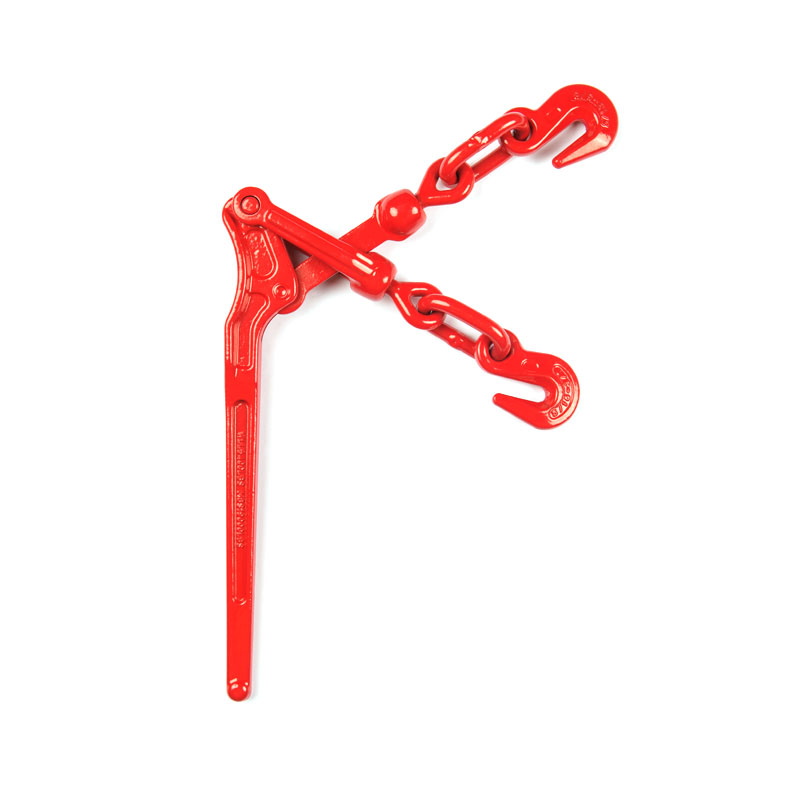
1. Why Does a Chain Need a Rigid Tiedown Instead of a Simple Hook or Binder?
A chain alone can hold a load if it is cut to the right length and connected with a grab hook. The problem is the slack. A chain that is even slightly too long will allow the load to move, and a chain that is too short cannot be connected. A simple hook or a manual binder can take up some slack, but it does not provide controlled tension or a positive lock. The Rigid Tiedown provides a rigid frame, a ratchet gear, and a pawl that holds the tension while the operator resets the handle. This allows the operator to tighten the chain in small, controlled increments and to stop at the required tension. Our factory builds the frame from stamped steel and fits a heat treated ratchet gear, so the mechanism can hold a load without back driving.
The rigid frame also keeps the hooks aligned with the chain. A flexible binder can twist and pull the chain sideways, which loads the hook incorrectly. The rigid frame keeps the line of force straight, which reduces the risk of hook deformation and chain twisting. In our factory, we check the frame straightness and the hook alignment on every production lot.
2. How Does the Ratchet Pawl Convert Handle Motion Into Chain Tension?
The ratchet mechanism has three main parts: the handle, the ratchet gear, and the pawl. The handle is connected to the ratchet gear through a pivot. When the operator moves the handle, the gear rotates and winds the chain onto a spool or pulls it through a jaw. The pawl is a spring loaded lever that engages the teeth of the gear. When the handle moves in the tightening direction, the pawl rides over the teeth and clicks into the next tooth. When the operator releases the handle, the pawl locks against the tooth and prevents the gear from turning backward. The table below shows the typical parameters of the ratchet mechanism we assemble.
| Model | Rated lashing capacity | Handle force at rated load | Ratchet teeth | Take up per tooth | Maximum take up | Compatible chain diameter |
| RT 50 | 50 kN | 340 N | 18 | 2.5 mm | 250 mm | 10 mm |
| RT 80 | 80 kN | 420 N | 16 | 3.0 mm | 300 mm | 13 mm |
| RT 100 | 100 kN | 480 N | 14 | 3.5 mm | 350 mm | 16 mm |
Our factory tests the pawl engagement under load and checks that the spring returns the pawl fully into the tooth. A pawl that only partially engages will wear the tooth tip and can slip under vibration. Our inspection team measures the tooth profile and the pawl tip before assembly.
3. What Happens to Load and Handle Force When the Chain Is Partly Tightened?
When the chain is slack, the handle moves easily because the only resistance is the weight of the chain and the friction in the mechanism. As the chain becomes tight, the tension rises, and the handle force rises with it. The operator feels the load through the handle. The ratchet gear multiplies the handle force into a higher chain tension, but the multiplication is limited by the gear ratio and the handle length. A longer handle gives more leverage, but it also bends more under load. A short handle is stiffer, but it requires more force. The table below shows the chain grade match and the recommended tiedown rating for common chain sizes.
| Chain grade | Nominal proof load | Minimum tiedown rating | Grab hook opening | Typical use |
| G 70 | 70 kN | 50 kN | 12 mm | General cargo and flatbed |
| G 80 | 80 kN | 63 kN | 14 mm | Heavy plant and steel |
| G 100 | 100 kN | 80 kN | 16 mm | Abnormal loads and export |
Load securement note: The tiedown rating must be at least equal to the chain proof load divided by the safety factor required by the local transport rule. A tiedown that is undersized for the chain will become the weak link. Our factory recommends matching the tiedown rating to the chain grade and never using a handle extension to increase tension. A handle extension overloads the gear teeth and the pawl.
4. Why Do Chain Grade, Hook Fit, and Take Up Length Decide Whether the Tiedown Holds?
The chain grade determines the strength of the chain, but the hook fit determines whether the load transfers safely into the chain. A grab hook that is too wide will sit on the chain link at an angle and will load one side of the link. A hook that is too narrow will not seat fully and can slip. The take up length determines how much slack the tiedown can remove. If the chain is too long for the take up range, the operator cannot tighten it, and the load remains loose. The Rigid Tiedown should be selected with a take up range that covers the expected slack. Our factory checks the hook opening against the chain diameter and supplies a take up chart with each model. Ningbo By Really International Trading Co., Ltd. reviews the chain grade and the hook fit before confirming an order.
The chain grade also affects the handle force. A higher grade chain is stronger, but it is also stiffer. The operator may need more force to reach the same tension. The tiedown gear ratio should be selected so that the required tension can be reached within the rated handle force. Our factory provides a handle force curve for each model so that the operator can see the effort required at different tension levels.
5. How Should Operators Verify Tension and Release a Loaded Rigid Tiedown Safely?
The operator should verify three things before releasing the handle. First, the pawl must be fully engaged in the tooth. Second, the safety pin or the locking clip must be in place. Third, the hooks must be seated on the chain links with the load bearing on the hook saddle, not on the hook tip. After the load is secured, the operator should walk around the load and check that the chain is straight and that no part of the chain is rubbing against a sharp edge. A chain that is rubbing will wear and may fail. Our factory supplies edge protectors and a pre tension check card with each tiedown. Ningbo By Really International Trading Co., Ltd. also provides a release procedure for operators.
To release a loaded tiedown, the operator should first pull the handle slightly in the tightening direction to unload the pawl, then lift the pawl release lever and lower the handle slowly. The load should be transferred to the chain gradually. The operator should never strike the pawl with a hammer or use a cheater bar on the handle. A sudden release can whip the handle and injure the operator. A bent pawl or a cracked tooth should be replaced before the tiedown is used again.
Frequently Asked Questions About Rigid Tiedown Ratchet Chain Tensioning
Summary for Load Securement Teams
A rigid tiedown tightens a chain by converting handle motion into gear rotation and by using a spring loaded pawl to hold each increment of tension. The mechanism depends on full pawl engagement, correct hook fit, and a chain grade that matches the tiedown rating. The operator should connect the hooks while the chain is slack, tighten in controlled strokes, verify the pawl and the safety pin, and release the load gradually. A tiedown that is undersized, worn, or used with a handle extension can slip or fail. The correct selection and inspection procedure protects the load and the operator.