

How Does a Multi-media Filter Improve Water Treatment Efficiency?
2026-07-14
Article Summary
A reliable water filtration system is essential for industries, commercial facilities, and municipal applications where water quality directly affects operational efficiency and equipment lifespan. A Multi-media Filter is an advanced filtration solution designed to remove suspended solids, sediments, turbidity, and other impurities through multiple layers of filtration media. Compared with traditional single-layer filters, it provides higher filtration performance, longer service life, and more stable water treatment results.
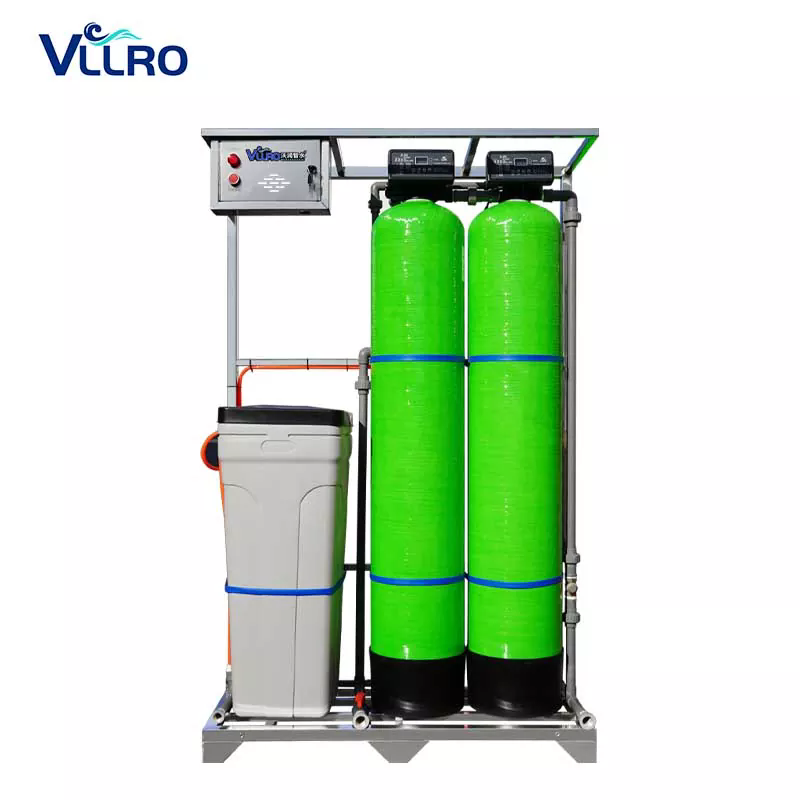
This article explains how a Multi-media Filter works, why it is widely used in modern water treatment projects, what challenges it solves for users, and how businesses can choose the right filtration system. With professional manufacturing experience and customized water treatment solutions, VLLRO provides efficient Multi-media Filter solutions designed to meet different industrial and commercial water purification requirements.
Table of Contents
- 1. What Is a Multi-media Filter?
- 2. How Does a Multi-media Filter Work?
- 3. Why Choose a Multi-media Filter for Water Treatment?
- 4. Where Are Multi-media Filters Used?
- 5. How to Select the Right Multi-media Filter?
- 6. Maintenance Tips for Better Filter Performance
- 7. Multi-media Filter vs Traditional Filtration Methods
- 8. Frequently Asked Questions
1. What Is a Multi-media Filter?
A Multi-media Filter is a pressure filtration device that uses several types of filter materials arranged in layers to remove different sizes of contaminants from water. Unlike conventional filters that rely on only one filtration material, multi-layer filtration technology allows water to pass through different media with different particle sizes and densities.
Typical filtration media may include quartz sand, activated carbon, anthracite, manganese sand, or other specialized materials. Each layer performs a specific function, allowing the system to capture suspended particles, organic matter, color, odor, and other unwanted substances.
The main purpose of a Multi-media Filter is to provide pre-treatment before advanced purification processes such as reverse osmosis, ultrafiltration, or industrial water recycling systems. By reducing the contaminant load before these processes, the entire water treatment system can operate more efficiently and achieve longer equipment life.
2. How Does a Multi-media Filter Work?
The working principle of a Multi-media Filter is based on physical filtration, adsorption, and depth filtration. When contaminated water enters the filter tank, it flows downward through multiple layers of filtration materials.
| Filter Layer | Main Function | Common Materials |
|---|---|---|
| Upper Layer | Captures larger suspended particles and protects lower media layers | Anthracite or coarse media |
| Middle Layer | Removes medium-sized impurities and improves filtration accuracy | Quartz sand |
| Lower Layer | Captures fine particles and supports stable filtration | Fine sand or specialized media |
During operation, larger particles are trapped near the upper layers while smaller particles continue moving through the deeper layers. This depth filtration process prevents rapid clogging and improves the overall dirt-holding capacity of the system.
When the filter media becomes saturated with impurities, a backwashing process is performed. Clean water flows in the opposite direction to remove accumulated contaminants, restoring the filter bed and maintaining filtration efficiency.
3. Why Choose a Multi-media Filter for Water Treatment?
Many industries face challenges such as unstable water quality, high maintenance costs, frequent equipment replacement, and inefficient filtration performance. A Multi-media Filter addresses these problems through a more advanced filtration structure.
- Higher Filtration Efficiency: Multiple filtration layers allow the system to remove a wider range of suspended solids and impurities compared with single-media filtration.
- Longer Operating Periods: The layered media structure improves dirt retention capacity and reduces frequent cleaning requirements.
- Stable Water Quality: Continuous filtration performance helps maintain consistent water quality for downstream processes.
- Reduced Equipment Damage: Removing sediments and particles protects pumps, membranes, pipelines, and other water treatment components.
- Flexible Customization: Different filtration media combinations can be selected according to specific water conditions and application requirements.
For companies requiring dependable water treatment performance, VLLRO develops Multi-media Filter systems that focus on efficiency, durability, and practical operation requirements.
4. Where Are Multi-media Filters Used?
Due to their reliable filtration capability, Multi-media Filters are widely applied in various industries and water treatment environments.
| Application Field | Filtration Purpose |
|---|---|
| Industrial Water Treatment | Remove suspended solids before production processes or advanced purification systems |
| Municipal Water Supply | Improve raw water quality and reduce turbidity |
| Power Generation | Protect boilers, cooling systems, and related equipment |
| Food and Beverage Industry | Provide cleaner process water and improve production reliability |
| Chemical Industry | Support stable water quality requirements for manufacturing processes |
| Swimming Pool Treatment | Maintain clear and clean circulating water |
Whether used as a primary filtration unit or a pre-treatment stage, a properly designed Multi-media Filter can significantly improve overall water system performance.
5. How to Select the Right Multi-media Filter?
Choosing the correct Multi-media Filter requires careful consideration of water conditions, treatment goals, and operating requirements. An unsuitable filtration system may result in poor performance, higher maintenance costs, or unnecessary energy consumption.
Important selection factors include:
- Raw Water Quality: Analyze turbidity, suspended solids, organic content, and other contaminants before selecting filter media.
- Required Flow Rate: The filter size should match the expected water treatment capacity to ensure stable operation.
- Filtration Accuracy: Different applications require different levels of particle removal performance.
- Media Combination: Selecting suitable media layers improves contaminant removal efficiency.
- Operating Environment: Material selection should consider temperature, pressure, and installation conditions.
Professional manufacturers can provide customized recommendations based on actual project requirements. VLLRO works with customers to develop suitable filtration solutions that balance performance, reliability, and operating costs.
6. Maintenance Tips for Better Filter Performance
Regular maintenance is important for keeping a Multi-media Filter operating efficiently. Proper management can extend equipment lifespan and prevent unexpected downtime.
- Perform regular backwashing according to water quality conditions.
- Monitor pressure changes to identify possible clogging problems.
- Check filtration media condition periodically.
- Replace damaged or exhausted media when necessary.
- Keep valves, pipelines, and control systems in good working condition.
A well-maintained filtration system provides more consistent water quality and reduces long-term operating expenses.
7. Multi-media Filter vs Traditional Filtration Methods
| Comparison | Multi-media Filter | Single-media Filter |
|---|---|---|
| Filtration Structure | Multiple layers of different media | One type of filtration material |
| Contaminant Removal | Removes various particle sizes effectively | Limited filtration range |
| Operating Time | Longer filtration cycles | Requires more frequent cleaning |
| Application Range | Suitable for diverse industrial applications | More suitable for simple filtration needs |
| System Protection | Provides better protection for downstream equipment | Lower protection capability |
The advantages of multi-layer filtration make Multi-media Filters an important component in modern water treatment systems where efficiency and reliability are priorities.
8. Frequently Asked Questions
FAQ 1: What contaminants can a Multi-media Filter remove?
A Multi-media Filter mainly removes suspended solids, sediments, turbidity, and certain organic impurities. The exact removal performance depends on the selected filtration media and water conditions.
FAQ 2: How often should a Multi-media Filter be backwashed?
Backwashing frequency depends on water quality, flow rate, and operating conditions. Systems with higher contamination levels usually require more frequent cleaning.
FAQ 3: Can a Multi-media Filter be customized?
Yes. Different media combinations, tank sizes, and operating configurations can be customized according to specific treatment requirements.
FAQ 4: Why is a Multi-media Filter important before reverse osmosis systems?
A Multi-media Filter reduces suspended solids and protects reverse osmosis membranes from fouling, helping improve system efficiency and extend membrane service life.
FAQ 5: How long can a Multi-media Filter operate?
With proper maintenance and suitable operating conditions, a Multi-media Filter can provide long-term reliable service for industrial and commercial water treatment applications.
Conclusion
A Multi-media Filter plays an important role in modern water treatment by providing efficient removal of suspended particles, improving water quality, and protecting downstream equipment. Its multi-layer filtration structure offers better performance, longer operation cycles, and greater flexibility compared with traditional filtration methods.
For businesses seeking reliable filtration technology, VLLRO provides professionally designed Multi-media Filter solutions to meet different industrial and commercial water treatment challenges. Contact VLLRO today to discuss your water filtration requirements and discover a customized solution. Please contact us for more information and professional support.