

How Does a Manual Chain Hoist Improve Heavy Lifting Efficiency and Safety?
2026-08-11
Article Summary:
A Manual Chain Hoist is a practical lifting solution designed to move heavy loads with less physical effort while maintaining excellent control and reliability. In factories, construction sites, warehouses, workshops, and maintenance environments, choosing the right lifting equipment directly affects productivity, operator safety, and long-term operating costs. This article explains how manual chain hoists work, why they remain essential in modern industries, how to select the right model, and how Shengyu provides dependable lifting solutions for different applications.
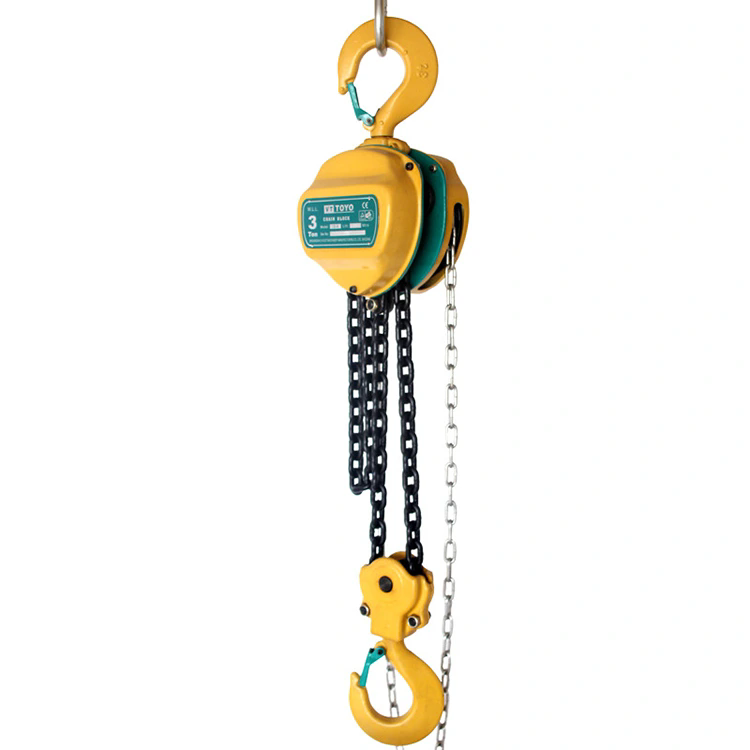
Table of Contents
- What Is a Manual Chain Hoist?
- How Does a Manual Chain Hoist Work?
- Key Advantages of Using a Manual Chain Hoist
- Main Components and Their Functions
- How to Choose the Right Manual Chain Hoist
- Common Applications Across Industries
- Maintenance Tips for Better Performance
- Manual Chain Hoist Compared with Other Lifting Equipment
- Frequently Asked Questions
What Is a Manual Chain Hoist?
A Manual Chain Hoist is a mechanical lifting device that uses human power to raise, lower, and position heavy loads. Unlike electric lifting equipment, it does not require electricity, making it suitable for outdoor projects, remote locations, emergency repairs, and areas where power supply is limited.
The equipment operates through a hand chain, gear transmission system, lifting chain, and hooks. By pulling the hand chain, operators activate the internal gear mechanism, creating mechanical advantages that allow heavy objects to be lifted with significantly reduced effort.
Modern manual chain hoists are widely used because they combine portability, durability, simple operation, and cost efficiency. Shengyu develops and manufactures reliable manual chain hoists that are designed for industrial lifting requirements, offering stable performance for factories, construction projects, equipment installation, and material handling operations.
How Does a Manual Chain Hoist Work?
Understanding the working principle of a manual chain hoist helps users select and operate lifting equipment more effectively.
The lifting process begins when an operator pulls the hand chain. The movement rotates the hand wheel, which transfers force through a series of precision gears. These gears increase mechanical advantage and drive the lifting sprocket connected to the load chain. As the sprocket rotates, the load chain moves upward or downward, allowing the attached hook to lift or lower the load.
The internal brake system plays an important role during operation. It holds the load securely when the operator stops pulling the chain, preventing unexpected movement and improving workplace safety.
- Step 1: The operator pulls the hand chain to generate input force.
- Step 2: The gear system multiplies the applied force.
- Step 3: The lifting sprocket moves the load chain.
- Step 4: The hook raises or lowers the load smoothly.
- Step 5: The brake system maintains load position when required.
Key Advantages of Using a Manual Chain Hoist
Many industries continue to choose manual chain hoists because they solve several common lifting challenges, including limited working space, high equipment costs, and the need for precise load control.
| Advantage | Description |
|---|---|
| No Power Requirement | Manual operation allows use in locations without electricity or unstable power conditions. |
| Easy Transportation | Compact structure makes the equipment convenient to move between different working areas. |
| Precise Load Control | Operators can adjust lifting speed and positioning accurately. |
| Low Maintenance Cost | Simple mechanical design reduces repair requirements and operating expenses. |
| Strong Adaptability | Suitable for factories, construction sites, warehouses, and outdoor applications. |
For companies looking to reduce downtime and improve lifting reliability, a properly selected manual chain hoist provides a practical balance between performance and investment.
Main Components and Their Functions
A manual chain hoist consists of several important parts working together. The quality of each component directly influences safety, service life, and lifting performance.
- Lifting Chain: The load-bearing component responsible for carrying heavy objects. High-strength chains improve durability and resistance against deformation.
- Hand Chain: The operating chain that allows workers to control lifting and lowering actions manually.
- Gear System: Transfers and increases manual force through mechanical transmission.
- Lifting Hooks: Connect the hoist with the load. Strong hook materials help maintain stability during lifting operations.
- Brake Mechanism: Keeps suspended loads securely positioned and improves operational safety.
- Protective Housing: Protects internal components from dust, impact, and environmental conditions.
Shengyu manual chain hoists use durable structures and quality materials, including high-strength chains and reinforced components, to provide dependable lifting performance in demanding environments.
How to Choose the Right Manual Chain Hoist?
Selecting unsuitable lifting equipment can lead to efficiency problems and safety risks. Before purchasing a manual chain hoist, users should evaluate several important factors.
| Selection Factor | Important Considerations |
|---|---|
| Load Capacity | Select a hoist with a rated capacity higher than the maximum lifting weight. |
| Lifting Height | Choose an appropriate chain length according to working conditions. |
| Working Environment | Consider moisture, dust, temperature, and special conditions. |
| Frequency of Use | Heavy-duty applications require stronger and more durable equipment. |
| Safety Requirements | Confirm that components meet required industrial safety standards. |
Professional suppliers can help customers select suitable models according to actual lifting requirements. Shengyu provides different manual hoist solutions to support various industrial applications.
Common Applications Across Industries
Manual chain hoists are widely used because they can perform lifting tasks in environments where flexibility and reliability are important.
- Construction Industry: Used for lifting steel structures, building materials, and installation components.
- Manufacturing Plants: Helps move machinery parts, production equipment, and heavy components.
- Warehousing: Supports material handling and equipment positioning.
- Automotive Repair: Used for lifting engines, transmissions, and mechanical parts.
- Shipyards and Maintenance: Provides reliable lifting support in complex working environments.
- Mining Operations: Suitable for equipment installation and maintenance tasks.
Maintenance Tips for Better Performance
Regular inspection and maintenance can extend the service life of a manual chain hoist and reduce unexpected failures.
- Inspect the lifting chain regularly for wear, corrosion, or deformation.
- Check hooks and safety components before each operation.
- Keep gears properly lubricated to maintain smooth movement.
- Avoid exceeding the rated lifting capacity.
- Store the hoist in a dry and clean environment after use.
- Arrange professional inspections for frequently used equipment.
Proper maintenance not only protects the equipment but also helps create a safer working environment for operators.
Manual Chain Hoist Compared with Other Lifting Equipment
| Equipment Type | Main Feature | Suitable Applications |
|---|---|---|
| Manual Chain Hoist | Human-powered, portable, precise control | Maintenance, construction, workshops, outdoor lifting |
| Electric Hoist | Fast lifting with powered operation | High-frequency industrial lifting |
| Hydraulic Equipment | High force output | Heavy machinery and specialized applications |
| Forklift | Horizontal and vertical material handling | Warehouses and logistics operations |
Although powered lifting equipment offers higher speed, manual chain hoists remain valuable because of their flexibility, reliability, and ability to operate without external energy sources.
Frequently Asked Questions
What weight can a Manual Chain Hoist lift?
The lifting capacity depends on the specific model and design. Manual chain hoists are available in different capacities to meet light-duty and heavy-duty industrial requirements. Users should always select equipment according to the rated load specification.
Why choose a Manual Chain Hoist instead of an electric hoist?
A manual chain hoist is ideal when portability, simple operation, and independence from electricity are important. It is especially useful for temporary lifting tasks and remote working environments.
How long does a Manual Chain Hoist last?
Service life depends on product quality, operating conditions, maintenance frequency, and correct usage. High-quality materials and regular inspections can significantly improve durability.
Can Manual Chain Hoists be customized?
Yes. Different industries may require specific lifting capacities, chain lengths, or structural designs. Shengyu provides customized lifting solutions according to customer requirements.
What safety checks should be completed before operation?
Operators should inspect chains, hooks, brakes, and load connections before use. Never operate a damaged hoist or lift loads beyond the rated capacity.
Conclusion
A Manual Chain Hoist remains one of the most practical lifting tools for industries that require safe, flexible, and cost-effective load handling. Its mechanical design provides reliable lifting performance without depending on electricity, making it suitable for a wide range of applications.
With professional manufacturing experience and a commitment to quality lifting solutions, Shengyu continues to provide durable manual chain hoists designed for modern industrial needs. Whether you require standard equipment or customized lifting solutions, Shengyu can support your project with reliable products and professional service. For more information about suitable lifting solutions, please contact us.