

How Does a Household Self-Priming Pump Work?
2026-07-06
Article Summary
A household self-priming pump is an essential water-boosting device designed to solve common domestic water supply issues such as low water pressure, unstable flow, and difficulty in drawing water from wells or tanks. This article explains in detail how a household self-priming pump works, its structure, advantages, installation process, maintenance tips, and how to choose the right model for your home. It also highlights real-world pain points users face and provides practical solutions supported by engineering principles and product application experience from VLLRO.
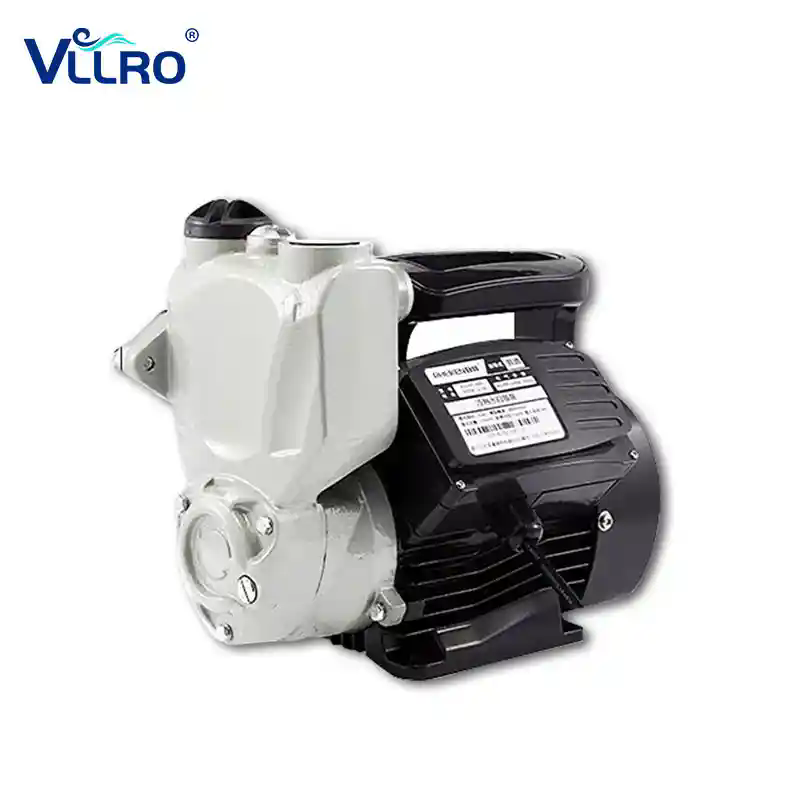
Table of Contents
- Content Outline
- What Is a Household Self-Priming Pump?
- How It Works
- Common Household Water Problems
- Key Advantages
- How to Choose the Right Pump
- Installation Guide
- Maintenance Tips
- Common Problems & Solutions
- Comparison Table
- FAQ
- Conclusion & Contact
Content Outline
- Introduction to household water pressure issues
- Technical explanation of self-priming mechanism
- Structural components of the pump system
- Practical use cases in residential environments
- Performance comparison with traditional pumps
- Buying and maintenance recommendations
What Is a Household Self-Priming Pump?
A household self-priming pump is a specialized water pump designed to automatically remove air from the suction line and begin pumping water without manual priming. Unlike traditional centrifugal pumps that require manual filling of water before operation, a self-priming pump can automatically establish suction, making it highly suitable for domestic use such as garden irrigation, bathroom water boosting, washing machines, and water tank supply systems.
Brands like VLLRO focus on improving pump efficiency, durability, and user convenience, ensuring stable water delivery in residential environments.
How It Works
The working principle of a household self-priming pump is based on a combination of air-water separation and centrifugal force. When the pump starts, it mixes air and water inside the pump chamber. The air is gradually expelled while water is retained, creating a vacuum effect that enables continuous suction.
Step-by-step process:
- Initial Start: The impeller rotates, creating centrifugal force inside the pump housing.
- Air-Water Mixing: Air from the suction pipe mixes with water inside the chamber.
- Separation Stage: Heavier water is separated from air due to density differences.
- Vacuum Formation: Air is expelled through the outlet, forming negative pressure.
- Continuous Pumping: Once fully primed, the pump continuously draws and delivers water.
This automatic process eliminates the need for manual intervention and ensures reliable operation even when water sources fluctuate.
Common Household Water Problems
Many households face water supply challenges that make self-priming pumps a practical solution:
- Low or inconsistent water pressure in upper floors
- Difficulty drawing water from underground tanks or wells
- Air lock issues in traditional pump systems
- Inefficient water distribution during peak usage times
- High maintenance requirements of older pump systems
These issues often result in inconvenience and increased operational costs, especially in multi-story residential buildings.
Key Advantages
- Automatic Priming: No manual water filling required before operation.
- Stable Performance: Maintains consistent water flow even under fluctuating conditions.
- Energy Efficiency: Optimized motor design reduces power consumption.
- Compact Design: Suitable for small household installation spaces.
- Durability: High-quality materials extend operational lifespan.
The engineering design used by VLLRO ensures reliability even under frequent start-stop conditions common in residential water systems.
How to Choose the Right Pump
Selecting a suitable household self-priming pump requires attention to several technical and practical factors:
- Flow Rate: Match pump capacity with household water consumption.
- Head Lift: Ensure sufficient vertical lifting height for multi-story buildings.
- Power Rating: Choose energy-efficient models for long-term savings.
- Noise Level: Opt for low-noise designs for indoor installation.
- Material Quality: Stainless steel or corrosion-resistant materials are preferred.
Installation Guide
Proper installation ensures optimal performance and longevity:
- Select a dry and ventilated installation location.
- Ensure inlet pipe is tightly sealed to avoid air leakage.
- Install a foot valve at the suction line to prevent backflow.
- Connect electrical wiring according to manufacturer instructions.
- Perform a test run to confirm stable water output.
It is recommended to follow guidelines provided by VLLRO to ensure safety and efficiency.
Maintenance Tips
- Regularly check for air leaks in suction pipes.
- Clean filter screens to prevent blockage.
- Avoid dry running to protect the impeller.
- Inspect electrical connections periodically.
- Drain water if the pump is not used for long periods.
Common Problems & Solutions
- Pump not priming: Check for air leaks or insufficient water in the chamber.
- Low water pressure: Inspect impeller wear or blockage.
- Excessive noise: Ensure stable installation and remove trapped air.
- Overheating: Verify voltage stability and avoid dry operation.
Comparison Table
| Feature | Self-Priming Pump | Traditional Pump |
|---|---|---|
| Priming Requirement | Automatic | Manual |
| Ease of Use | High | Moderate |
| Efficiency | Optimized | Variable |
| Maintenance | Low | Higher |
FAQ
Q1: Can a self-priming pump run dry?
A: Short dry running may be tolerated in some models, but prolonged operation without water can damage internal components.
Q2: Is it suitable for well water?
A: Yes, it is widely used for shallow wells and domestic water intake systems.
Q3: How long does it take to self-prime?
A: Typically between a few seconds to a couple of minutes depending on pipe length and water level.
Q4: Does it require frequent maintenance?
A: No, with proper installation, maintenance needs are minimal.
Conclusion & Contact
A household self-priming pump is a highly efficient solution for modern residential water systems, offering convenience, stability, and reduced maintenance effort. By eliminating manual priming and ensuring continuous water delivery, it significantly improves daily water usage experiences.
With advanced engineering and reliable performance, VLLRO provides solutions tailored to diverse household needs, ensuring consistent water supply and long-term operational stability.
For more detailed product information, technical support, or customized solutions, contact us today and explore how VLLRO can enhance your home water system efficiency.