

How Does a Flex Arm with Clamp Improve Workspace Efficiency?
2026-01-15
Article Summary: This article explores how a flex arm with clamp can transform your workspace, solve persistent ergonomic challenges, and enhance productivity. It provides clear insights into its structure, use cases, installation guidance, and the measurable benefits users gain. Additionally, readers will find practical comparisons, best practices, and answers to common questions.
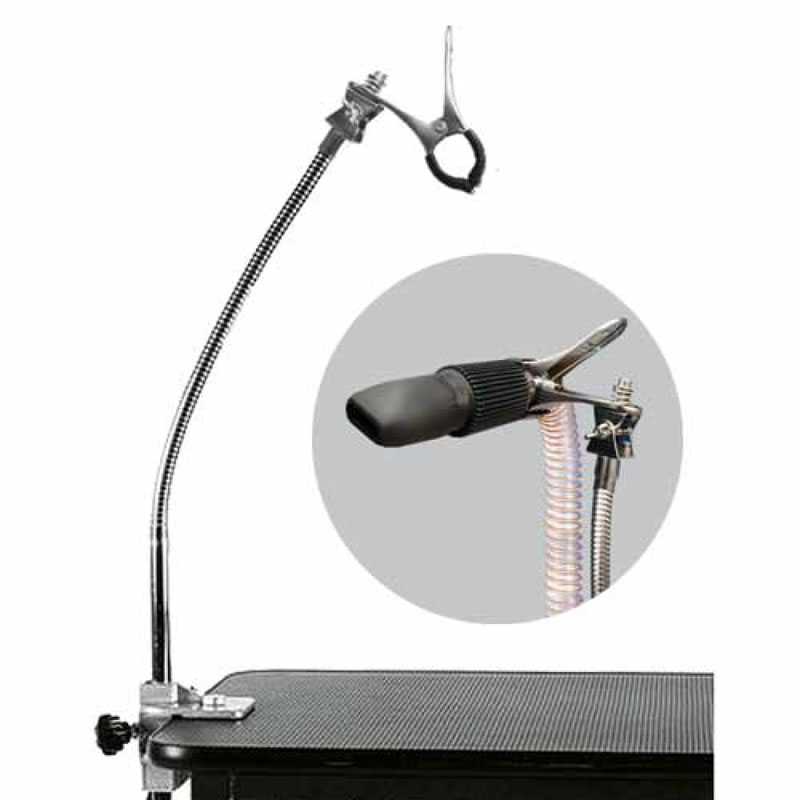
Table of Contents
- Introduction
- What Is a Flex Arm with Clamp?
- Common Workspace Pain Points Solved
- Key Benefits of Using a Flex Arm with Clamp
- Installation and Adjustment Guide
- Product Feature Comparison
- Best Practices for Optimal Use
- Frequently Asked Questions
- Conclusion
Introduction
The modern workspace demands flexibility, adaptability, and ergonomic design. Whether equipping a laboratory bench, photography setup, assembly station, or multimedia workstation, a flex arm with clamp provides a versatile solution for positioning tools and accessories where they are needed most. This article helps you understand not only what this device is, but how it can address specific challenges and improve your workflow.
What Is a Flex Arm with Clamp?
A flex arm with clamp is an adjustable mechanical arm that attaches securely to a surface. Its articulated joints and robust clamping mechanism allow users to position objects — such as lamps, cameras, magnifiers, or tools — with precision and stability. The flexibility of movement makes it ideal for dynamic work environments that require frequent reconfiguration.
- Articulated joints for multi-angle adjustments
- Secure clamp for stable attachment to desks, benches, rails
- Modular compatibility with accessories and tools
Common Workspace Pain Points Solved
Professionals across industries often encounter similar barriers to efficient work. The following outlines key pain points and how a flex arm with clamp addresses them:
- Poor visibility: Shadows or fixed lighting hinder precision work.
- Limited space: Bulky equipment crowds valuable surface area.
- Ergonomic strain: Reaching, bending, or twisting causes fatigue.
- Lack of versatility: Tools are fixed and cannot be repositioned quickly.
With its adjustability and secure clamping, a flex arm offers a practical alternative to static mounts, saving time and reducing physical strain.
Key Benefits of Using a Flex Arm with Clamp
Understanding the advantages of integrating a flex arm solution into your workspace is essential for informed decision-making. Core benefits include:
- Enhanced Ergonomics: Position lighting and tools at optimal angles to minimize strain.
- Improved Flexibility: Reposition elements rapidly without tools or hardware swaps.
- Space Optimization: Free up desk space by elevating devices off the work surface.
- Precision: Fine adjustments support tasks that require accuracy, such as soldering, inspection, or photography.
- Durability: High-quality clamps and joints maintain stability over repeated use.
Installation and Adjustment Guide
Installing a flex arm with clamp is straightforward when the following steps are observed:
- Select the Mounting Surface: Choose a flat, stable edge (desk, table, bench).
- Secure the Clamp: Tighten the clamp firmly without over-torquing. Ensure it does not damage the surface.
- Attach the Tool or Accessory: Lock your device into the arm’s end fitting or accessory adapter.
- Adjust the Joints: Position the arm according to task requirements. Use joint tensioners if available.
- Test Stability: Verify that the assembly holds its position under normal working conditions.
Proper installation ensures longevity and prevents equipment drift or slippage during use.
Product Feature Comparison
| Feature | Standard Clamp Arm | Flex Arm with Clamp | Outcome |
|---|---|---|---|
| Flexibility | Limited | High | Greater range of motion |
| Stability | Moderate | High | Reliable positioning |
| Ease of Adjustment | Low | High | Quick reconfiguration |
| Accessory Compatibility | Selective | Wide | Supports more tools |
Best Practices for Optimal Use
To maximize the lifespan and performance of your flex arm with clamp unit, follow these recommendations:
- Check Torque Regularly: Inspect joint tension and adjust as necessary.
- Protect Surfaces: Use protective pads between the clamp and mounting surface to avoid damage.
- Balance Loads: Mount devices within weight specifications for stable operation.
- Routine Inspection: Periodically verify fasteners and joints for wear or loosening.
Frequently Asked Questions
-
What weight can a flex arm with clamp support?
Load capacities vary by model. Always consult product specifications to ensure the arm can support your device safely. -
Can I use it on round or uneven surfaces?
A flex arm with clamp performs best on flat edges. For non-flat surfaces, adaptors or custom fixtures may be required. -
Is assembly required on delivery?
Most units ship partially assembled. Basic final assembly is usually tool-free and guided by included instructions. -
How does it differ from an articulated arm?
A flex arm with a robust clamp integrates both stable mounting and multi-joint articulation, whereas simple articulated arms may lack a high-strength clamping base. -
Can I attach lighting and cameras simultaneously?
Yes. With modular adaptors and multi-attachment points, you can configure a setup that supports multiple accessories.
Conclusion
Integrating a flex arm with clamp into your workspace delivers tangible improvements in ergonomics, flexibility, and productivity. Whether for professional tasks that require precision or everyday workflows that demand adaptability, this solution enhances how tools and accessories are positioned and used. When choosing the right configuration, consider load requirements, surface compatibility, and accessory options to match your exact needs.
Lohas provides high-quality flex arm with clamp solutions designed for a wide range of applications, backed by industry-grade reliability. If you are ready to transform your workspace and eliminate persistent pain points, contact us to learn more about our products, customization options, and how we can support your specific requirements today.