

How Do Wire End Ferrules Improve Wiring Reliability in Industrial Applications?
2025-12-12
Wire end ferrules are precision-engineered metal sleeves used to protect, consolidate, and secure the strands of flexible wires before insertion into screw-type or spring-clamp terminals. Their primary role is to enhance connection stability by preventing strand breakage, reducing resistance fluctuations, and ensuring long-term electrical reliability.
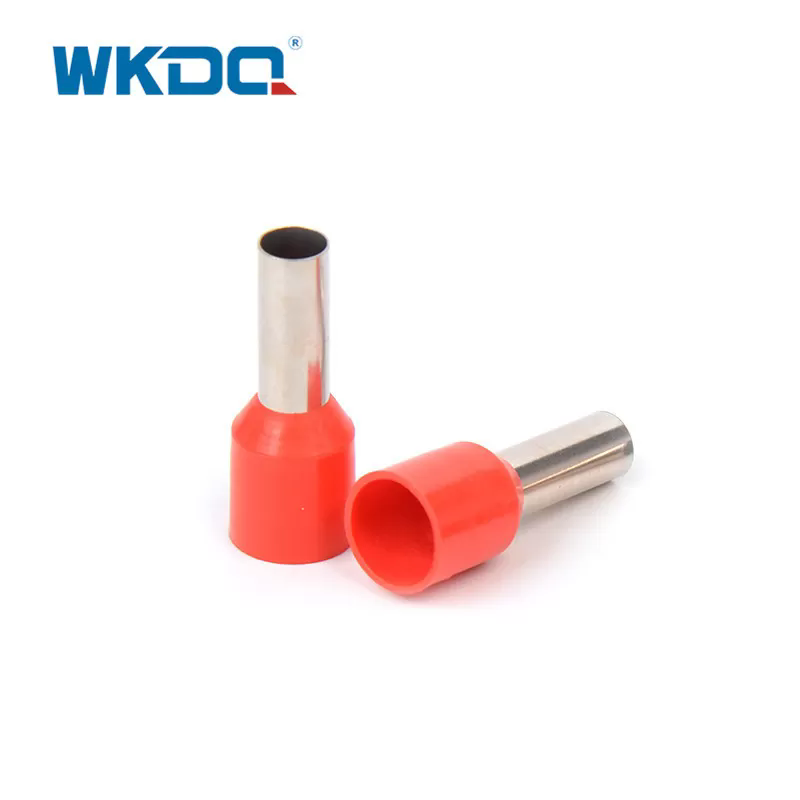
At the foundation of ferrule performance are specifications such as conductor size range, material composition, plating type, barrel length, crimping compatibility, and insulation sleeve options. The following table summarizes typical technical parameters applied in high-performance ferrules used for industrial power distribution, automation cabinets, HVAC systems, and general electrical installations.
| Parameter Category | Specification Range | Technical Description |
|---|---|---|
| Conductor Size | AWG 26–AWG 4 / 0.14–25 mm² | Supports fine-strand and extra-flexible conductors used in automation, energy, and machine wiring |
| Barrel Material | Electrolytic copper | Ensures high conductivity and resistance to oxidation |
| Plating | Tin-plated | Provides corrosion resistance and stable electrical contact over long cycles |
| Insulation Sleeve | Polypropylene / Nylon | Color-coded for size identification and heat-resistant for demanding environments |
| Barrel Type | Single/Double | Single ferrules for one conductor; double ferrules for dual-conductor terminations |
| Temperature Rating | –40°C to 105°C | Suited for industrial electrical cabinets and field equipment |
| Crimping Standard | DIN, UL, IEC | Compatible with certified crimping tools for standardized termination performance |
How Do Wire End Ferrules Enhance System Stability Across Industrial Wiring Environments?
In industrial wiring, connection quality is a key determinant of long-term operational reliability. Wire end ferrules mitigate common failure points that arise from conductor strand dispersion, loosening under vibration, and terminal screw damage. By consolidating wire strands during termination, ferrules create a uniform mechanical interface that withstands high-frequency vibration and torque variations inside machinery, conveyor systems, and automation units. This stability is especially important where flexible conductors are used, as these are more susceptible to strand fatigue and deformation.
Another major contribution involves electrical consistency. Without ferrules, loose strands may partially contact the terminal surface, leading to uneven current distribution, micro-arcing, and heat buildup. Ferrules enforce a complete conductive interface, maintaining steady resistance and reducing the risk of intermittent faults. The uniform crimp profile also improves retention forces within the terminal block, so maintenance intervals become longer and electrical failures less frequent.
In applications that require rapid wiring or panel modification, ferrules create a standardized termination method. Technicians can install, remove, and reterminate wires without worrying about conductor degradation. This has measurable benefits in production facilities, where wiring changes occur frequently during expansion, equipment upgrades, or troubleshooting. During such operations, ferrules maintain conductor integrity even after repeated insertions.
Furthermore, ferrules help achieve compliance with widely recognized wiring standards in energy management, building automation, transportation electronics, and machine control. Many industries prefer ferruled wiring for improved documentation accuracy, fault detection, and lifecycle stability in mission-critical systems such as PLC input/output modules, auxiliary power supplies, motor drives, and relay control circuits.
How to Select Wire End Ferrules for High-Demand Electrical Installations?
Selecting the correct ferrule requires evaluating conductor characteristics, application environments, installation workflows, and system longevity expectations. This decision process is especially important when designing automation cabinets, power distribution panels, industrial control systems, and modular wiring architectures.
The first consideration is size matching. Conductor cross-section must correspond precisely to the ferrule barrel dimension to ensure full compression during crimping. Oversized ferrules can cause poor retention, while undersized barrels may damage conductor strands. Engineers often follow color-coding standards to streamline identification.
Material quality also plays a significant role. Copper with uniform tin plating provides optimal conductivity and durable corrosion resistance, particularly in humid or high-temperature environments. Industrial installations with exposure to chemical vapors or continuous thermal cycling benefit from thick, uniformly applied plating layers that preserve electrical performance.
Crimping compatibility is another major factor. Using ferrules with certified crimping tools ensures consistent deformation geometry across all terminations. Uniform crimping increases mechanical stability and reduces long-term maintenance. For environments with entry vibration, such as mobile equipment or factory robotics, hexagonal or square-profile crimps provide particularly robust retention forces.
Engineers must also consider insulation sleeves. Color-coded polypropylene sleeves improve visibility within crowded control cabinets and simplify panel documentation. Heat-resistant or chemical-resistant sleeve materials are necessary in harsher environments such as industrial ovens, manufacturing floors, and energy distribution rooms.
In multi-conductor terminations, dual-entry ferrules allow two wires to be inserted into a single terminal point while maintaining electrical integrity and preventing strand entanglement. These are common in daisy-chain power circuits, signal loops, or grounding networks.
How Are Wire End Ferrules Shaping the Future of Electrical Wiring Standards?
The evolution of industrial wiring is shifting toward higher efficiency, modularity, and long-term reliability. Wire end ferrules are becoming integral to this shift by enabling standardized terminations, improving installation accuracy, and supporting more compact and high-density panel designs.
A major trend involves increasing adoption of fine-strand conductors in automation systems. These conductors improve flexibility and routing efficiency but require ferrules for proper termination. As system complexity increases, ferrules help maintain clear cable management, reduce wiring errors, and support rapid expansion.
Another growing trend is the integration of ferrules into automated wiring and assembly processes. Advanced machinery used in mass-production panels, automotive wiring harnesses, and smart-building systems now includes crimping modules that process ferrules automatically. This enhances consistency and allows manufacturers to achieve high-volume production with minimal error rates.
In field installations, ferrules facilitate predictive maintenance programs. Their standardized interfaces make thermal profiling, resistance measurement, and electrical mapping easier to conduct on a scheduled basis. As industries adopt more digital monitoring and smart-maintenance frameworks, ferrules support cleaner data acquisition and more reliable sensor readings.
Sustainability expectations also influence ferrule development. More manufacturers are adopting eco-efficient plating methods, recyclable sleeve materials, and manufacturing processes that reduce energy consumption. As electrical systems continue to evolve toward higher efficiency and digitalization, ferrules will remain a key component for robust, scalable, and documented wiring architectures.
How Do Wire End Ferrules Support Wiring Quality Across Diverse Industry Sectors?
Across industries such as manufacturing, transportation, power distribution, automation, HVAC, renewable energy, and industrial machinery, ferrules ensure that wiring remains stable despite varying mechanical, thermal, and electrical conditions.
In manufacturing and automation, equipment vibration is a constant stressor. Ferrules reduce the risk of wires loosening at terminal points and ensure stable signal transmission to PLC systems. This minimizes unplanned downtime, reduces maintenance costs, and increases machine runtime.
In building electrical systems, ferrules improve the long-term stability of wiring in distribution boxes, lighting circuits, and HVAC control boards. Installers benefit from easier termination workflows, cleaner panel layouts, and reduced risk of strand-related miswiring.
In renewable-energy systems, ferrules help maintain reliability across fluctuating loads and environmental conditions. Solar arrays, battery storage systems, and wind-energy controls require precise wiring that can withstand both mechanical stress and thermal variation. Ferrules ensure that conductor strands remain protected even when cables move due to environmental dynamics.
Transportation equipment—including rail vehicles, heavy trucks, marine systems, and aviation—uses ferrules to support high-vibration environments. These sectors require terminations that remain stable despite constant acceleration forces and temperature swings.
In power electronics, ferrules prevent hotspots at connection points, supporting stable current flow in chargers, converters, power supplies, inverters, and motor controllers. This contributes to improved device longevity and reduces the likelihood of electrical failure.
Common Questions About Wire End Ferrules
What is the primary purpose of using wire end ferrules?
The primary purpose is to protect and consolidate the strands of flexible wires during termination. Ferrules prevent strand breakage, improve electrical contact area, minimize connection resistance, and maintain long-term mechanical stability inside terminals.
How do wire end ferrules improve safety in electrical installations?
Ferrules eliminate loose strands that can cause short circuits or partial contact. Their consistent crimped profile ensures stable current flow, reduces heat generation at terminal interfaces, enhances vibration resistance, and helps installations meet industry compliance requirements.
Throughout installation, maintenance, system upgrades, and industrial deployment, wire end ferrules remain a crucial component for dependable wiring architectures. Their contribution spans mechanical integrity, electrical stability, safety compliance, and lifecycle performance across numerous sectors. For organizations seeking high-quality ferrules engineered for professional electrical applications, Wonke offers precision-manufactured solutions backed by consistent quality control and technical support. For product inquiries, specification requests, or bulk procurement discussions, contact us for further assistance.