

How Do Safety Regulations Impact the Design of Long Nozzle Air Blow Guns
2026-03-09
When discussing industrial workshop tools, the conversation inevitably turns to compliance and user protection. For the Long Nozzle Air Blow Gun, safety is not just a feature; it is the foundational principle that dictates every curve, material, and pressure rating. At WYMA, we understand that adhering to international safety standards directly shapes how these tools perform in the field, ensuring they are as safe as they are efficient.
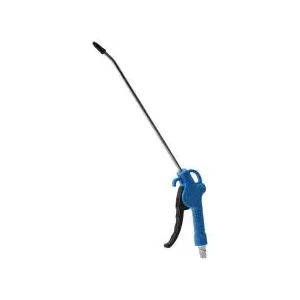
The Direct Influence of Standards on Physical Design
Global safety regulations, such as those set by OSHA in the United States or the Pressure Equipment Directive in Europe, mandate strict requirements for tip pressure and noise control. This forces manufacturers to innovate. Below is a breakdown of how specific safety requirements influence the core components of the Long Nozzle Air Blow Gun.
| Safety Requirement | Design Impact on Long Nozzle Air Blow Guns | Benefit to the User |
|---|---|---|
| Dead-End Pressure Limits | Incorporation of pressure relief vents or nozzle holes to prevent dead-end pressure buildup. | Prevents fluid injection injuries and damage to sensitive equipment. |
| Noise Reduction Standards | Integration of multi-port tips or spiral nozzles to diffuse air and reduce turbulence. | Lowers operational decibels, protecting hearing without sacrificing force. |
| Material Durability | Use of high-impact polymers or reinforced metals that resist shattering or corrosion. | Ensures the tool remains intact under high pressure and in harsh chemical environments. |
| Ergonomic Safety | Design of longer trigger guards and balanced weight distribution. | Reduces muscle fatigue (RSI) and allows for a secure grip even with gloves. |
Material Innovation Driven by Compliance
Safety regulations demand that a Long Nozzle Air Blow Gun must not become a hazard itself. For instance, regulations concerning electrical conductivity in certain environments require specific material choices. WYMA utilizes advanced composite materials that are non-conductive and anti-static, ensuring the nozzle can reach into electronic panels without risk of spark or shock. The length of the nozzle, which could otherwise be a leverage hazard, is reinforced internally to prevent bending or snapping, a direct response to safety testing protocols.
The WYMA Approach to Certified Safety
For WYMA, designing a Long Nozzle Air Blow Gun begins with the end safety standard in mind. We do not simply add safety features as an afterthought; we engineer the tool so that its performance characteristics—like high-velocity air output—are achieved within the strict confines of global safety laws. This means our designs frequently feature silicone nozzles for heat resistance or stainless steel extensions for food-grade environments, ensuring that the tool not only cleans effectively but also complies with hygiene and safety audits.
Long Nozzle Air Blow Gun FAQ
Q: How does nozzle length affect safety compliance regarding tip pressure?
A: The length of the nozzle can create a pressure drop over distance, which inherently aids in compliance. However, regulations require that even if the tip of a Long Nozzle Air Blow Gun is blocked completely (dead-ended), the pressure at the nozzle cap must not exceed the 30 PSI limit typically mandated by OSHA. To achieve this with a longer barrel, manufacturers like WYMA must engineer precise pressure relief ports along the nozzle or at the tip. Without these engineered vents, the air could become dead-headed, creating a dangerous pressure buildup regardless of the nozzle's length. The design must balance the reach of the nozzle with the physics of air compression to remain legally compliant.
Q: Are there specific materials required by safety regulations for these tools?
A: Yes, material choice is heavily dictated by the application and the safety standards that govern it. For general industrial use, regulations require the material to be durable enough to withstand impact without shattering—hence the use of tough engineering-grade polymers or anodized aluminum by WYMA. However, in specialized environments, additional rules apply. For example, in chemical plants, the Long Nozzle Air Blow Gun must be resistant to corrosive substances, often leading to stainless steel construction. In explosive atmospheres, regulations mandate non-sparking materials, meaning the nozzle must be made from materials like brass or beryllium copper to prevent any ignition risk. The design and material certification go hand-in-hand to meet these legal safety classifications.
Q: Do safety regulations impact how quiet a Long Nozzle Air Blow Gun must be?
A: Absolutely. Occupational noise exposure is a primary focus of workplace safety regulations like OSHA's 29 CFR 1910.95. Standard air blow guns can produce noise levels well above the 85 dBA action limit, especially with the focused air stream of a long nozzle. To comply, the design of the nozzle tip is critical. Safety regulations effectively force the design of multi-channel or "venturi" nozzles. These designs entrain surrounding air, reducing the high-velocity exhaust noise at the tip. A Long Nozzle Air Blow Gun designed for compliance will feature a specially engineered tip that maximizes cleaning force while using air diffusion to keep decibel levels low, protecting workers' hearing without a loss in performance.
Conclusion
Navigating the complex world of safety regulations requires a partner who understands that compliance is synonymous with quality. At WYMA, we are dedicated to providing Long Nozzle Air Blow Guns that not only meet but exceed these rigorous standards, ensuring your workshop remains productive, safe, and compliant.
Contact us today to discuss your specific application and find the perfect compliant solution for your team.