

How Do Flat Webbing Slings Improve Load Handling Safety and Efficiency?
2025-12-11
Flat webbing slings are widely used across construction, warehousing, logistics, heavy equipment maintenance, port operations, manufacturing, and rigging environments due to their combination of strength, flexibility, and material compatibility.
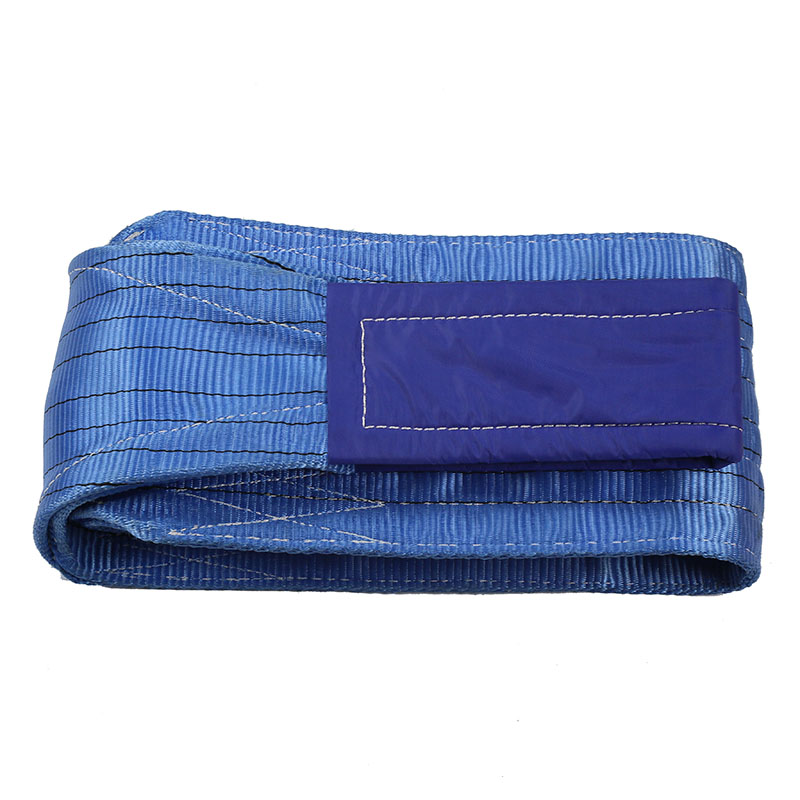
How Do Flat Webbing Sling Specifications Influence Performance in Professional Lifting Applications?
The structural performance of a flat webbing sling is determined by the integration of its fiber composition, weave density, surface treatment, ply configuration, safety factor, and compliance with international standards such as EN 1492-1, ASME B30.9, and ISO 4878. Flat webbing slings are typically manufactured using high-tenacity polyester (PES), although polypropylene (PP) and polyamide (PA) are used for specialized environments. Polyester is preferred due to its low stretch characteristics under load, excellent resistance to moisture, and stability when exposed to ultraviolet radiation.
Below is a consolidated parameter summary suitable for operational planning, procurement decisions, or technical documentation:
| Parameter Category | Technical Specification Details |
|---|---|
| Material | High-tenacity Polyester (PES), optional PP/PA variants depending on chemical exposure requirements |
| Weight Capacity Range | 1 Ton to 12 Ton standard; can be custom engineered up to 30 Ton+ for special lifting plans |
| Safety Factor | Typically 7:1 or 5:1 depending on local regulation; 4:1 for non-lifting utility applications |
| Ply Configuration | 1-Ply, 2-Ply, or 4-Ply depending on load distribution requirements |
| Effective Working Length (EWL) | Standard lengths 1 m to 12 m; customizable for oversized or irregular lifts |
| Color Coding | Industry-standard color identification following EN 1492-1 for rapid capacity recognition |
| Stretch Percentage | Approx. 2–3% at Working Load Limit (WLL), enabling stable load positioning |
| Edge Reinforcement | Optional woven or synthetic protectors for abrasion resistance |
| Temperature Range | -40°C to +100°C for polyester-based slings |
| Label Identification | WLL, length, manufacturer, batch number, compliance codes, fiber type |
The above specifications allow operational stakeholders to select slings based on load characteristics, lifting angles, environmental exposure, and risk assessments. Understanding these metrics ensures proper matching between sling performance and site demands, supporting both efficiency and regulatory compliance.
How Does Comparing Flat Webbing Slings with Alternative Lifting Equipment Support Better Operational Decisions?
Optimizing rigging operations often requires comparing flat webbing slings to chain slings, wire rope slings, round slings, and synthetic rope assemblies. Each category carries inherent advantages in strength, flexibility, surface contact, and durability. The ways in which flat webbing slings differ from other options shape selection decisions in high-volume, high-risk lifting environments.
Flat webbing slings distribute pressure over a wider surface area, reducing the risk of crushing or marking sensitive loads. They are lightweight and can be deployed quickly by a single operator, reducing handling time and minimizing fatigue. Unlike wire rope slings, they do not develop broken wires or metal splinters. In comparison with chain slings, they offer lower weight and improved flexibility, though chain slings may outperform in high-temperature environments or with sharp-edged loads.
For large-surface loads such as fabricated steel panels, pipes, structural modules, and machinery housings, the flat webbing sling’s broad contact area can significantly minimize localized stress points. Their controlled elongation rate also improves stability during critical lifts, particularly when load centers of gravity shift during the hoisting process.
Common FAQ 1
Q: How should a flat webbing sling be selected for loads with irregular geometry?
A: Selection should be based on the load’s weight, footprint, center-of-gravity behavior, and edge condition. Irregular surfaces require additional protection such as corner pads or sleeves to prevent cutting. Operators should calculate sling angles to ensure WLL is not exceeded. When lifting objects where weight distribution varies between pick points, multiple slings may be configured with equalizing beams or spreader bars to maintain consistent tension across each sling leg.
Common FAQ 2
Q: How does environmental exposure influence the lifespan of flat webbing slings?
A: Environmental factors such as UV intensity, humidity, abrasive surfaces, chemical agents, and temperature cycles influence degradation. Polyester slings resist most acids but are vulnerable to strong alkalis. Slings exposed to outdoor environments should be inspected more frequently for fading, surface stiffening, or fiber thinning. Moisture does not structurally compromise polyester, but contaminants such as grit can embed into fibers, increasing wear rates. Operators should store slings in dry, shaded conditions and use protective sleeves when handling rough loads.
How Are Flat Webbing Slings Applied in Field Operations to Maximize Reliability and Safety?
Operational safety depends heavily on proper usage techniques. Incorrect sling placement, improper lifting angles, or inadequate inspection practices can compromise both load stability and personnel safety. To ensure optimal reliability, several core principles guide professional deployment.
Sling Angle Considerations
The relationship between sling angle and tension load is critical. Tension increases as the angle between sling legs decreases. Slings should ideally operate above 60 degrees when used in a multi-leg configuration. A sling angle of 30 degrees can nearly double the tension load applied to each leg. Operators must calculate angles and confirm the adjusted WLL remains within safe limits.
Pre-Use Inspection Protocols
Before each lift, slings should be examined for cuts, tears, abrasion, heat damage, chemical exposure, or illegible labels. Any sling showing compromised stitching or fiber distortions must be withdrawn from service. This aligns with the procedural controls mandated by international lifting standards.
Load Attachment
The load must be positioned so that the sling sits flat against the contact surfaces without twisting. Twisting reduces strength and introduces torsional stress. When using a basket or choker configuration, ensure load contact points do not exceed the sling’s minimum bend radius.
Post-Use Handling
After lifting operations, slings should be cleaned of debris, inspected again, and stored away from sharp tools and prolonged sunlight. Proper maintenance prolongs operational lifespan and reduces total replacement costs.
These usage principles underscore the importance of a structured lifting plan, where the characteristics of the sling and the nature of the load are jointly analyzed to prevent operational hazards.
How Will the Evolving Demands of Modern Industry Shape the Future Development of Flat Webbing Slings?
The future of lifting technology is being reshaped by market demands for enhanced durability, material intelligence, and smarter handling solutions. As construction projects grow in scale and complexity, as warehousing automation expands, and as global logistics require faster cycle times, flat webbing slings are experiencing several notable advancements.
Higher-Performance Fibers
Development of next-generation polyester blends and coated yarns is advancing sling resistance to abrasion, chemicals, and thermal exposure. These materials aim to reduce weight while maintaining or increasing Working Load Limit performance.
Integrated Wear Indicators
More manufacturers are introducing woven-in indicator threads that reveal internal wear levels. This supports predictive maintenance strategies and reduces reliance on subjective visual inspections.
Data-Enabled Identification
Future slings may adopt embedded RFID tags or machine-readable serials to provide lifecycle analytics, usage history, and inspection tracking. This supports digital asset management systems in large operations with hundreds of slings.
Sustainability Considerations
Recyclable polyester fibers and low-energy manufacturing processes are emerging to meet corporate sustainability requirements. Repurposing protocols for retired slings may also become more common.
These innovations indicate that flat webbing slings will continue to evolve in both material science and operational intelligence, driven by safety regulations, risk-management practices, and the expansion of global industrial infrastructure.
Conclusion and Contact
Flat webbing slings remain a cornerstone of modern lifting operations due to their controlled flexibility, load-friendly contact surfaces, and compliance with stringent industry standards. Their performance depends on a combination of precise material engineering, correct operational use, and routine safety inspections. Understanding technical specifications, environmental impacts, tension dynamics, and future developmental trends empowers organizations to enhance safety, reduce downtime, and elevate lifting efficiency.
Force provides professionally engineered flat webbing slings designed to meet demanding industrial requirements across logistics, manufacturing, construction, and heavy-equipment sectors. For detailed specifications, procurement guidance, or custom engineering support, contact us for further assistance.