

How CGH Cylinder Nulls Work in Optical Testing and Metrology
2026-07-01
Abstract
CGH Cylinder Nulls (Computer Generated Hologram cylinder nulls) are advanced optical testing elements used to evaluate and certify cylindrical and aspheric optical components with extremely high precision. They are widely applied in interferometry systems where conventional reference optics fail to deliver sufficient accuracy or flexibility. This article explains how CGH Cylinder Nulls work, why they are critical in modern optical manufacturing, and how companies like Zhixing integrate these solutions into high-end optical testing workflows. It also addresses common engineering challenges, system design considerations, and real-world application scenarios.
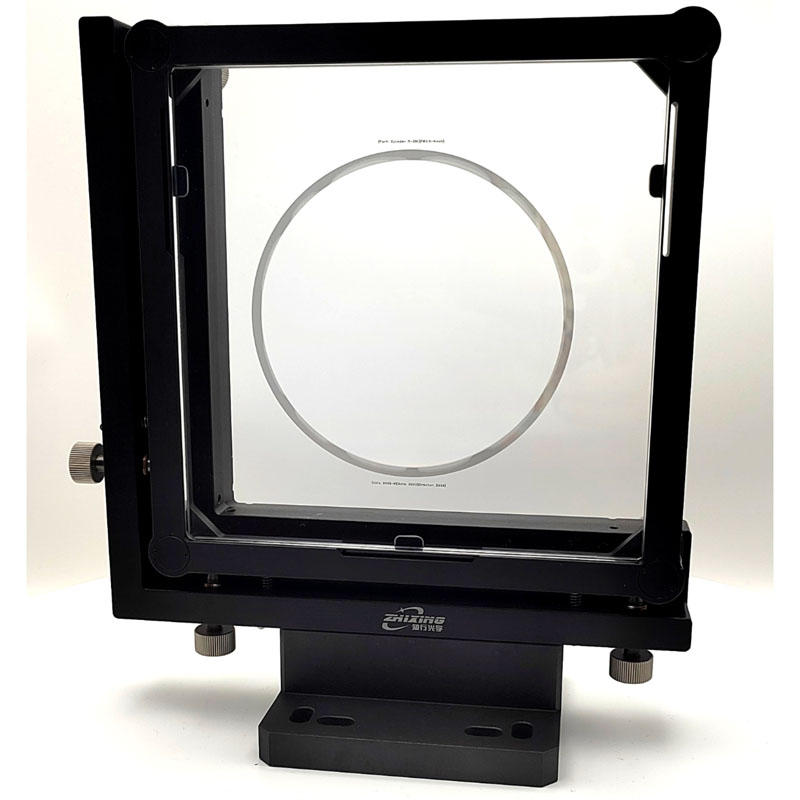
Table of Contents
- Outline Overview
- 1. Introduction to CGH Cylinder Nulls
- 2. Working Principle of CGH Cylinder Nulls
- 3. Key Applications in Optical Engineering
- 4. Advantages and Technical Benefits
- 5. Comparison with Traditional Null Optics
- 6. Design and Manufacturing Considerations
- 7. Technical Parameter Overview
- 8. Common Challenges and Solutions
- 9. Industrial Implementation by Zhixing
- FAQ
- Conclusion
Outline Overview
This article provides a structured breakdown of CGH Cylinder Nulls, starting from fundamental principles and moving toward advanced industrial applications. It focuses on optical interference theory, system calibration methods, production constraints, and real-world usage scenarios. The goal is to help engineers, procurement specialists, and optical designers understand both theoretical and practical aspects of CGH-based cylinder null testing systems.
1. Introduction to CGH Cylinder Nulls
In modern optical manufacturing, cylindrical and freeform optical components are increasingly used in aerospace imaging systems, semiconductor lithography, and precision laser equipment. Traditional testing methods often struggle to accurately characterize these complex geometries. CGH Cylinder Nulls solve this limitation by introducing a computer-generated diffraction pattern that acts as a reference wavefront for interferometric testing.
Unlike conventional optical flats or reference lenses, CGH Cylinder Nulls are digitally designed and lithographically fabricated, allowing engineers to precisely tailor wavefront corrections for specific cylindrical geometries.
2. Working Principle of CGH Cylinder Nulls
The core principle of CGH Cylinder Nulls is based on wavefront manipulation using diffraction. A computer-generated hologram encodes the ideal wavefront required to "null" the optical error of a cylindrical surface under test. When coherent laser light passes through the CGH, it is diffracted into a reconstructed wavefront that matches the ideal reference surface.
The interferometer then compares the returned wavefront from the optical component with the reference wavefront generated by the CGH. Any deviation results in an interference pattern, which is analyzed to determine surface errors.
Key process steps include:
- Digital modeling of the ideal cylindrical wavefront
- Phase pattern computation using Fourier optics
- Lithographic fabrication of CGH substrate
- Alignment with interferometric optical axis
- Wavefront reconstruction and error analysis
This method significantly reduces the need for custom physical reference optics.
3. Key Applications in Optical Engineering
CGH Cylinder Nulls are widely used in high-precision optical environments where accuracy requirements exceed traditional testing capabilities.
- Aerospace optical system calibration
- Laser beam shaping and collimation testing
- Semiconductor lithography optics validation
- High-end telescope mirror evaluation
- Industrial cylindrical lens inspection
In all these applications, precise wavefront matching ensures system-level performance consistency.
4. Advantages and Technical Benefits
CGH Cylinder Nulls offer several significant advantages over traditional optical testing methods:
- High customization for specific optical geometries
- Reduced need for physical reference optics inventory
- Improved measurement repeatability
- Compatibility with complex aspheric and cylindrical surfaces
- High sensitivity to sub-wavelength surface deviations
These benefits make them indispensable in next-generation optical manufacturing pipelines.
5. Comparison with Traditional Null Optics
| Feature | Traditional Null Lens | CGH Cylinder Nulls |
|---|---|---|
| Flexibility | Low | Very High |
| Cost Efficiency | High per design | Moderate after design |
| Surface Adaptability | Limited | Extensive |
| Precision Level | High | Ultra-High |
| Production Time | Long | Shorter after digital design |
This comparison clearly shows why CGH-based systems are replacing traditional null optics in advanced metrology environments.
6. Design and Manufacturing Considerations
Designing CGH Cylinder Nulls requires advanced computational optics and precise fabrication methods. Engineers must consider diffraction efficiency, wavelength dependency, and alignment tolerances.
Critical design parameters include:
- Laser wavelength compatibility
- Phase quantization levels
- Substrate flatness and stability
- Alignment sensitivity
- Thermal expansion behavior
Manufacturing typically uses electron-beam lithography or laser direct writing to achieve nanoscale precision.
7. Technical Parameter Overview
| Parameter | Typical Range | Description |
|---|---|---|
| Wavelength Support | 632.8 nm / 1550 nm | Common laser interferometry wavelengths |
| Phase Accuracy | < λ/20 | High precision wavefront encoding |
| Diffraction Efficiency | 70% - 95% | Energy transfer efficiency |
| Surface Resolution | Sub-micron level | Fabrication precision |
| Alignment Tolerance | < 1 arcminute | System setup accuracy requirement |
8. Common Challenges and Solutions
Despite their advantages, CGH Cylinder Nulls introduce certain engineering challenges.
- Alignment Sensitivity: Requires high-precision mechanical positioning systems.
- Fabrication Complexity: Demands advanced lithography facilities.
- Wavelength Dependency: Must be designed for specific laser sources.
- Environmental Stability: Sensitive to vibration and thermal drift.
Solutions often include active alignment systems, environmental isolation chambers, and multi-wavelength compensation algorithms.
9. Industrial Implementation by Zhixing
Zhixing plays a significant role in the development and supply of CGH Cylinder Null systems for industrial optical testing applications. By integrating high-precision lithographic fabrication with advanced optical simulation, Zhixing provides customized solutions tailored to cylindrical lens testing, laser optics validation, and precision imaging systems.
Their implementation approach focuses on:
- Application-specific CGH design optimization
- High stability substrate engineering
- Interferometry system integration support
- Quality validation under real-world conditions
This ensures that manufacturers can achieve consistent measurement accuracy while reducing system complexity and calibration time.
FAQ
Q1: What is the main purpose of CGH Cylinder Nulls?
They are used to generate precise reference wavefronts for testing cylindrical optical components in interferometric systems.
Q2: Why are CGH Cylinder Nulls better than traditional optics?
They offer greater flexibility, higher accuracy, and reduced dependency on physical reference lenses.
Q3: Can CGH Cylinder Nulls be reused for different systems?
Yes, but each CGH is typically optimized for a specific optical configuration and wavelength.
Q4: What industries rely on CGH Cylinder Nulls?
Aerospace, semiconductor manufacturing, laser optics, and advanced research laboratories.
Q5: How does Zhixing support CGH implementation?
Zhixing provides design, manufacturing, and integration support for high-precision CGH optical testing systems.
Conclusion
CGH Cylinder Nulls represent a major advancement in optical metrology, enabling precise and adaptable testing of cylindrical and complex optical surfaces. Their ability to digitally define reference wavefronts eliminates many limitations of conventional optical testing methods. As industries continue to demand higher precision and more complex optical geometries, CGH-based solutions will remain essential.
With engineering expertise and application-driven design, Zhixing continues to support the evolution of high-end optical measurement systems, helping manufacturers achieve superior performance and reliability.
For customized solutions, technical consultation, or system integration support, contact us today to explore how Zhixing can enhance your optical testing capabilities.