

How Can International Refugee Tents Provide Rapid Shelter in Humanitarian Emergencies?
2026-06-22
Abstract
International refugee tents play a critical role in emergency humanitarian response, offering fast-deployable, scalable, and durable shelter solutions for displaced populations. In crisis scenarios such as natural disasters, armed conflict, or mass displacement, these tents become the first line of defense against harsh environmental conditions. This article explores how modern refugee tents are designed, deployed, and optimized to meet urgent shelter needs while balancing cost, durability, and human dignity.
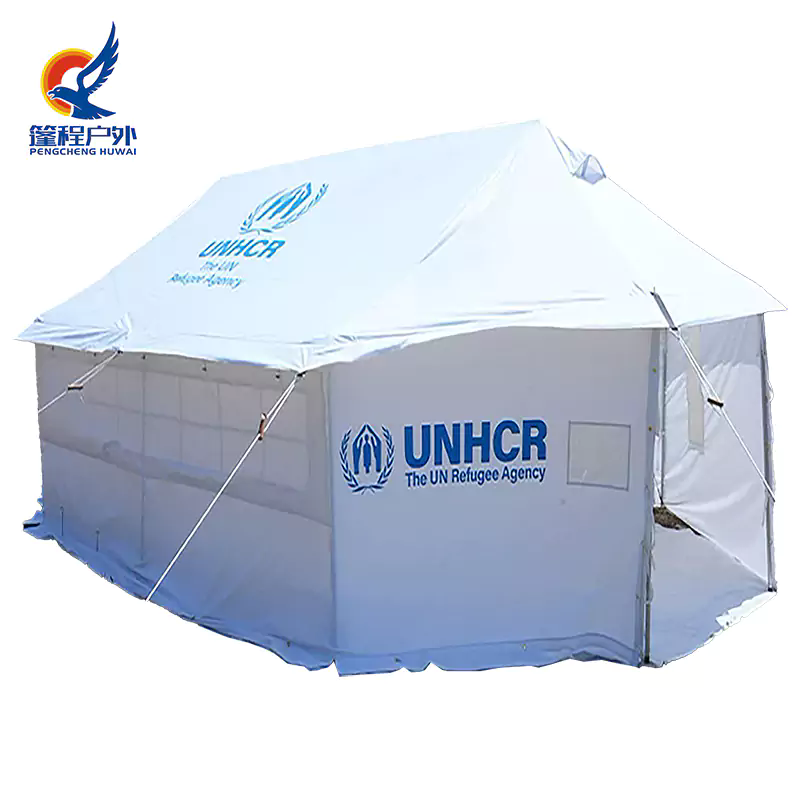
Table of Contents
- Introduction: The Urgency of Emergency Shelter
- Design Principles of Refugee Tents
- Materials and Structural Engineering
- Rapid Deployment in Crisis Zones
- Comparison of Tent Types
- Operational Challenges
- Technological Innovations
- Practical Applications in Real Disasters
- Industry Role and Manufacturing Standards
- Frequently Asked Questions
Introduction: The Urgency of Emergency Shelter
In humanitarian emergencies, shelter is one of the most immediate and essential needs. When populations are displaced due to conflict, earthquakes, floods, or pandemics, temporary housing must be provided within hours or days. International refugee tents serve as a scalable solution that bridges the gap between survival and recovery.
Unlike permanent housing, these tents must be lightweight, transportable, and easy to assemble without specialized labor. The challenge lies in delivering stability, safety, and dignity in environments where infrastructure has collapsed.
Design Principles of Refugee Tents
The design of international refugee tents is governed by strict humanitarian and engineering principles. These include rapid deployability, environmental resistance, modular scalability, and user safety.
- Quick assembly: Structures must be erected within 30 minutes to a few hours.
- Weather resistance: Protection against wind, rain, snow, and UV exposure.
- Ventilation: Adequate airflow to reduce heat buildup and disease spread.
- Modularity: Ability to connect multiple units for larger family or community use.
These principles ensure that refugee shelters remain functional in both short-term relief and medium-term resettlement phases.
Materials and Structural Engineering
Modern refugee tents are engineered using high-performance materials designed for durability and efficiency.
- Outer fabric: PVC-coated polyester or polyethylene for waterproofing
- Frame structure: Aluminum alloy or galvanized steel for strength and portability
- Insulation layers: Thermal liners for extreme climate adaptation
| Component | Material | Function |
|---|---|---|
| Cover Fabric | PVC-coated polyester | Weather protection and waterproofing |
| Frame | Aluminum alloy | Structural stability and portability |
| Ground Sheet | Reinforced polyethylene | Moisture and pest protection |
The engineering focus is to balance weight reduction with maximum durability, ensuring that tents can be transported efficiently while still withstanding harsh field conditions.
Rapid Deployment in Crisis Zones
Deployment efficiency is a defining factor in humanitarian response. Refugee tents are typically designed for palletized shipping and can be distributed via trucks, helicopters, or even airdrops in inaccessible regions.
- Site assessment and ground preparation
- Unpacking and inventory verification
- Frame assembly and anchoring
- Cover installation and stabilization
- Final inspection and occupancy readiness
In large-scale disasters, coordinated logistics between governments, NGOs, and manufacturers ensures that thousands of families can be sheltered within days.
Comparison of Tent Types
| Type | Use Case | Durability | Deployment Speed |
|---|---|---|---|
| Emergency Relief Tent | Immediate disaster response | Short-term (3–6 months) | Very fast |
| Mid-term Shelter Tent | Displacement camps | 1–3 years | Fast |
| Family Modular Tent | Longer-term housing support | 3–5 years | Moderate |
Each type is engineered to match different phases of humanitarian response, from immediate survival to transitional settlement.
Operational Challenges
Despite their effectiveness, international refugee tents face several operational challenges:
- Extreme climate variability across deployment regions
- Logistical delays in transportation infrastructure
- Limited ground preparation in emergency zones
- High demand during simultaneous global crises
These challenges require continuous innovation in materials, logistics planning, and global coordination frameworks.
Technological Innovations
Recent advancements have significantly improved refugee tent systems:
- Solar-powered integrated lighting systems
- Fire-retardant and antimicrobial fabric coatings
- Foldable rigid-frame hybrid structures
- Smart ventilation systems for climate regulation
These innovations enhance safety, reduce dependency on external utilities, and improve living conditions in temporary settlements.
Practical Applications in Real Disasters
International refugee tents have been deployed in numerous crisis situations including earthquakes in Asia, flooding in South America, and conflict zones across the Middle East. Their adaptability makes them suitable for diverse environments such as deserts, cold mountain regions, and humid tropical areas.
In each case, speed of deployment and structural reliability directly impact survival rates and long-term recovery outcomes.
Industry Role and Manufacturing Standards
Manufacturers play a crucial role in ensuring the quality and reliability of emergency shelter systems.
Companies in this sector must adhere to strict material testing, load-bearing validation, and environmental resistance standards. Consistency in production quality ensures that shelters perform reliably in unpredictable and high-pressure environments.
Beyond manufacturing, collaboration with humanitarian agencies helps refine designs based on field feedback, improving future iterations of refugee shelter systems.
Frequently Asked Questions
Q1: How quickly can refugee tents be deployed?
Most emergency tents can be deployed within 30 minutes to 3 hours depending on size and complexity.
Q2: Are refugee tents suitable for extreme weather?
Yes, modern designs include reinforced frames and weather-resistant fabrics suitable for wind, rain, and moderate snow conditions.
Q3: How long do refugee tents typically last?
Depending on type, they can last from several months up to 5 years with proper maintenance.
Q4: Can refugee tents be reused?
Yes, most high-quality units are reusable and can be relocated or reassembled multiple times.
Q5: What makes modern refugee tents different from older versions?
Modern versions incorporate better materials, modular systems, insulation layers, and sometimes solar or smart environmental features.
International refugee tents continue to evolve as global humanitarian needs increase. Their role is not only to provide immediate shelter but also to support dignity, safety, and stability during times of profound uncertainty.
For organizations seeking reliable and scalable shelter solutions, working with experienced manufacturers ensures faster deployment and higher resilience in the field. Pengcheng remains committed to supporting humanitarian operations with dependable infrastructure solutions tailored to real-world emergency demands.
Contact us today to explore how advanced refugee tent systems can support your emergency response strategy and deliver rapid, effective shelter where it is needed most.