

How Are Silicon Carbide Tubes Applied Across High-Temperature Industrial Systems?
2025-12-31
Abstract
Silicon Carbide Tubes are advanced ceramic components widely used in high-temperature, corrosive, and mechanically demanding industrial environments. This article provides a structured and technical exploration of Silicon Carbide Tubes, focusing on material fundamentals, application logic, performance parameters, manufacturing considerations, and long-term industry relevance. Through four consolidated content sections, the article addresses how these tubes function within industrial systems, how specifications are determined, and how end users can evaluate suitability for furnaces, heat exchangers, and chemical processing equipment. The discussion is aligned with global SEO standards and written for engineers, procurement managers, and technical decision-makers.
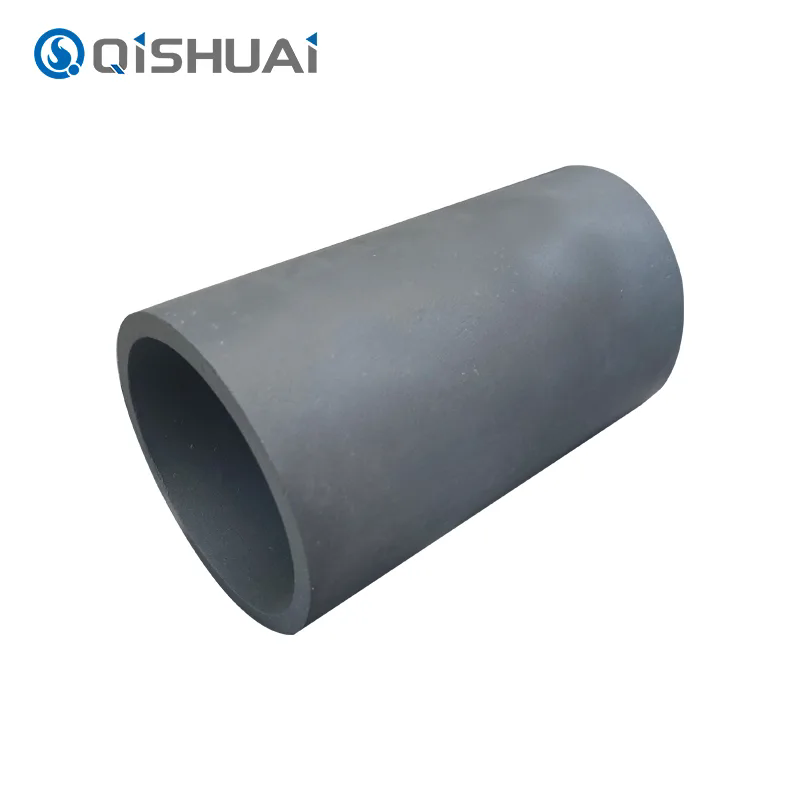
Table of Contents
- How Do Silicon Carbide Tubes Function in Industrial Thermal Environments?
- How Are Silicon Carbide Tube Specifications Determined for Different Applications?
- How Do Manufacturing Processes Influence the Performance of Silicon Carbide Tubes?
- How Will Silicon Carbide Tubes Evolve with Industrial Energy and Material Trends?
How Do Silicon Carbide Tubes Function in Industrial Thermal Environments?
Silicon Carbide Tubes are cylindrical ceramic structures manufactured from silicon carbide (SiC), a compound known for its exceptional thermal stability, mechanical strength, and chemical inertness. These tubes are commonly deployed in environments where conventional metal or oxide ceramics fail due to thermal deformation, oxidation, or rapid wear.
In industrial furnaces, Silicon Carbide Tubes serve as radiant heating elements, protection sheaths, or structural conduits that allow controlled heat transfer while maintaining dimensional stability. Their low thermal expansion coefficient ensures minimal cracking under rapid temperature changes, making them suitable for continuous or intermittent heating cycles.
Within chemical processing systems, these tubes act as protective barriers for thermocouples, gas flow channels, or reaction chambers. Their resistance to acids, alkalis, and molten salts enables long-term operation in aggressive chemical atmospheres without contamination or material degradation.
The central objective of Silicon Carbide Tubes is to provide reliable structural and thermal performance under extreme operating conditions, reducing downtime, maintenance frequency, and overall lifecycle cost for industrial users.
How Are Silicon Carbide Tube Specifications Determined for Different Applications?
Selecting the correct Silicon Carbide Tube requires a precise understanding of operational parameters, including temperature range, mechanical load, chemical exposure, and installation geometry. Unlike standardized metal tubing, SiC tubes are typically engineered to application-specific tolerances.
Key technical parameters are summarized below to illustrate the professional criteria used in industrial evaluation:
| Parameter | Typical Range | Industrial Significance |
|---|---|---|
| Maximum Operating Temperature | 1380°C – 1650°C | Defines suitability for high-temperature furnaces and reactors |
| Bulk Density | 2.6 – 3.1 g/cm³ | Impacts mechanical strength and thermal conductivity |
| Thermal Conductivity | 120 – 200 W/m·K | Controls heat transfer efficiency |
| Flexural Strength | 250 – 400 MPa | Determines load-bearing capacity |
| Oxidation Resistance | Excellent up to 1600°C | Ensures long service life in air atmospheres |
Beyond material properties, dimensional accuracy such as outer diameter, inner diameter, straightness, and surface finish must align with installation requirements. Inconsistent tolerances may result in stress concentration or sealing failures during thermal cycling.
Common Questions About Silicon Carbide Tubes
Q: How long do Silicon Carbide Tubes typically last in continuous furnace operation?
A: Service life depends on temperature stability, atmosphere composition, and mechanical stress. In controlled oxidizing environments below rated temperatures, tubes can operate reliably for several years with minimal performance loss.
Q: Can Silicon Carbide Tubes withstand rapid heating and cooling cycles?
A: Yes. Silicon carbide exhibits low thermal expansion and high thermal shock resistance, allowing tubes to tolerate rapid temperature changes without cracking when properly installed.
Q: Are Silicon Carbide Tubes compatible with corrosive gases?
A: Silicon carbide is chemically inert to most acids and alkalis. However, specific gas compositions and impurities should be evaluated to ensure compatibility under prolonged exposure.
How Do Manufacturing Processes Influence the Performance of Silicon Carbide Tubes?
The performance of Silicon Carbide Tubes is directly linked to their manufacturing route. Common production methods include reaction-bonded silicon carbide, pressureless sintering, and recrystallization. Each process results in distinct microstructures that influence porosity, strength, and thermal conductivity.
Reaction-bonded SiC tubes are valued for dimensional precision and cost efficiency, while recrystallized SiC tubes offer superior high-temperature stability and purity. Manufacturing consistency plays a decisive role in minimizing internal defects, which are the primary cause of premature failure in ceramic components.
Advanced quality control measures such as ultrasonic inspection, dimensional scanning, and thermal shock testing are typically applied to ensure reliability. For industrial users, understanding the manufacturing background provides insight into expected performance and maintenance planning.
How Will Silicon Carbide Tubes Evolve with Industrial Energy and Material Trends?
As global industries pursue higher energy efficiency and lower emissions, Silicon Carbide Tubes are positioned to play an increasingly strategic role. Their ability to operate at higher temperatures enables more efficient thermal processes, reduced fuel consumption, and compact equipment design.
Emerging applications include hydrogen production systems, advanced ceramics sintering lines, and high-efficiency heat exchangers. Material research continues to improve purity levels, oxidation resistance, and mechanical reliability, further expanding operational boundaries.
Manufacturers such as Shandong Qishuai continue to develop Silicon Carbide Tubes that align with evolving industrial standards and customized application requirements. Through material optimization and precision manufacturing, these products support long-term operational stability across diverse sectors.
For organizations evaluating high-temperature ceramic solutions or seeking application-specific guidance, direct technical consultation is recommended. Contact us to discuss performance requirements, customization options, and long-term supply solutions tailored to industrial needs.