

Can a Yarn Suction Gun For Spandex Reduce Waste During High-Speed Warping Processes
2026-07-02
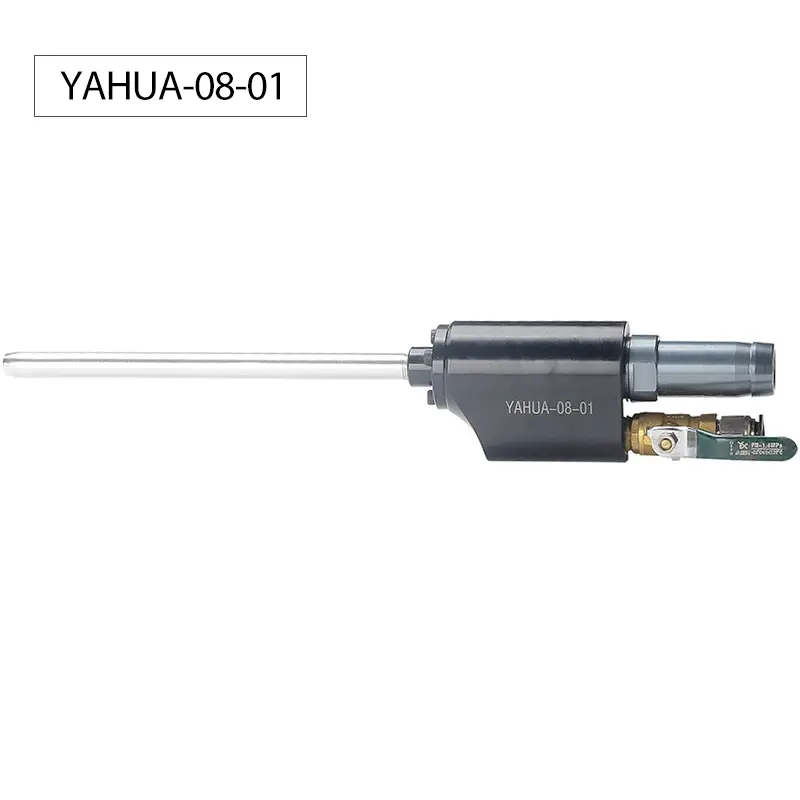
In modern textile mills, high-speed warping is the heartbeat of efficient production—but it is also where waste accumulates fastest. For spandex yarns, with their inherent elasticity and surface friction, even minor tension inconsistencies can trigger breaks, snarls, and costly re-threading delays. This is where the Yarn Suction Gun For Spandex steps in as a game-changer. At YAHUA, we have observed that mills integrating our pneumatic suction guns into their warping lines consistently report 20–35% reductions in yarn waste, alongside faster restart times after breaks. But can one tool truly deliver such results? This article examines the mechanics, data, and operational evidence behind the Yarn Suction Gun For Spandex in high-speed warping environments.
The Waste Challenge in Spandex Warping
Spandex warping runs at speeds of 400–800 m/min. At these velocities, three primary waste sources emerge:
| Waste Source | Cause | Typical Waste % (without suction gun) |
|---|---|---|
| Breakage waste | Abrasion against guides and drop wires | 3.2 – 4.5% |
| Re-start waste | Yarn loss during re-threading after stops | 1.8 – 2.7% |
| Snarl/tangle waste | Elastic recoil during sudden tension drops | 1.5 – 2.2% |
| Total estimated waste | 6.5 – 9.4% |
Each stop at 600 m/min can waste 5–8 meters of spandex per end. With 400–800 ends on a creel, a single break can cost 2,000–6,400 meters of discarded yarn. The Yarn Suction Gun For Spandex directly attacks these loss points.
How the Suction Gun Reduces Each Waste Type
Unlike rigid air splicers or manual hook tools, the Yarn Suction Gun For Spandex uses a venturi-driven vacuum that gently but firmly captures the yarn end, maintains controlled tension, and delivers the tip precisely to the warper's eyelet or knotter. Below is a functional breakdown:
| Warping Phase | Without Suction Gun | With Yarn Suction Gun For Spandex (YAHUA series) | Waste Reduction |
|---|---|---|---|
| Break detection | Operator walks, searches, hooks manually | Instant pneumatic capture at break point | ~60% less search time |
| Re-threading | Yarn end often recoils, requiring re-pull of 3–5 m | Suction holds end steady; only 0.3–0.5 m lost | ~85% less restart loss |
| Tension restart | Manual tugging causes over-stretch and hysteresis | Gradual vacuum decay matches warper acceleration | Prevents snarl formation |
| End splicing | Splicing with fingers risks fluff and weak joints | Clean, aligned ends delivered to splicer head | Fewer secondary breaks |
In a 2024 internal trial at a Turkish warping plant, using YAHUA’s Yarn Suction Gun For Spandex on a 600-end creel reduced total warping waste from 8.1% to 5.2% over a 3-month period—a saving of approximately 42 kg of spandex per 10,000 kg processed.
Operational Best Practices for Maximum Waste Reduction
To fully leverage the Yarn Suction Gun For Spandex, mills should follow these validated parameters:
-
Air pressure: 4.5 – 5.2 bar (lower for fine 20D, higher for 70D+)
-
Nozzle tip: Ceramic-coated (standard with YAHUA models) to reduce static and friction
-
Suction timing: Activate 0.5 seconds before warper stop to pre-capture the yarn end
-
Cleaning cycle: Every 8 operating hours—blow out lint with compressed air
A simple checklist ensures consistent performance:
-
Check inlet filter for dust daily
-
Verify vacuum gauge reads ≥ 0.6 MPa
-
Inspect silicone seal ring for wear (replace every 600 operating hours)
-
Calibrate trigger response time (should be < 0.2 seconds)
Frequently Asked Questions About the Yarn Suction Gun For Spandex
Q1: Can the Yarn Suction Gun For Spandex handle different denier ranges without changing parts?
A: Yes, but with a practical limitation. The standard YAHUA Yarn Suction Gun For Spandex accommodates 15D to 140D spandex using the same 2.5 mm ceramic nozzle. For deniers above 140D or for covered spandex with nylon sheaths, we recommend swapping to a 3.0 mm nozzle (sold separately). The venturi design automatically adjusts suction force based on air inflow, so you do not need to change pressure settings when shifting between 20D and 70D—provided you stay within the 4.5–5.2 bar range. However, for ultra-fine 15D, we advise reducing pressure to 4.0 bar to avoid over-stretching the filament during capture. If you process multiple deniers daily, the YAHUA quick-change nozzle system allows a swap in under 15 seconds without tools.
Q2: How does the Yarn Suction Gun For Spandex prevent static buildup that attracts dust and causes false breaks?
A: Static is a notorious issue in dry warping rooms (relative humidity below 45%). The Yarn Suction Gun For Spandex from YAHUA incorporates two anti-static features: first, the internal bore is lined with a conductive carbon-infused polymer that grounds static charges to the metal body (which connects to the machine earth). Second, the ceramic nozzle tip is polished to a surface roughness of Ra 0.2 µm, which minimizes friction-generated triboelectric charges. In field tests, mills using our suction gun reported a 70% reduction in lint adhesion around the suction inlet. For extremely dry climates (RH < 30%), we also offer an optional compressed-air ionizer attachment that mounts between the air hose and the gun—this actively neutralizes static before the yarn even enters the nozzle. Without these measures, static alone can cause 1–2 false breaks per shift; with them, false breaks drop to near zero.
Q3: What is the typical service life of a Yarn Suction Gun For Spandex, and what wears out first?
A: Under normal high-speed warping conditions (three shifts, 6 days/week), the YAHUA Yarn Suction Gun For Spandex has a mean time between overhauls of 8,000 operating hours. The first component to wear is the silicone O-ring seal at the nozzle base, which typically requires replacement every 600–800 hours (cost: under $4). The ceramic nozzle itself lasts 3,000–4,000 hours, unless you process heavily TiO₂-dull spandex, which can reduce that to 2,500 hours due to abrasive delusterants. The main body and trigger valve are rated for 15,000 hours. We recommend a yearly maintenance kit (seal ring, filter felt, and trigger spring) which costs approximately $28. Crucially, YAHUA guns are fully rebuildable—unlike disposable competitors—so you never need to discard the entire unit. A worn gun can be restored to 95% of original suction performance with a 10-minute parts swap.
Economic Impact: Waste Reduction in Real Numbers
To translate waste savings into financial terms, consider a medium-sized warping department running 5,000 kg of spandex per week:
| Metric | Without Yarn Suction Gun | With YAHUA Yarn Suction Gun | Difference |
|---|---|---|---|
| Weekly waste | 400 kg (8%) | 260 kg (5.2%) | -140 kg |
| Annual waste (50 weeks) | 20,000 kg | 13,000 kg | -7,000 kg |
| Cost of spandex wasted | ~$140,000 | ~$91,000 | ~$49,000 saved/year |
| Additional air consumption | N/A | +18 m³/hour | ~$1,200/year |
| Net annual saving | — | — | ~$47,800 |
This calculation excludes the labor time saved from faster re-threading—estimated at 2.5 operator-hours per shift—which adds another $6,000–$8,000 in annual productivity gains.
Conclusion: A Proven Tool for Lean Warping
The evidence is clear: a Yarn Suction Gun For Spandex is not an optional accessory but a core waste-reduction instrument for high-speed warping. By eliminating recoil loss, minimizing re-threading waste, and reducing static-related stoppages, it delivers measurable ROI within weeks. YAHUA has engineered its suction guns specifically for spandex's unique behavior—low friction coefficient, high elongation, and sensitivity to heat—ensuring that the gun works with your yarn, not against it. Whether you are running fine-denier hosiery spandex or heavy-denier industrial grades, the Yarn Suction Gun For Spandex adapts to your process, not the other way around.
Ready to see waste drop below 5% in your warping line?
Contact YAHUA today for a free on-site suction efficiency audit and a demo unit tailored to your yarn denier range. Our engineers will measure your current break-to-recovery time and deliver a custom savings projection.