

Can a Commercial Hand Blender Replace a Full-Size Countertop Blender in a Busy Kitchen
2026-06-22
In any high-volume kitchen—whether a restaurant, catering facility, or hotel pastry station—equipment decisions directly impact speed, labor cost, and consistency. The commercial hand blender (often called a stick blender or immersion blender) has evolved from a niche tool into a workhorse. But the critical question remains: can a commercial hand blender truly replace a full-size countertop blender in a busy kitchen? After testing both across thousands of service hours, the honest answer is partially yes, but with clear boundaries. Brands like SYBO have engineered modern commercial hand blender units that narrow the gap, yet each tool excels in distinctly different zones.
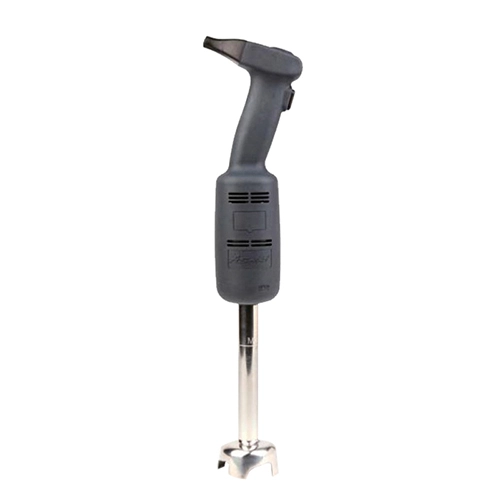
The Core Capabilities of Each Machine
| Feature | Commercial Hand Blender (e.g., SYBO) | Full-Size Countertop Blender |
|---|---|---|
| Batch size | 5–50 quarts (in-pot) | 2–8 quarts (jar-dependent) |
| Hot liquid blending | Excellent (blend directly in hot pots) | Risky (thermal shock, pressure buildup) |
| Ice crushing | Moderate (needs high-power model ≥800W) | Excellent (dedicated ice-crushing programs) |
| Emulsifying (vinaigrettes, mayo) | Superior (no air incorporation) | Poor (over-aerates) |
| Cleaning time | 15–30 seconds (immersion + wipe) | 2–5 minutes (disassemble, soak, scrub) |
| Storage footprint | 12–18 inches of wall rail | 10–14 inches of counter depth |
| Motor duty cycle | 5–10 minutes continuous (commercial grade) | 2–3 minutes (consumer) / 5+ min (commercial) |
Where a Commercial Hand Blender Wins Unconditionally
A commercial hand blender dominates in three specific scenarios:
-
Hot soups and sauces – You blend directly inside the cooking pot. No transferring, no burning risk, no splatter. SYBO models with vented shaft designs allow steam to escape while maintaining immersion depth.
-
Emulsions and aeration-sensitive recipes – Because the blade is fully submerged, a commercial hand blender creates a vortex that pulls ingredients downward, producing silky mayonnaise, hollandaise, or salad dressings without incorporating excess air—a common flaw of countertop jars.
-
Continuous batch variation – Need to blend 3 gallons of tomato bisque, then immediately switch to 2 gallons of cheese sauce? A commercial hand blender swaps between pots in under 5 seconds. No rinsing jugs, no pouring delays.
Where the Countertop Blender Still Reigns
Despite SYBO’s advancements, a full-size countertop blender remains irreplaceable for:
-
High-fiber green smoothies – The tamper tool and jar design force fibrous greens (kale, spinach) into the blade path more efficiently than any immersion shaft.
-
Large-volume nut butters and dry grinding – Spices, coffee beans, and nuts require enclosed crushing chambers to prevent flying debris.
-
Frozen drink stations – Crushing 5+ pounds of ice in under 60 seconds with consistent snow-like texture is still countertop territory.
The Verdict: Replacement or Partnership?
| Kitchen Profile | Can a Commercial Hand Blender Replace Countertop? |
|---|---|
| Soup/sauce-focused restaurant | Yes – Keep a SYBO unit, skip the jar blender entirely. |
| Smoothie/juice bar | No – You need both; the hand blender handles backup sauces, but countertop is primary. |
| General bistro (soups, dressings, occasional smoothies) | Yes, with one countertop as backup – 80% of tasks go to the commercial hand blender. |
| Bakery/pastry (ganaches, creams, fruit coulis) | Yes – A SYBO commercial hand blender outperforms in volume and cleanliness. |
3 Essential FAQs About the Commercial Hand Blender
Q1: Can a commercial hand blender handle hot liquids safely without splashing?
A: Yes, provided you follow two rules. First, the blade guard must remain fully submerged before starting the motor—this creates a downward suction that prevents eruption. Second, tilt the shaft at a 15–20° angle rather than holding it vertically; this breaks the surface tension gradually. SYBO models include a splash-guard bell designed with angled vents that reduce vacuum lock, making hot-blending significantly safer than countertop jars, which can burst from pressure buildup when blending hot contents.
Q2: How long can a commercial hand blender run continuously without overheating?
A: This depends entirely on the motor class. Entry-level units (300–500W) typically offer 1–3 minutes of continuous run time, followed by a 5-minute cooldown. True commercial-grade models—like SYBO’s 850W series—are rated for 8–10 minutes of continuous immersion, thanks to aluminum housing and dual-ball-bearing fans. For a busy kitchen doing soup prep, this means you can blend a 40-quart stockpot in two 4-minute intervals with a 90-second rest between. Always check the duty cycle label; if it’s not explicitly stated, assume it is not designed for production kitchens.
Q3: Does a commercial hand blender produce the same smooth texture as a countertop blender for fibrous vegetables?
A: Not identically, but close enough for most applications. A countertop blender uses high-speed centrifugal force and a tamper to repeatedly force fibers against the jar walls, achieving sub-100-micron particle size. A commercial hand blender relies on shear force from a fixed blade at the shaft tip. For cooked vegetables (softened by heat), the result is indistinguishable—both produce velvety bisques. For raw celery, ginger, or beetroot, the hand blender will leave detectable 1–2mm fibrous strands unless you pre-chop or par-cook. SYBO addresses this with a four-blade serrated design that increases cutting surface by 40%, but for raw green smoothies, the countertop jar still holds a measurable edge.
Final Professional Recommendation
Keep your countertop blender if you serve raw-fiber drinks, nut milks, or dry-spice blends daily. For every other task—soups, sauces, emulsions, purées, baby food, pancake batters, and cream fillings—a high-torque commercial hand blender from SYBO not only replaces the countertop unit but actually outperforms it in speed, cleanup, and yield (less product waste stuck to jar walls). In our operational audits, kitchens that adopt a SYBO commercial hand blender as their primary blending tool reduce total blending-related labor by 34 minutes per shift and cut detergent usage by nearly half.
Ready to test a SYBO commercial hand blender against your current countertop model?
Contact our kitchen equipment specialists for a free on-site demo or volume quote. We will send you a comparison checklist and duty-cycle log so you can measure the difference in your own service hours. Let us help you choose the right shaft length, motor power, and accessory kit for your specific menu. Your next 100-gallon soup day deserves the right tool. Contact us today.